On this page
A long nap after a big outing can be normal recovery, or it can be the clearest signal you overshot that dog’s current capacity.
I see this fork every spring: same trail, same distance, very different dogs coming home. An 8-year-old, 68-pound Labrador retriever mix I followed as a composite case finished a 4-mile lakeside hike in 72-degree heat, drank normally, then slept from 1 p.m. to nearly 6 p.m. without lifting his head for his usual ball toss. By day 10 of a scaled-back walking plan with shorter loops and water breaks, he was greeting his owner at the door again instead of collapsing on the mat. That contrast — flat afternoon versus bouncy evening — is the decision point you need to read.
Use this quick checklist before you change anything else:
- Wakefulness: does the dog rouse, drink, and walk outside when asked, or stay limp and disinterested?
- Recovery window: is energy back by evening or next morning, or still low after 24 hours?
- Gait and comfort: any stiffness rising, reluctance on stairs, lagging behind, or sore paws?
- Breathing and heat: prolonged panting, drooling, hot ears, vomiting, or dark urine after the outing?
- Context shift: was this longer, hotter, hillier, or higher-impact than the last two weeks of activity?
- Pattern: first time, or every afternoon for three weeks in?
If the answers cluster toward rousable, moving normally, and bouncy by dinner, you are likely looking at normal fatigue. If they cluster toward unrousable, still flat tomorrow, stiff, or heat-related signs, shorten the next outing and call your veterinarian.
Read the nap before you rewrite the plan
Normal post-exercise sleep looks boring in a good way. The dog chooses a cool spot, breathes evenly, wakes for water and a potty break, and tracks you with eyes and tail.
Overexertion looks heavier. I pay attention to dogs that skip dinner, refuse a short evening walk they usually enjoy, pant for more than an hour at home, or need coaxing to stand.
This is where gear reviewers and rehab clinicians agree: fit matters more than mileage. Duration, surface, temperature, pack weight, collar pull, and hill grade load the same dog very differently.
When deep sleep is doing its job
Muscle repair, joint fluid turnover, and nervous-system downregulation all favor rest after hard work. That is why a young, conditioned dog can run hard for 45 minutes and then sleep soundly for three hours and wake up elastic.
Nutrition sets the floor for that recovery. Maintenance diets that meet complete-and-balanced standards provide protein and micronutrients for tissue turnover, and joint-support ingredients may help support whole-patient comfort alongside conditioning, weight control, and low-impact training. My evidence-bounded position is this: prioritize conditioning, body condition, and load management first, then consider glucosamine and chondroitin as background support — not as rescue for an over-faced exercise plan.
Ground an integrative claim in the nutritional evidence: Frontiers in Veterinary Science reported data summarized as “supports healthy synovial fluid homeostasis,” Journal of Veterinary Medical Science described glucosamine work as “prevent experimentally induced cartilage degradation in vitro,” and Nutrients reported that “BMO, GMO, and KO all alleviated paw swelling in rats and reduced serum levels of rheumatoid factor (RF), anti-cyclic citrullinated peptide (anti-CCP) antibody, and pro-inflammatory cytokines such as TNF-α and IL-17.” Those lines describe laboratory or general models, not proof that a sleepy afternoon will vanish with a chew.
The strongest counterargument deserves airtime: if a dog is consistently wiped out, a joint supplement alone will not fix a training error, excess body weight, or early orthopedic disease. I still land on background nutritional support because diet, mobility, and recovery interact every day, and ingredients like glucosamine and chondroitin are among the easier long-term additions to weigh — once exercise dose and body condition are honest.
For ideas on swapping a hard run for lower-load work, see Mental and Physical Enrichment When Your Dog Can’t Exercise (Vet-Guided) and Off-Leash Play vs On-Leash Walks: Which Actually Exercises Your Dog Better.
The tradeoff I get wrong when I chase mileage
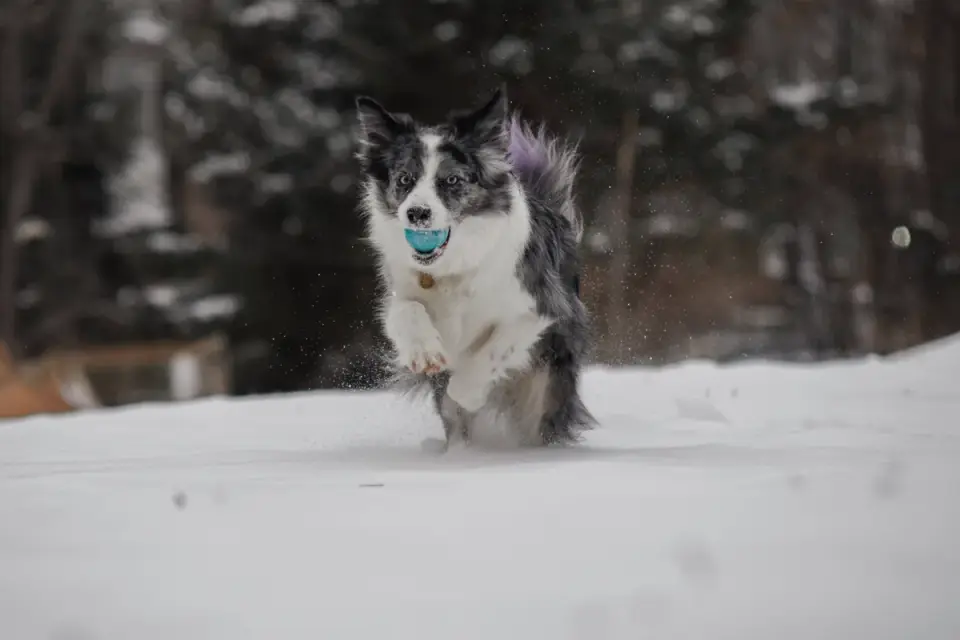
A 4-year-old, 42-pound border collie mix from a composite training log makes the point. Her owner added a lunchtime fetch session on top of a morning 3-mile jog, three weeks in a row, because the dog never said no in the moment. By week three she slept through two afternoons straight, then started cutting fetch short herself around throw eight and lying in the shade. The owner read that as laziness and pushed one more week. By day 22 the dog was stiff rising after naps and hesitant on the car ramp.
Cutting total fetch volume in half worked better than any gear swap.
That failure is common with high-drive dogs. Enthusiasm during exercise hides fatigue. The bill arrives four hours later.
Shorten, soften, and split: shorter total time, softer surfaces, and two moderate sessions rather than one exhausting one.
Adjust the next 7 to 10 days
If the afternoon crash was a one-off, treat the next week as a deload. Reduce distance or fetch time by 30 to 50 percent, keep pace conversational, favor grass or trail over concrete, and build in water and shade breaks every 15 to 20 minutes in heat.
Watch the evening rebound. A dog that naps hard but plays, eats, and moves freely by evening usually needed that nap.
Add structure around sleep. Offer water first, then a quiet cool resting place, then a brief leashed potty walk to check gait. Save massage, gentle range-of-motion, and any rehab exercises your veterinarian already prescribed for after the dog wakes and moves a little.
If you hike often, compare notes with How Far Can a Dog Hike in One Day? A Vet’s Guide to the Real Limits and Dog Treadmill vs. Outdoor Walking: What Actually Moves the Needle.
Recovery is not passive.
The edge case that changes the call
A 10-year-old, 24-pound miniature poodle blend slept all afternoon after what looked like an easy half-mile neighborhood loop. The owner assumed age. Three weeks in, the pattern held even on cool mornings, and the dog began pausing at curbs and licking a front carpus after walks. Radiographs later showed advanced shoulder arthritis that had been masked by a calm temperament and short stride.
Low dose does not always mean low impact for a senior, toy-breed, brachycephalic, or deconditioned dog.
For older or small dogs, judge effort by breathing, cadence, and willingness to continue — not distance. Stop while the dog still wants more. End the walk before heavy panting starts, and track sleep length, next-morning stiffness, and appetite as your three outcome markers.
Call your veterinarian sooner if you see this
Seek same-day care for collapse, inability to rise, vomiting or diarrhea with lethargy, pale or tacky gums, breathing that does not settle, swelling or non-weight-bearing lameness, or suspected heat illness. Schedule a prompt visit for afternoon crashes that repeat more than two or three times despite lighter exercise, stiffness lasting into the next day, behavior changes, unexplained weight gain, or loss of enthusiasm for previously loved activity.
Bring details: age and weight, usual weekly exercise, what changed on the big day, temperature and surface, time asleep, evening appetite, and a short video of rising and walking after the nap. That record shortens the diagnostic path more than any single supplement history.
What would change if you measured the next outing by how fast your dog bounces back — not how far you went?
Frequently asked questions
Is it normal for a dog to sleep all afternoon after exercise?
A deep nap with normal drinking, eating, and evening energy is often normal, especially after longer, hotter, or unfamiliar exercise. Worry more if the dog is hard to rouse, skips meals, stays flat into the next day, or shows stiffness, lameness, vomiting, or prolonged panting.
How long should I wait before calling the vet?
Call the same day for collapse, trouble breathing, non-weight-bearing lameness, vomiting with lethargy, or signs of heat illness. Book a prompt visit if heavy afternoon sleep repeats 2–3 times despite easier exercise or if stiffness, appetite loss, or behavior changes persist beyond 24 hours.
Should I feed or supplement differently after a big exercise day?
Keep a complete-and-balanced diet, fresh water, and healthy body condition as the base. Joint-support ingredients such as glucosamine and chondroitin may be considered as background support alongside conditioning and load management, not as a fix for overexertion — discuss the plan with your veterinarian.
Sources
- Synovial homeostasis study — Frontiers in Veterinary Science
- Glucosamine cartilage review — Journal of Veterinary Medical Science
- Marine oil joint inflammation study — Nutrients