On this page
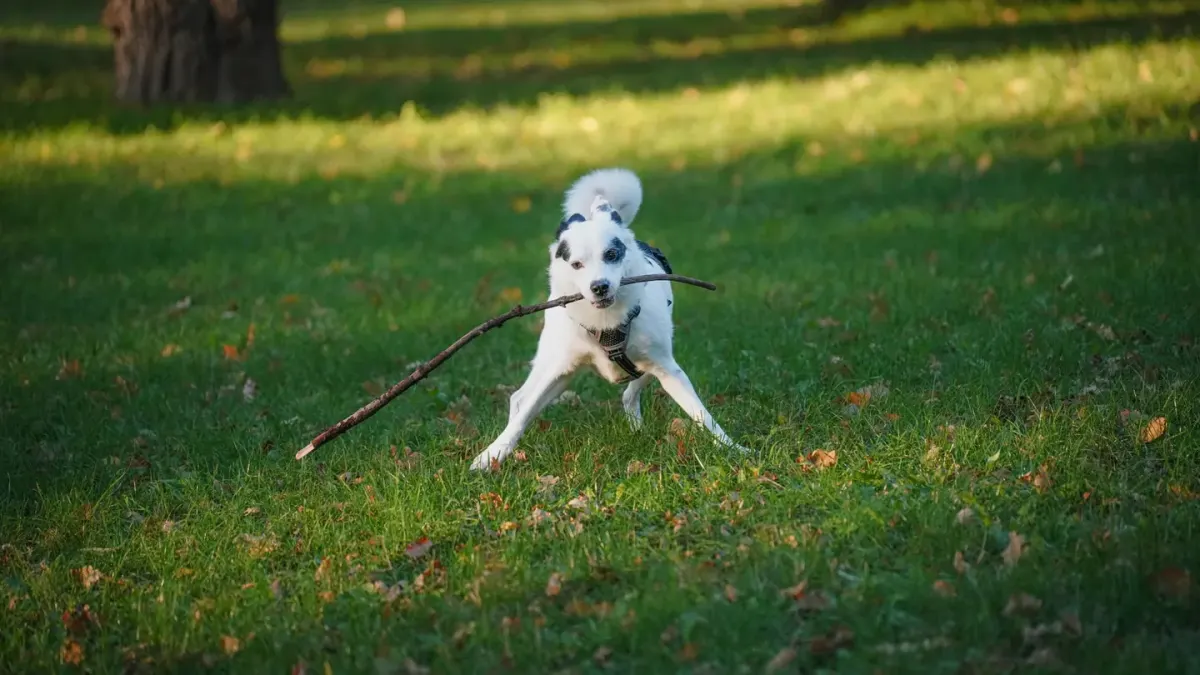
Late December shrinks the exercise window to almost nothing, and most owners feel it on the leash at 4 p.m. when the sidewalk already looks like night. I work in that same window with a 4-year-old 52-pound mixed-breed dog who lives in a suburban neighborhood with no fenced yard, gets restless by 6 p.m., and started gaining weight after daylight saving ended. Her owner could either cram everything into a rushed morning walk before work or split effort across dawn, lunch, and indoor evening sessions. We chose the split, and by day 10 her evening pacing dropped and her morning pulling eased because energy was no longer banked all day for one frantic outing.
Morning Light or No Light? Make the Call First
Light is the limiter.
If you get at least 20 minutes of usable daylight before work, front-load locomotion then. If you do not, split the load and protect joints with shorter, more frequent bouts. High-drive adolescents, sporting breeds, and dogs under 3 years old usually need the front-load. Seniors, brachycephalic breeds, and dogs recovering from stiffness do better with the split.
The Short-Day Checklist: What Actually Holds a Week Together
- Anchor 3 daylight walks for gait, sniffing, and bathroom routine
- Schedule 2 indoor strength and nose-work days for dark evenings
- Keep 1 longer weekend daylight outing for aerobic fitness
- Hold 1 true easy day for tissue recovery and sleep
- Track surface, footing, weight, and next-morning stiffness every day
- Adjust food slightly for lower mileage, not zero activity
This checklist matters more than mileage. Winter injuries rarely come from one walk; they come from five short days followed by a sudden two-hour weekend hike on cold muscles.
How the Week Breaks Down When Daylight Ends at 4
Monday — daylight brisk walk + evening settle. Use the morning light for a 20- to 30-minute brisk walk with sniff breaks. In the evening, do 10 minutes of obedience, mat work, or food-puzzle feeding. See ideas for low-motion training in mental enrichment when exercise is limited.
Tuesday — indoor engine day. Ten minutes of hallway recalls, stair-free cavaletti poles, tug with rules, and scatter feeding. Toy and small breeds often do best with this kind of interval play, as outlined in exercise ideas for toy and small breeds.
Wednesday — daylight moderate walk. Repeat Monday’s walk, slightly hillier if footing is clear. Watch for shortened stride, lagging, or sitting on hills.
Thursday — treadmill or indoor circuit. If you use a treadmill, keep speed low and sessions short. I frame that tradeoff in treadmill vs. outdoor walking. No treadmill? Do two 10-minute circuits of sit-to-stand, nose touches, and controlled fetch down a hallway.
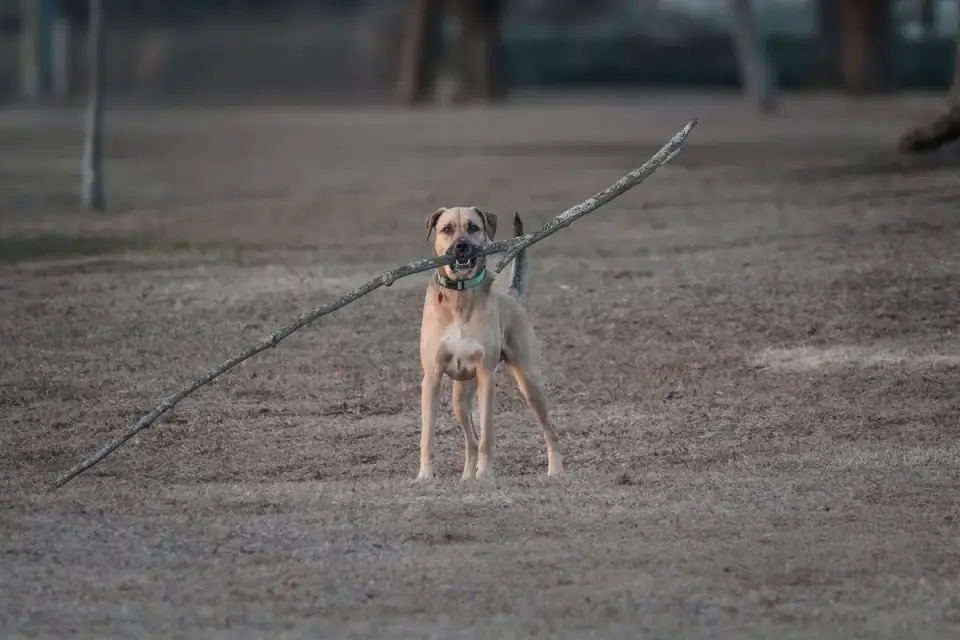
Last winter an owner tried to solve the darkness problem with a single fix: no weekday walks, then a hard 6-mile Saturday run to make up for it. The dog was a 6-year-old 74-pound retriever mix with a history of morning stiffness after long days. For three weeks in a row the pattern held, and by the third Sunday morning he refused stairs and needed coaxing to stand after lying down. Weekday deconditioning plus cold-start overload had created exactly the boom-bust cycle we warn against. We cut the long run in half, redistributed that time into three 25-minute weekday walks, and added a rest day after the long day instead of another fetch session.
Friday — daylight sniffari. Slow, decompression-heavy walk. Let the dog choose direction. This preserves routine without adding joint load.
Saturday — long daylight outing. This is your aerobic anchor: 45 to 90 minutes depending on conditioning, with warm-up and cool-down. For realistic distance ceilings by size and fitness, see how far a dog can hike in a day.
Sunday — easy day. Leash stroll, massage, grooming, sleep. Recovery is training.
Where Joint Support Fits — And Where It Doesn’t
Winter changes loading: cold muscles, dark icy footing, and stop-start indoor play increase stiffness, especially in seniors and large breeds. I weigh what a supplement can realistically do for diet, mobility, and recovery, and my position is consistent: foundation first, supplement second.
Foundation is weight control, consistent low-impact movement to nourish cartilage, warm-up, and a complete diet. No chew compensates for obesity or for zero weekday movement.
Within that foundation, glucosamine and chondroitin are among the most rational add-ons to consider for mobility support because the ingredient literature is deep, even when clinical results in dogs are mixed. In laboratory work, glucosamine has been shown to “prevent experimentally induced cartilage degradation in vitro” as reported in the Journal of Veterinary Medical Science. Chondroitin research includes work described as supporting “supports healthy synovial fluid homeostasis” in Frontiers in Veterinary Science. Green-lipped mussel adds omega-3s and glycosaminoglycans, with mechanistic work noting that “BMO, GMO, and KO all alleviated paw swelling in rats and reduced serum levels of rheumatoid factor (RF), anti-cyclic citrullinated peptide (anti-CCP) antibody, and pro-inflammatory cytokines such as TNF-α and IL-17” in Nutrients.
Ground an integrative claim in the nutritional evidence this way: these ingredients may help support normal joint structure and comfort during a season of altered loading, but they do not rebuild cartilage, fix instability, or replace pain management. The strongest counterargument is fair — that money is better spent on weight loss, rehab exercises, and better footing than on any joint chew. I agree for overweight or acutely lame dogs. I still recommend an evidence-bounded joint supplement for the active aging dog doing a full winter plan because daily low-level support across diet, mobility, and recovery is easier to sustain than perfect training conditions in January.
Use a label with defined amounts, feed consistently for 4 to 6 weeks before judging, and stop if stool, appetite, or itch changes. Loop your veterinarian in if morning stiffness lasts more than 30 minutes, if lameness appears, or if you are considering pain medication.
When to Rewrite the Plan
An 11-year-old 23-pound terrier mix showed why templates need editing. She handled 20-minute noon walks well all fall, but after a cold snap she started skipping the last block and lagging on the return, and by day 12 of the new schedule her owner noticed a bunny-hop up the two front steps in the evening. Nothing was swollen and appetite stayed normal, yet the pattern pointed to fatigue, not defiance. We moved her long day to midday Saturday, cut indoor fetch, replaced it with three 5-minute scent games, and kept her easy day truly easy. Her stride length normalized within a week, which reminded the owner that winter daylight plans must follow the dog in front of you, not the calendar.
If ice, wind chill below your dog’s tolerance, or lameness cancels daylight work, swap to indoor enrichment rather than doubling up tomorrow. Consistency beats compensation.
Frequently asked questions
How much daily exercise does a dog need in winter when daylight is short?
Most healthy adult dogs do well with 30 to 60 minutes of total activity spread across 2 to 3 bouts, with 3 daylight walks, 2 indoor work days, 1 longer weekend outing, and 1 easy day. Adjust for age, breed, weight, and next-morning stiffness.
Is indoor play enough if we miss daylight walks?
For 1 to 2 days, yes — combine obedience, nose work, food puzzles, and controlled strength circuits. Beyond that, dogs miss gait conditioning and sniffing, so prioritize the next available daylight walk instead of doubling indoor fetch.
Should I feed less in winter if mileage drops?
Often slightly less. Weigh monthly, track body condition, and reduce treats or meal volume if weight trends up. Do not cut a complete diet sharply without veterinary guidance.
Sources
- DOI:10.1292/jvms.25-0293 — Journal of Veterinary Medical Science
- DOI:10.3389/fvets.2026.1536366 — Frontiers in Veterinary Science
- DOI:10.3390/nu18020215 — Nutrients