On this page
The fork: shorten the session, or change the whole approach?
Most owners assume grooming an arthritic dog just means going slower. That’s part of it, but the more useful fork is this: do you keep the same grooming routine and just soften it, or do you rebuild the routine around what the dog’s joints can actually tolerate that day? I land firmly on the second option, and here’s the checklist I give owners before we ever pick up a brush.
- Read the joints, not the calendar. A dog’s tolerance for standing, weight-bearing, and limb manipulation can change day to day, even hour to hour.
- Trim nails often, in small amounts. Long nails change how a dog bears weight and can worsen an already awkward gait.
- Clip the fur between paw pads. Traction matters more for an arthritic dog than it does for a younger one.
- Support the body, don’t just hold the leash. A hand or sling under the belly takes real weight off stiff hips.
- Break the groom into shorter blocks. A full groom doesn’t have to happen in one sitting.
- Warm the room and the water. Cold surfaces tighten already-stiff joints.
- Watch for pain signals, not just fidgeting. Yelping, freezing, or sudden reluctance to be touched in one spot is information, not misbehavior.
I’ll expand on each of these below, but the short version is: the checklist matters more than the specific brush or clipper you own.
Why the joints, not the coat, should set the pace
In my practice, I’ve watched this play out dozens of times with dogs who were otherwise easy patients. One that stands out was an 11-year-old Labrador, about 78 pounds, whose owner brought her in because she’d started yelping when the groomer lifted her front paw for a nail trim — something that had never happened before. The owner had noticed her slowing down on stairs about two months earlier but hadn’t connected it to grooming. We talked through what changed: the groomer had been using the same 20-minute standing hold she’d always used, but the dog’s hips could no longer tolerate that position for that long. Once we shortened sessions to about ten minutes with breaks, supported her hindquarters during nail trims, and had her lie on a padded mat instead of standing on a table, the yelping stopped. It wasn’t the tool that was wrong. It was the position and the duration.
That’s the pattern I see most: owners assume a dog who resists grooming has suddenly become difficult, when actually the dog is telling you a position or duration has become painful. AAHA’s mobility guidance lists difficulty rising, stiffness, soreness to touch, and reluctance to be handled as common signs of osteoarthritis — the same signs that show up mid-groom, not just on walks.
What actually changes about nail and paw care
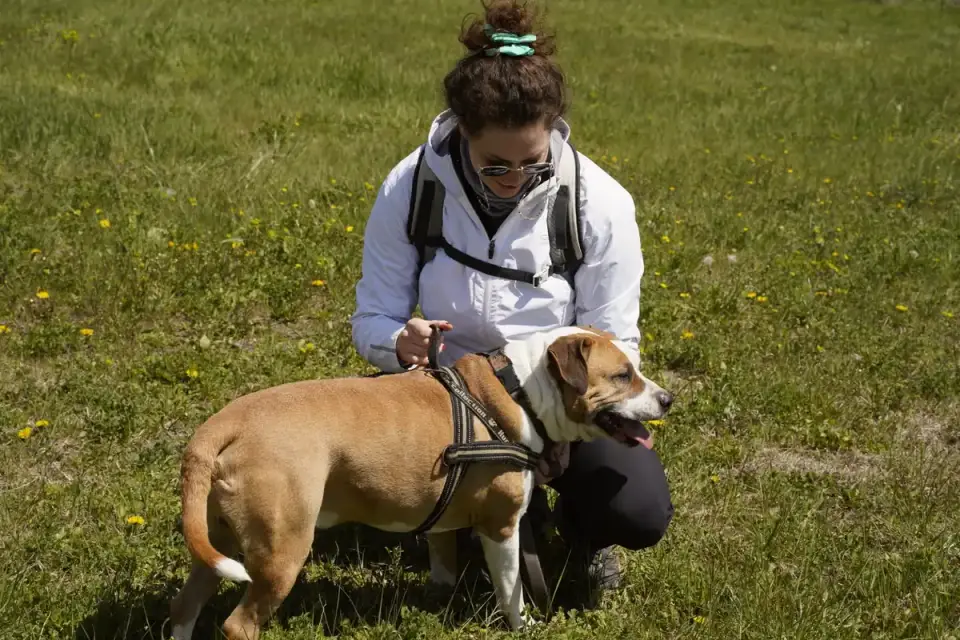
Nail length has an outsized effect on an arthritic dog’s gait, more than most owners expect. According to Cornell University College of Veterinary Medicine: Cornell’s Riney Canine Health Center, regular nail trims can meaningfully improve comfort and mobility, and trimming the fur between paw pads improves traction and foot placement. For a dog with osteoarthritis, that traction is the difference between a confident step and a slip that triggers a pain flare.
I tell owners to trim nails more frequently but take off less each time — small maintenance trims every one to two weeks beat a single aggressive session every six weeks. A dog that’s braced against pain will fight a long trim far more than a short one, and that fight itself can aggravate stiff shoulders and hips.
Handling, positioning, and session length
This is where most home grooming routines go wrong, and it’s also where a groomer with Fear Free training earns their fee. Fear Free Happy Homes: Fear Free recommends gentler handling for senior dogs because thinner skin and stiff joints make long sessions uncomfortable, and it points to specific adjustments: approaching from the side, letting the dog sniff hands before touch, avoiding rushed or forced positioning, and stopping before stress escalates.
In practice, that means:
- Skip the raised table when possible, or pad it heavily and add a non-slip surface.
- Let the dog lie down for as much of the groom as the coat allows.
- Warm the bathing area and use lukewarm, not cold, water.
- Split a full groom across two or three shorter sessions instead of one long one.
- Stop at the first sign of guarding, freezing, or vocalizing — don’t push through it to “finish.”
Here’s a short one worth sitting with: a groom that takes longer isn’t a failure, it’s the plan working.
If you’re weighing whether any of this belongs at home versus with a professional, our guide on at-home grooming versus a professional groomer walks through that decision in more detail, and for dogs whose coat still needs real maintenance, full groom versus bath-and-tidy explains what each service actually asks of the dog’s body.
Tools worth reconsidering, and ones that aren’t the problem
Owners often ask whether they need different clippers or brushes for an arthritic dog. Mostly, no — the coat hasn’t changed, the joints have. What’s worth reconsidering is anything that requires the dog to hold an awkward position for a long stretch. A slicker brush used with the dog standing braced on all fours is harder on stiff shoulders than the same brush used with the dog lying on its side. If nail trims have become a fight, a grinder rather than a clipper can let you take off small amounts with less limb manipulation per pass — though the tool matters less than how you position the leg while using it. For owners still deciding between clippers and scissors for a coat that needs regular maintenance, dog clippers versus scissors covers that separately from the arthritis question, and coat needs also shift by size, which our piece on grooming needs by dog size breaks down.
Where I land
I’ve had owners tell me they feel like they’re “babying” a dog by shortening grooming sessions or skipping the table. I don’t see it that way, and I said as much to a client last spring whose 9-year-old German Shepherd had started refusing to lie down for brushing. We rebuilt her routine around ten-minute blocks, brushing on a padded floor mat instead of a table, and doing nail trims separately from coat work so no single session asked too much of her hips. Within a few weeks she was lying down for brushing again without being coaxed. The counterargument I hear most is that shorter, more frequent sessions cost more time and, if you use a groomer, more money. That’s fair, and I won’t pretend otherwise. But the alternative — pushing through a full groom that a dog’s joints can’t tolerate — trains the dog to dread grooming altogether, which costs you more in the long run than the extra fifteen minutes ever will.
My bottom line: build the session around the joints first, and let the coat work happen in whatever order and pace that allows.
Frequently asked questions
Can I still bathe a dog with arthritis at home?
Yes, but warm the room and water first, use a non-slip mat, and let the dog stand or lie in whatever position is most comfortable rather than forcing a standard bathing stance.
How often should nails be trimmed on an arthritic dog?
More often than usual, in smaller amounts — every one to two weeks tends to work better than a single aggressive trim every six weeks.
Sources
- Mobility Matters: A Practical Guide to Recognizing and Managing Osteoarthritis — AAHA
- Osteoarthritis — Cornell University College of Veterinary Medicine
- 12 Tips To Caring For Your Senior Dog's Coat — Fear Free Happy Homes