On this page
Start here, not with a product list. Before you buy anything, run your dog through this checklist:
- Coat type first. Thick, double-coated breeds (Huskies, German Shepherds, Golden Retrievers) are almost always a clipper job for the undercoat, with scissors reserved for finishing.
- Coat length second. Anything under an inch that needs to stay short and even is clipper territory. Anything long, wispy, or styled around the face and paws leans scissors.
- Mats and skin condition. Matted coats need a clipper with the right blade, worked carefully; scissors near tight mats risk nicking skin you can’t see under the tangle.
- Noise tolerance. A dog who bolts at the sound of a clipper motor may do better with quiet, slow scissor work, even if it takes longer.
- What you’re trying to achieve. Uniform short cuts want clippers. Shaping, blending, and precision around ears, paws, and the face want scissors, sometimes both in the same session.
None of that is a rule you can apply blind. It’s a starting filter, and the rest of this piece is about reading your own dog against it.
I’ve had owners bring in dogs after a home clipper session gone sideways — patchy lines down a Labrador’s back, or a Cocker Spaniel’s feathering shaved to the skin because someone grabbed a #10 blade meant for sanitary trims and ran it over the whole body. In my practice, that’s rarely a bad tool. It’s usually the wrong tool for that coat, used with the wrong blade length, by someone who didn’t know there was a decision to make in the first place. The dog is fine, physically, once the coat grows back in over a few months. But the owner is often shaken, and more cautious about home grooming than they need to be. The fix isn’t always “hire a professional forever.” Sometimes it’s just understanding what the tool in your hand is actually built to do.
What Clippers Are Built to Do
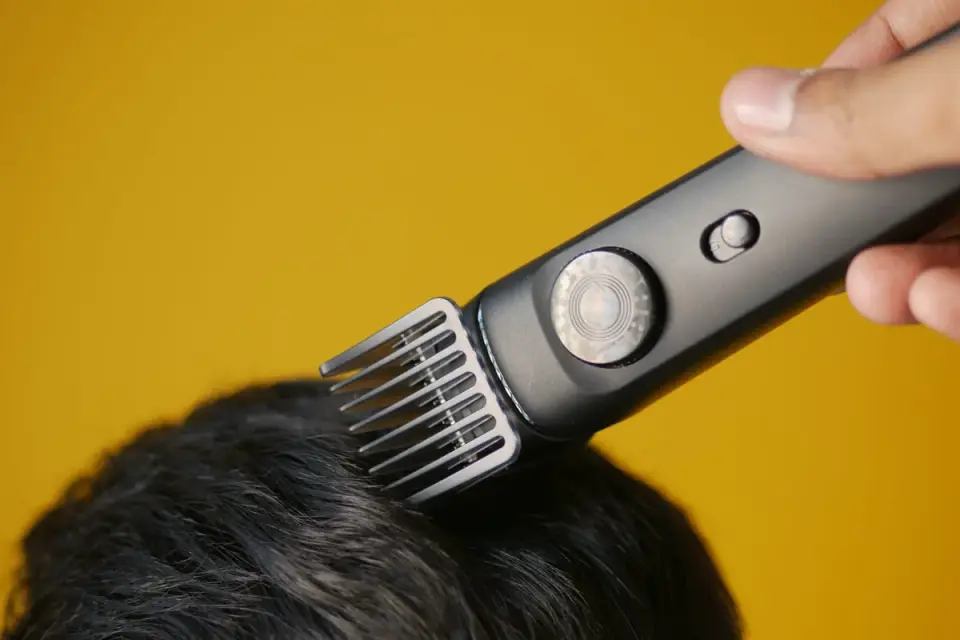
Clippers exist to remove a lot of hair evenly, fast, at a consistent length. That’s their entire job. The blade number on the clipper determines how short it cuts — according to the PBS Animal Health Andis blade guide, higher numbers cut shorter, with a size 10 blade leaving roughly 1.5mm of hair (a “medium cut”) and a size 40 cutting nearly to the skin for surgical-style close work. Skip-tooth blades are built for coarser, thicker coats that would otherwise clog a standard blade.
This is where most at-home mistakes start: grabbing whatever blade came in the kit instead of matching the number to the coat and the goal. A blade meant for a sanitary trim around the belly is not the blade you want gliding down a double-coated dog’s back. Comb attachments buy you more length above what the bare blade allows, which is the safer starting point if you’re not sure.
Double coats deserve a specific callout. Breeds with a dense undercoat under a coarser topcoat — the kind you’ll see discussed in our guide on grooming a German Shepherd through coat blow — shed seasonally in a way scissors simply can’t keep up with. A clipper, paired with the right undercoat tools, is the only realistic way to manage that volume of loose hair during a heavy blow.
Where Scissors Do the Job Better
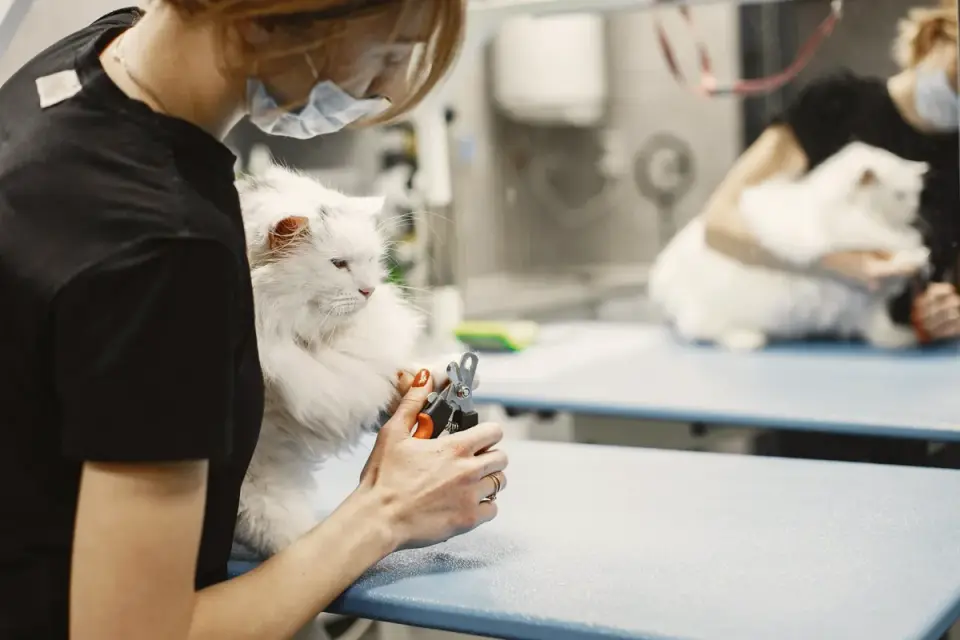
Scissors trade speed for control. That’s the whole trade. A groomer working around a dog’s eyes, ears, paw pads, or a sanitary area is choosing precision over efficiency, because a clipper nick in those spots is a real risk and a scissor slip is usually forgiving by comparison.
Scissors also matter for texture. Breeds with longer, styled coats — Poodles, Shih Tzus, many terrier mixes — need shaping and blending that a uniform clipper pass can’t replicate. And for a dog who genuinely can’t tolerate clipper noise or vibration, hand scissoring, done patiently, may be the only grooming option that doesn’t turn every session into a fight.
One short truth worth sitting with: scissors ask more of the person holding them.
They demand a steadier hand, more time, and a better read on a dog’s body language, because you’re working closer to the skin without a guard between the blade and the coat. That’s not a reason to avoid them. It’s a reason to build the skill gradually, starting with easy areas like the tail or leg feathering before attempting a face trim.
The Blade Number Question Nobody Explains Well
If you’ve stood in a grooming aisle staring at a wall of blade numbers, you’re not alone. Blade numbering is standardized across major brands under what’s often called the A5 universal system, so a #10 blade cuts to roughly the same length whether it’s made by Andis, Oster, or Wahl. That consistency matters if you’re building a small blade collection over time instead of guessing fresh with every purchase.
For most home groomers, two or three blades cover the majority of needs: a longer guard comb for body maintenance, a shorter blade for sanitary and paw-pad trims, and possibly a mid-length option for dogs who get a shorter all-over cut. You don’t need the full professional set unless you’re grooming multiple dogs or breeds with very different coat demands.
Reading Your Dog, Not Just the Coat Chart
A senior client of mine, a fourteen-year-old Cocker Spaniel named Biscuit, used to sit calmly through clipper work for years. Around her thirteenth birthday, her owner noticed she’d started trembling and trying to climb off the table the moment the clipper motor started, even on the lowest vibration setting. Nothing about her coat had changed. What had changed was her hearing sensitivity and her joints — standing still on a table for a twenty-minute clipper session had become physically uncomfortable in a way it hadn’t been two years earlier. Her groomer switched her to shorter, scissor-based sessions with more breaks, and the anxiety mostly disappeared. The coat came out a little less uniform than a full clipper cut would have produced. Nobody minded. That’s the kind of tradeoff a chart can’t make for you, and it’s worth watching for as dogs age.
Coat type gets most of the attention in tool comparisons, but skin sensitivity, mat history, and a dog’s tolerance for noise and handling matter just as much. A dog prone to matting between grooming sessions may need clipper touch-ups more often than the coat type alone would suggest — which ties into a broader question worth working out separately, covered in our piece on how often you should bathe a dog, since bathing frequency and coat maintenance between cuts are linked.
It’s also worth remembering that clippers and scissors aren’t really competing with your other coat-care tools — they’re part of the same toolkit as a slicker brush or undercoat rake. If you’re still sorting out which brushing tool your dog’s coat calls for, our comparison of a slicker brush vs. undercoat rake covers that decision in the same practical terms.
Where This Leaves You
Most owners don’t need to pick a side. They need to know which tool solves the problem sitting in front of them today. A short-coated dog getting an even, all-over trim is a clipper job. A dog needing precision around the face, ears, or a healing skin issue is a scissors job. A heavily double-coated dog in the middle of a seasonal blow needs both, plus a good undercoat tool.
Professional standards bodies like the National Dog Groomers Association of America exist partly because tool selection and technique are skills that take real practice to get right, not just equipment to buy. If your dog has a complicated coat, sensitive skin, or a history of matting, a session or two with a professional groomer before you commit to home clipping can save both of you a rough first attempt.
So which does your dog actually need — a clipper for volume, scissors for precision, or both, depending on the week?
Frequently asked questions
Can I use human hair clippers on my dog?
Human clippers aren't built for the thickness and density of most dog coats and tend to overheat or bog down quickly; dog-specific clippers with the correct blade number are the safer choice for anything beyond a quick touch-up.
Do I need both clippers and scissors, or can I pick one?
Many coats only need one tool for routine maintenance, but double-coated and longer-haired breeds usually need both — a clipper for bulk and undercoat, scissors for finishing around the face, ears, and paws.
Sources
- Andis Blade Guide — PBS Animal Health
- About NDGAA — National Dog Groomers Association of America