On this page
Chew toys satisfy an oral, largely physical drive. Puzzle toys recruit a foraging and problem-solving circuit that lives somewhere else in the brain entirely. Neither one is the “upgrade” version of the other, and picking wrong is why a lot of enrichment budgets get spent on toys that sit untouched by week three.
A ten-month-old Vizsla named Copper came into my exam room a few years back, chewing his way through a third couch cushion in two months. He weighed 42 pounds, ate on schedule, walked forty minutes a day, and still tore into anything foam the second his owners left for work. They’d tried three different “indestructible” chew toys, and none of them held his attention past the front door closing. What changed things wasn’t a tougher rubber — it was a snuffle mat and a treat-dispensing puzzle added to his morning routine. Copper wasn’t under-chewed. He was under-occupied. That distinction is the whole article, and it’s worth sitting with before you buy anything.
Start Here: A Working Checklist
Before the mechanism talk, here’s what I actually ask owners to check, in order:
- Is the behavior happening only when the dog is alone? That points toward boredom, confinement stress, or mild separation anxiety — puzzle-toy territory.
- Is the dog under six months old? Teething drives a lot of chewing on its own timeline; a durable chew toy matters more here than a puzzle. See our guide on when puppies stop teething for the age ranges.
- Does the dog finish a walk and still seem “wound up” rather than settled? That’s often a mental-fatigue gap a chew toy alone won’t close — worth reading why your dog won’t settle in the evening.
- Is the household destruction pattern targeted (shoes, corners of furniture) or diffuse (anything within reach)? Targeted usually resolves with better chew-toy variety; diffuse usually needs mental load, not just jaw load.
- Has the toy been in rotation for more than three weeks? Novelty matters for puzzle toys specifically — a puzzle a dog has mastered stops doing its job.
The Teething Window Comes First
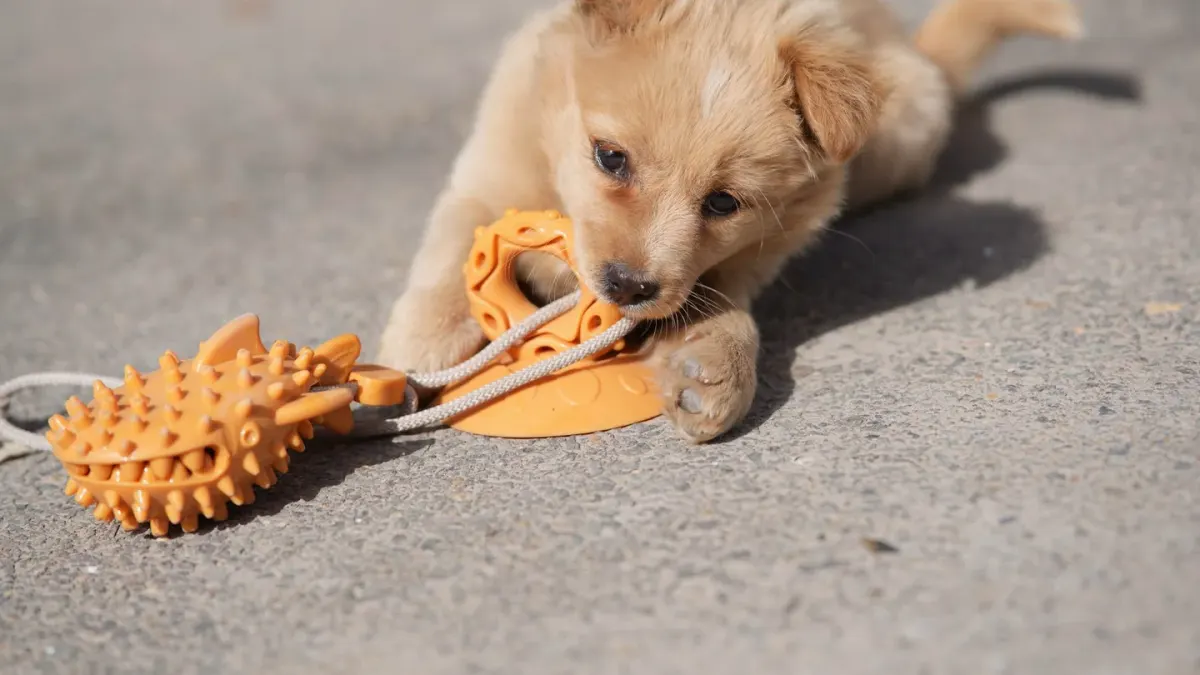
For puppies roughly three to six months old, chewing is developmentally normal, not a behavior problem to solve. According to VCA Animal Hospitals, dogs chew to investigate their environment, and teething-age puppies chew on household objects as part of that developmental stage. VCA also notes that offering toys with “a variety of tastes, odors, and textures” helps identify what a given puppy actually prefers, and that stuffing and freezing a toy extends how long it holds interest.
This is where a straightforward chew toy usually wins over a puzzle toy. A teething puppy isn’t bored in the cognitive sense — the gums are uncomfortable, and gnawing is the relief behavior. A frozen, food-stuffed chew does double duty: it soothes the mouth and gives a first, gentle taste of “working for food,” which sets up puzzle toys later without overwhelming a brain that’s still building basic impulse control.
Adolescence Is Where the Two Get Confused
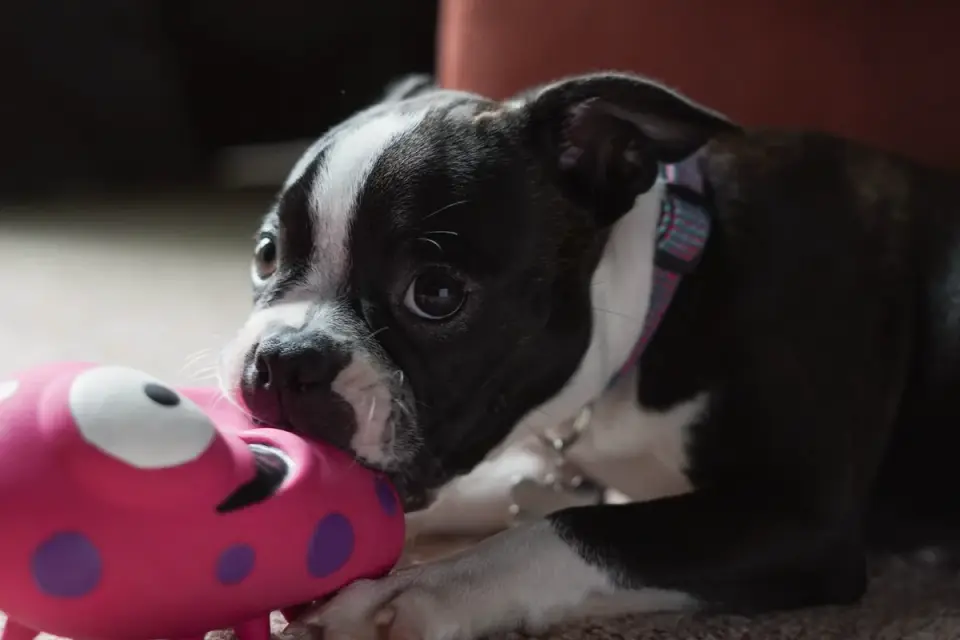
Somewhere between five months and two years, most owners hit the wall Copper’s owners hit: the dog is physically tired but still destructive. This is the age range where I see the most mismatched gear. Owners keep buying tougher chew toys for a problem that isn’t really about toughness — it’s that an adolescent dog’s brain is asking for a job, and a chew toy, however durable, doesn’t ask anything of the dog beyond bite force.
Puzzle toys close that gap because they recruit foraging behavior specifically. Research on kenneled dogs found that dogs given food-dispensing toys barked less, were more active, and spent more time engaged with food than dogs without them, according to a guide from the American Veterinary Society of Animal Behavior. The same guide describes the so-called “Eureka” effect — dogs, in some studies, show more positive engagement when they work for a reward than when it’s simply handed to them. None of that means a puzzle toy fixes true separation anxiety on its own, and it isn’t a substitute for addressing pain or a medical driver of restlessness. It means the mental-work piece is doing something a chew toy structurally cannot.
If daily walks aren’t cutting the edge off an adolescent dog, mental fatigue is usually the missing variable, not physical fatigue — our piece on mentally tiring a dog that can’t exercise goes deeper into that substitution.
Adulthood: Building an Actual Rotation
By the time a dog is a settled adult, the honest answer is that most households need both categories, rotated rather than chosen once and forgotten. I tell owners to think of a chew toy as the baseline — something available most of the time, replaced when worn — and a puzzle toy as the variable, swapped every couple of weeks so the dog can’t fully “solve” it and lose interest.
That rotation only works if the gear stays clean enough to keep offering. Food residue in a puzzle toy’s channels or a chew toy left slick with saliva both become a reason a dog loses interest or, worse, a hygiene issue — worth checking our guide on cleaning and disinfecting dog toys if a toy that used to hold attention suddenly doesn’t.
One short note here: size and jaw strength matter more than most owners budget for. A puzzle toy sized for a Cavalier will get destroyed, not solved, by a Labrador working the same problem.
Senior Dogs and the Cognitive Angle
This is the stage where my own bias shows. In a neurology practice, I reach for both the imaging study and the acupuncture needle — I want the objective picture and the modality that fits the whole patient, not one tool applied reflexively. Chew-versus-puzzle in a senior dog is the same instinct in miniature: you want to know what’s actually driving the behavior before you pick the toy.
I worked with a fourteen-year-old spayed female Beagle, Daisy, about 24 pounds, whose owner noticed she’d stopped finishing her stuffed chew toys and seemed to “forget” where she’d hidden them mid-session — something that hadn’t happened a year earlier. That kind of change is worth a conversation with your veterinarian about age-related cognitive decline before assuming it’s just pickiness, because the workup and the enrichment plan aren’t competing choices; they run in parallel. Once medical causes are on the table and addressed, food puzzles that are simplified rather than abandoned can keep a senior dog’s foraging circuit engaged longer than a plain chew, which mostly just occupies the mouth. A chew toy still matters for a senior dog’s jaw comfort and routine, but it isn’t doing the cognitive-maintenance job a puzzle can.
Where This Leaves You
Structure/function framing matters here, not marketing framing: quercetin, resveratrol, and similar compounds sometimes marketed for “cellular support” in aging dogs are a separate conversation from toy selection entirely, and nothing about enrichment gear changes that a real workup comes first when a senior dog’s behavior shifts.
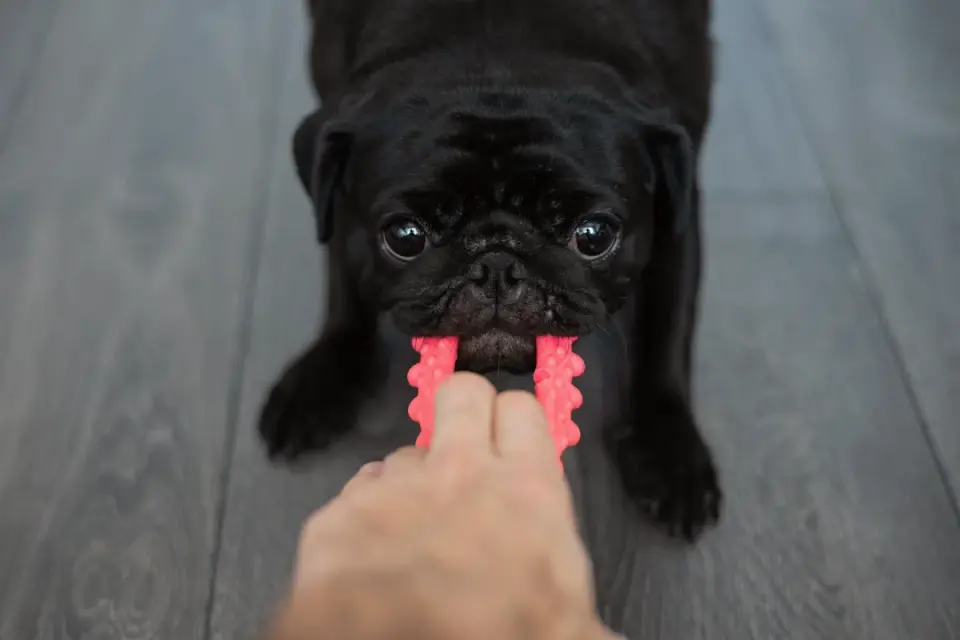
If you take one thing from Copper’s case and Daisy’s, it’s that the toy aisle isn’t really the decision point — the dog’s stage of life and the specific behavior you’re seeing are. A teething puppy needs a chew. A bored, physically-tired-but-still-destructive adolescent usually needs a puzzle added, not a tougher chew swapped in. A settled adult typically needs both, rotated. A senior dog needs the same dual instinct I use in the exam room: get the picture, then match the tool.
So which one is your dog actually asking you for right now?
Frequently asked questions
Can a puzzle toy replace daily walks?
No. Puzzle toys address mental engagement, not cardiovascular exercise or muscle conditioning — most dogs need both physical activity and mental work, not one substituting for the other.
My dog ignores puzzle toys after a few days. Is something wrong?
Usually not — it's typically the "Eureka" novelty effect wearing off once a dog has mastered a puzzle's pattern. Rotating puzzles every couple of weeks, per the American Veterinary Society of Animal Behavior's guidance, tends to keep engagement higher than leaving one out indefinitely.
Is a chew toy enough for an under-exercised, destructive adolescent dog?
Often not on its own. A chew toy occupies the jaw but doesn't recruit the same foraging and problem-solving behavior a puzzle toy does, which is frequently the missing piece in adolescent destructive chewing.
Sources
- Dogs and Destructive Chewing — VCA Animal Hospitals
- A Guide to Using Food Puzzle Toys with Your Dog — American Veterinary Society of Animal Behavior