On this page
A twelve-year-old Lab mix named Otis came into my exam room a while back dragging his back feet just slightly on the turn, the kind of subtle change an owner notices before any test does. His people had already cut his walks from forty minutes to a careful loop around the yard, and they were worried he’d spend the rest of his evenings restless and understimulated. That worry is common, and it’s usually solvable. A dog who can’t walk far still has a brain that wants a job to do, and there are several ways to tire out a dog that can’t walk the way it used to.
The starting point is separating physical fatigue from mental fatigue. They aren’t the same system. A dog recovering from orthopedic surgery, living with degenerative myelopathy, or simply aging into stiffer hips can still engage in scent discrimination, problem-solving, and short bursts of learning without loading the joints or spine the way a brisk walk does. The goal isn’t to replace the walk’s cardiovascular value. It’s to give the dog’s nervous system something substantial to chew on so restlessness has somewhere to go.
Why the Brain Gets Tired Too
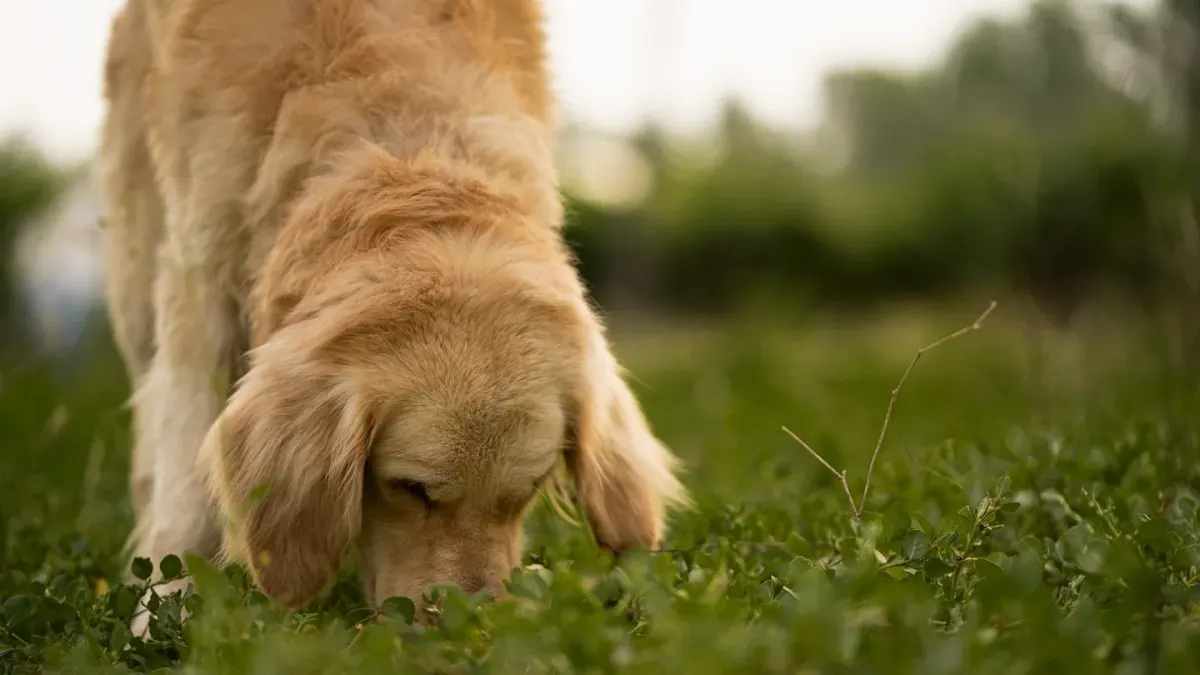
Dogs process an enormous amount of their world through olfaction, and asking that system to work in a focused, goal-directed way is metabolically demanding in a way that idle sniffing on a walk isn’t. That’s the mechanism behind why scent games tend to leave dogs calmer afterward rather than amped up. It isn’t a substitute for muscle work. It’s a different kind of work, and for a dog whose limiting factor is mobility rather than energy, that distinction matters.
Scent Work as the Default Substitute
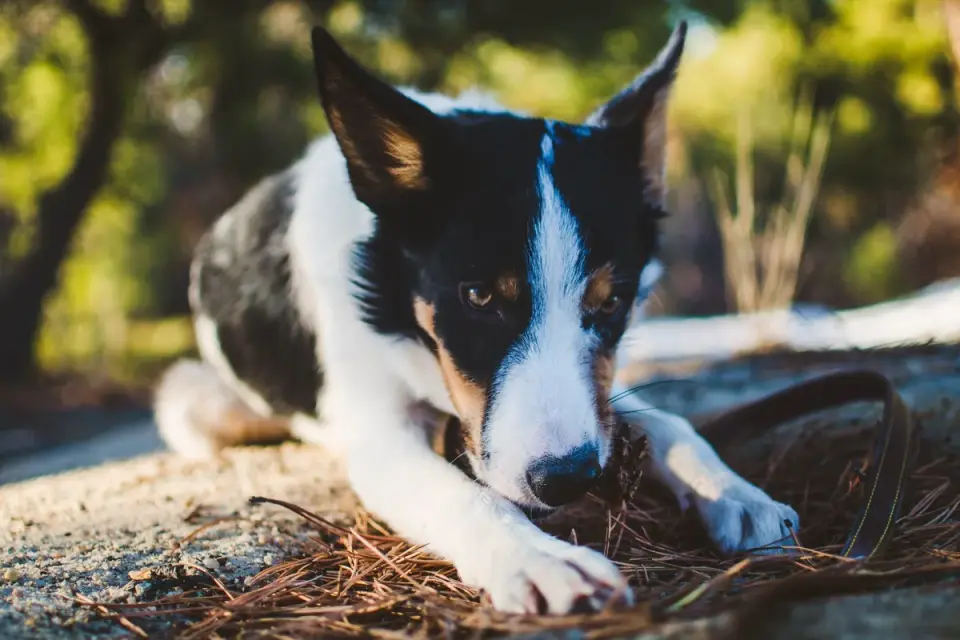
Start simple. Scatter a handful of kibble in a snuffle mat or across a low-pile rug and let the dog forage at its own pace, standing or lying down as needed. Once that’s easy, hide treats in a muffin tin under tennis balls, or under a few overturned cups the dog has to nose aside. None of this requires more than shifting body weight, which makes it appropriate for dogs recovering from surgery or managing chronic pain, provided a veterinarian has already cleared that activity level.
More structured nose work — teaching a dog to indicate a scented cotton swab hidden among several blank ones — takes this further and asks for real discrimination rather than just foraging. It’s worth introducing gradually, since a dog new to the task can get frustrated before it gets good at it.
Puzzle Feeders and Foraging Games
Commercial puzzle feeders range from simple sliding-lid trays to multi-step towers, and matching the puzzle’s difficulty to the dog is the part people skip. A dog that’s never worked for food will disengage fast if the first puzzle is too hard, and a dog with limited neck or spinal mobility may need a puzzle that works at floor height rather than one it has to paw upright. PetMD’s rundown of enrichment options is a reasonable starting map for matching format to a dog’s physical limits. Slow feeders that double as puzzles let a dog work through an entire meal this way instead of adding treats on top of regular food.
The evidence on puzzle toys specifically is more mixed than marketing suggests, with outcomes depending heavily on the individual dog and how the puzzle is introduced. Rover’s review of the research is a fair-minded look at where puzzle toys genuinely help and where the claims outrun the data, and it’s worth reading before assuming any single puzzle will land the same way for every dog.
Short Training Bursts
Five minutes of nose-targeting, hand signals, or trick work most dogs can do from a sit or a down covers ground that walking used to. Training taps working memory and impulse control, both of which are genuinely tiring in a way that’s easy to underestimate. Keep sessions short and end on an easy win rather than pushing until the dog checks out.
This is one of the few single-sentence notes worth its own paragraph: consistency beats intensity here.
When Pain Is the Ceiling, Not Boredom
It’s worth saying plainly that an enrichment plan is not a substitute for treating the underlying reason a dog can’t walk. In my own practice, that often means combining conventional pain management with adjunct approaches such as acupuncture, which some owners and clinicians find may help support comfort and willingness to engage, alongside — never instead of — a diagnosis-driven medical plan. If a dog seems unwilling to participate in even low-effort games, or seems worse the day after, that’s a signal to revisit the medical picture with your veterinarian before assuming it’s a training problem.
Building the Routine
Rotate two or three formats across the week — a snuffle mat one day, a scent-discrimination game the next, a short training session on a day the dog seems stiffer — rather than repeating the same puzzle daily until it stops working. The AAHA Senior Care Guidelines for Dogs and Cats frame mental stimulation as a core part of quality-of-life care for aging and mobility-limited dogs, not an optional extra, and that framing holds up in practice. Otis, for what it’s worth, settled into a rhythm of a morning snuffle mat and a short evening training session, and his people reported he slept through the night again within a couple of weeks.
What would change first in your dog’s evening if the walk got shorter tomorrow — the restlessness, or your own sense that something’s missing?
Frequently asked questions
Can mental games really replace a walk?
They won't rebuild cardiovascular fitness, but for a dog whose limiting factor is joints or neurologic function rather than stamina, scent and puzzle work can meaningfully round out the day when walking distance is capped.
How long should a scent game session last?
Five to ten focused minutes is plenty to start. Watch for the dog disengaging or lying down between finds, which usually signals it's had enough for that session.
Is it okay to do enrichment games if my dog is in pain?
Only within whatever activity level your veterinarian has cleared. If a dog won't settle afterward, or seems more reluctant to move the next day, that's a sign to dial the difficulty or duration back and revisit pain control.