On this page
A dog who won’t calm down at night is usually signaling discomfort, anxiety, or a cognitive shift, not defiance.
That distinction matters because the three causes look almost identical from the couch. Pacing, panting, whining, circling near the bedroom door — a sore hip, a worried mind, and an aging brain can all produce that same restless loop after the lights go out. Untangling which one you’re actually looking at is most of the work, and it’s worth doing before reaching for any fix.
Pain That Only Shows Up Once the Dog Lies Still
Arthritis and other joint or spinal discomfort are among the most common, and most missed, drivers of nighttime unsettledness in dogs past middle age. Many dogs compensate well enough during the day that owners see nothing wrong. It’s only once the dog lies down, blood flow to inflamed joints drops, and stiffness sets in that the discomfort peaks and the dog gets up again, resettles, and repeats the cycle for hours.
A 2015 study published in PeerJ tested this connection directly in dogs with naturally occurring osteoarthritis, using an owner-completed nighttime restlessness scale alongside activity monitors. The accelerometer data didn’t move much with treatment, but the owner-reported restlessness score picked up a real improvement when the dogs received a pain-control medication, with a statistically significant treatment effect. In plain terms: owners could feel that their dogs slept better on pain control even when a wrist-worn activity tracker couldn’t show it. That’s a useful reminder that owner observation is a legitimate diagnostic data point, not just anecdote.
Anxiety That Waits Until the House Goes Quiet
Separation-related anxiety and general nighttime anxiety often intensify precisely when the household settles down. A dog who’s been fine all day with people moving around can unravel once the lights dim and everyone stops interacting with him: no more supervision, no more company, and for some dogs, an unmistakable cue that the pack is dispersing for hours. New pets, a recent move, a change in routine, or even a shift in who’s sleeping where can all set this off.
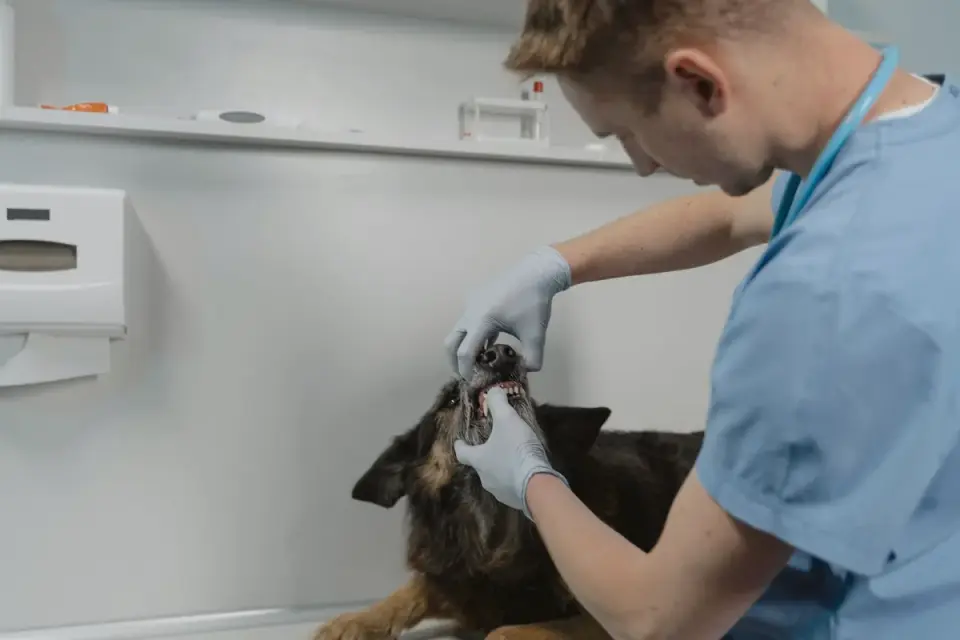
Here’s where I’d genuinely reach for both the imaging study and the acupuncture needle, because anxiety and pain are so often tangled together in the same dog. A dog who starts out sore frequently develops anxiety-driven sleep disruption layered on top, and by the time the pacing is obvious, the two have merged into one presentation. Western workup — a full physical, targeted bloodwork, imaging where indicated — pairs naturally with calming, low-risk supportive approaches like acupuncture or targeted food therapy once organic disease has been reasonably ruled out. Neither modality is being asked to cure anything here; both are being used to help support a calmer, more comfortable dog while the real driver gets addressed.
When It’s the Brain, Not the Body
In dogs generally past ten years old, disrupted sleep-wake cycling is itself recognized as a sign of canine cognitive dysfunction, sometimes nicknamed “sundowning” for the way symptoms intensify in the evening. A cognitively declining dog can lose its internal read on day versus night altogether, so darkness itself becomes disorienting rather than a cue to rest. Some of the pathology researchers describe overlaps meaningfully with what’s seen in human Alzheimer’s disease, a parallel discussed at length in Frontiers in Neuroscience, including shared patterns of age-related brain change.
This is the category where owners most often mistake the pattern for stubbornness or a bad habit. It rarely is. A dog getting stuck behind furniture, staring blankly at walls, or forgetting a well-worn nighttime routine is showing you a nervous system change, not defiance.
Sorting Out Which One You’re Dealing With
None of these three categories rule each other out, and in practice they frequently overlap in the same dog. A reasonable approach starts with a full veterinary exam aimed specifically at pain sources, since discomfort is both common and treatable. From there, a history focused on when the behavior started, what else changed in the household, and whether daytime confusion is present too usually points toward anxiety, cognitive decline, or both.
What Actually Helps at Home
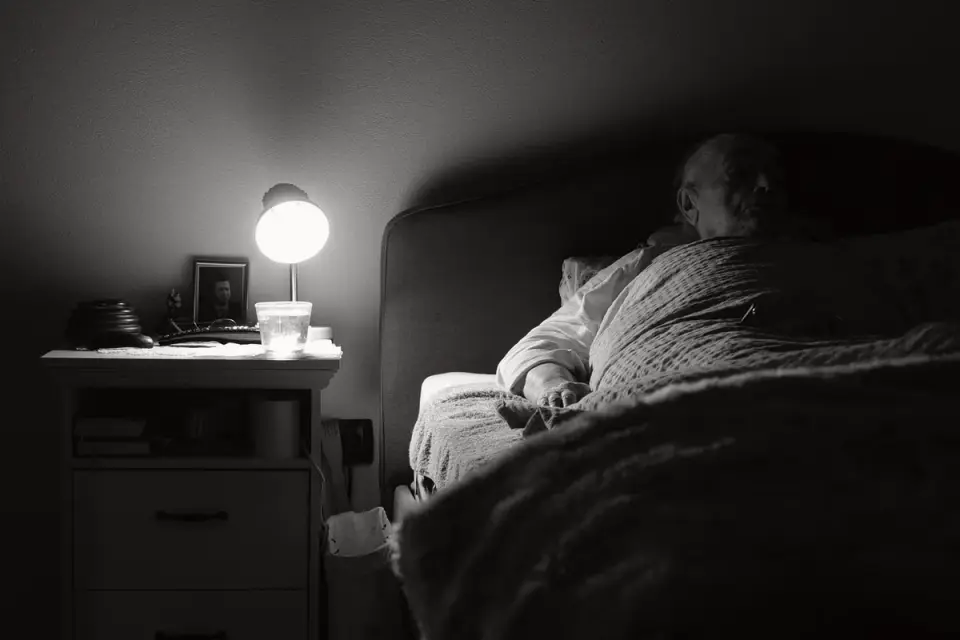
While you and your veterinarian sort out the underlying driver, a few structural changes tend to help across the board. A consistent bedtime routine gives an anxious or cognitively declining dog a predictable cue that the day is ending. A supportive, appropriately sized sleep surface reduces the joint pressure that makes lying still uncomfortable for a sore dog. A nightlight in the hallway can reduce disorientation for a dog whose vision or spatial sense has started to slip. None of these replace a diagnosis, but they lower the baseline stress load while you get one.
If the pattern is new, worsening, or paired with other changes — appetite shifts, increased thirst, house-soiling, or daytime confusion — that combination is worth a veterinary visit sooner rather than later. Nighttime restlessness is a symptom, and symptoms are how a body, and sometimes a brain, tells you something changed.
Frequently asked questions
Is it normal for a dog to get worked up every single evening?
Occasional evening zoomies from pent-up energy are normal, especially in young, high-drive dogs. A dog who can't settle most nights, especially if it's a new pattern, is telling you something is off and deserves a veterinary look rather than a shrug.
Could my dog's nighttime restlessness be arthritis even if he's not limping?
Yes. Many dogs mask limping while moving and only show discomfort once they lie still and blood flow to inflamed joints drops. A vet exam, sometimes with imaging, is the only reliable way to rule this in or out.
How do I tell anxiety apart from cognitive decline in an older dog?
It's genuinely hard to separate them by eye alone, since both produce pacing and vocalizing after dark. Onset pattern helps: cognitive decline tends to build gradually alongside daytime confusion, while anxiety often has a more identifiable trigger.