On this page
There’s a decision point every puppy owner hits, usually around the four-month mark: the toy basket that worked in month two suddenly looks wrong. The soft ropes are shredded, the tiny rubber rings disappear inside an adult-sized mouth, and the puppy is chewing harder and longer than before. Do you keep buying “teething” toys, or move to adult chew gear? The honest answer is that it isn’t a single switch — it’s a staged handoff that tracks the mouth itself.
In my practice, I’ve watched this play out on a predictable clock more often than owners expect. A Labrador retriever puppy I worked with, Otis, came in at 14 weeks with his owner convinced something was wrong — he’d stopped eating his morning kibble eagerly, was drooling more than usual, and had started gnawing the corner of a wooden end table. Nothing was wrong. He was 26 pounds, right in the window where the incisors loosen and the canines start pushing up behind them, and the couch corner was simply the hardest, coolest surface in the house. We talked through swapping his soft puppy ropes for a firmer rubber chew he could gnaw at will, and rotating a frozen washcloth in for the worst days. By 20 weeks his gums had settled and the table corner was forgotten.
What’s actually happening in a teething puppy’s mouth
Puppies are born without teeth and erupt a full set of 28 deciduous — baby — teeth by roughly six to eight weeks of age, according to Teeth, Teething and Chewing in Puppies: VCA Animal Hospitals. Those baby teeth are placeholders: thin-walled, sharp, and never meant to handle real mechanical load. The real teething event, the one owners feel as constant chewing and sore gums, starts when the permanent teeth begin pushing the deciduous roots to resorb, forcing the baby teeth out from underneath.
That process is not instantaneous, and it doesn’t happen tooth-by-tooth in one afternoon. Per the Puppy Teething Timeline from AKC, incisors are usually the first to loosen and fall, typically between 12 and 16 weeks of age, followed by the canines and premolars between roughly 16 and 24 weeks. By around six months, most puppies have all 42 adult teeth in place and have shed all 28 baby teeth. That’s the practical answer to “when do puppies stop teething” — the active discomfort phase is largely resolved by six months, though individual dogs, and especially small and toy breeds, can run a few weeks later.
Why the toy basket needs to change with the mouth, not the calendar
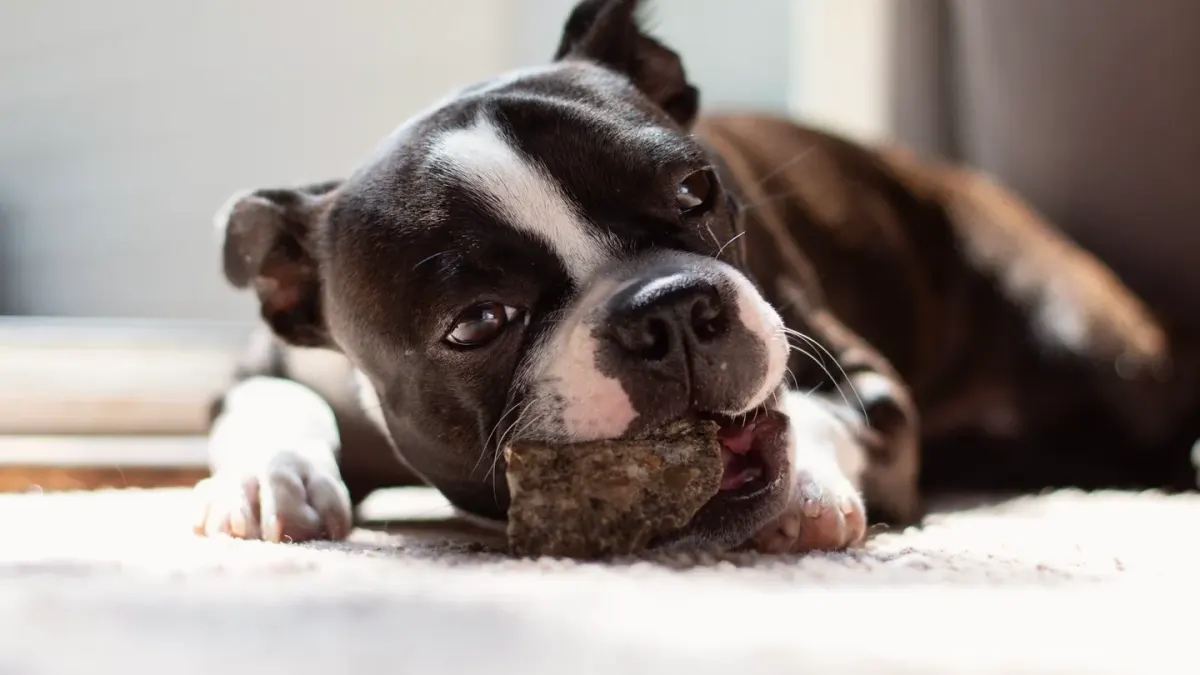
The mistake I see most often isn’t choosing the wrong toy — it’s picking a toy for the puppy’s age instead of the puppy’s mouth. A 10-week-old puppy with paper-thin baby teeth needs texture and give: something a bit soft, chilled if possible, that won’t chip an unset tooth. A 16-week-old puppy mid-eruption, gums inflamed and jaw strength climbing fast, needs something firmer that can take real pressure without splintering, but still forgiving enough not to fracture a tooth that’s still finishing its root. A seven-month-old with a full adult bite is a different animal entirely — full jaw strength, no more loose teeth, and now the durability question is about the toy surviving the dog, not the other way around.
This is where I’d push back on a common owner instinct: buying the hardest, most “indestructible” chew the moment the baby teeth are gone. Adult canine teeth are still maturing enamel and periodontal attachment for weeks after they erupt, and an overly rigid antler or nylon chew can fracture a tooth that looks adult-sized but isn’t fully seasoned. The counterargument — that a tougher toy simply lasts longer and saves money — is fair from a durability standpoint, but it ignores the biology of a mouth that’s only just finished changing over. I’d rather see owners step up chew firmness gradually across the six-to-nine-month window than jump straight to the toughest option on the shelf.
Feeding matters here too, in a way owners rarely connect to teeth. A puppy going through active tooth eruption is also building the jaw and skull structure that adult chewing depends on, and appropriate growth nutrition — not supplements, just a complete, balanced puppy diet — supports that skeletal development running in parallel with tooth eruption. It’s a reminder that a chew toy is one piece of a bigger developmental picture, not a substitute for it.
Reading the signs that teething is actually over
Retained baby teeth are the wrinkle that makes “just wait until six months” incomplete advice. According to Persistent Deciduous Teeth (Baby Teeth) in Dogs: VCA Animal Hospitals, some deciduous teeth — canines especially, and disproportionately in small and toy breeds — fail to fall out even after the permanent tooth has erupted alongside them, so the two sit side by side. That’s not cosmetic: it can crowd the permanent tooth into a bad angle, trap plaque, and predispose the dog to early periodontal disease. If you can still see or feel a baby tooth next to its full-sized adult replacement past six to seven months, that’s worth a veterinary look rather than assuming it will resolve on its own.
A one-line home check is genuinely useful here. Lift the lip and count: by around seven months a puppy’s mouth should show no doubled-up teeth and no obvious gum inflammation.
Once a vet confirms the mouth is clear, that’s the real signal to retire the dedicated “teething toy” category and shift fully into adult chew gear — rated for a grown dog’s bite force rather than a puppy’s transitional one.
Bringing the puppy through to an adult chew rotation
By the time Otis was eight months old, his owner had swapped almost the entire toy bin — the soft ropes and small rubber rings were gone, replaced by two firmer rubber chews sized for his adult jaw and a slow-release food puzzle for the mental work his adolescent brain now needed. That’s the arc most puppies follow: soft and cold in the first teething wave, moderately firm through the eruption peak, then a genuine step up to adult-rated durability once the vet check confirms the mouth is settled. If your puppy is still losing teeth well past six months, or if you can feel a double row anywhere in the mouth, that’s the cue to call the vet before you call it teething. What would you notice first in your own dog — the drooling, the chewing target, or the moment the toy basket just stops working?
Related reading: How to Clean and Disinfect Dog Toys, Best Training Treats for Dogs: A Buyer’s Guide to Size, Value, and Ingredients, and Independence Training for a Velcro Dog cover related stages of early puppy management.
Frequently asked questions
When do puppies stop teething completely?
Most puppies finish losing baby teeth and erupt all 42 adult teeth by around six months of age, though small and toy breeds sometimes run a few weeks later.
What if a baby tooth doesn't fall out?
A retained deciduous tooth sitting beside its adult replacement past six to seven months isn't normal and should be checked by a veterinarian, since it can crowd the permanent tooth and trap plaque.
Should I switch straight to the hardest chew toy once the baby teeth are gone?
Not right away — newly erupted adult teeth are still maturing, so stepping up chew firmness gradually over the following weeks is gentler than jumping straight to the toughest option.
Sources
- Teeth, Teething and Chewing in Puppies — VCA Animal Hospitals
- Puppy Teething Timeline — How Long Does Puppy Teething Last? — AKC
- Persistent Deciduous Teeth (Baby Teeth) in Dogs — VCA Animal Hospitals