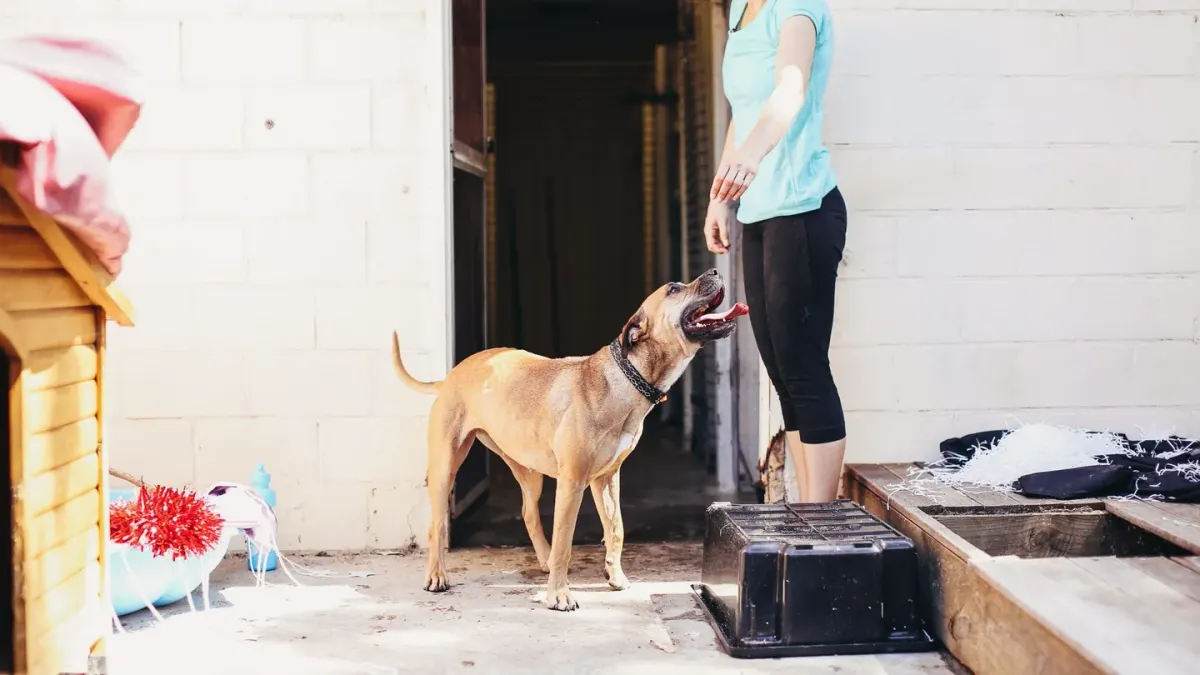
On this page
Before picking up a bag, run down this list. It covers what actually changes a treat’s usefulness at the leash, not marketing copy on the front of the package.
- Size: small enough to swallow in one bite, not chew — pea-sized for most dogs, rice-grain-sized for toy breeds or puppies just starting out.
- Texture: soft or slightly moist beats hard and crunchy for pure training speed.
- Calorie density: aim under 3–5 calories per piece so a 20-repetition session doesn’t blow the day’s budget.
- Scent strength: stronger aroma for high-distraction environments; milder for quiet living-room drills.
- Ingredient transparency: a named protein first, a calorie count per treat, and no vague catch-all fillers.
Each of those criteria earns its place for a specific mechanical reason, and they interact — a treat that nails size but skips calorie density will still throw off a dog’s daily intake by the end of a long session.
Why size beats almost everything else
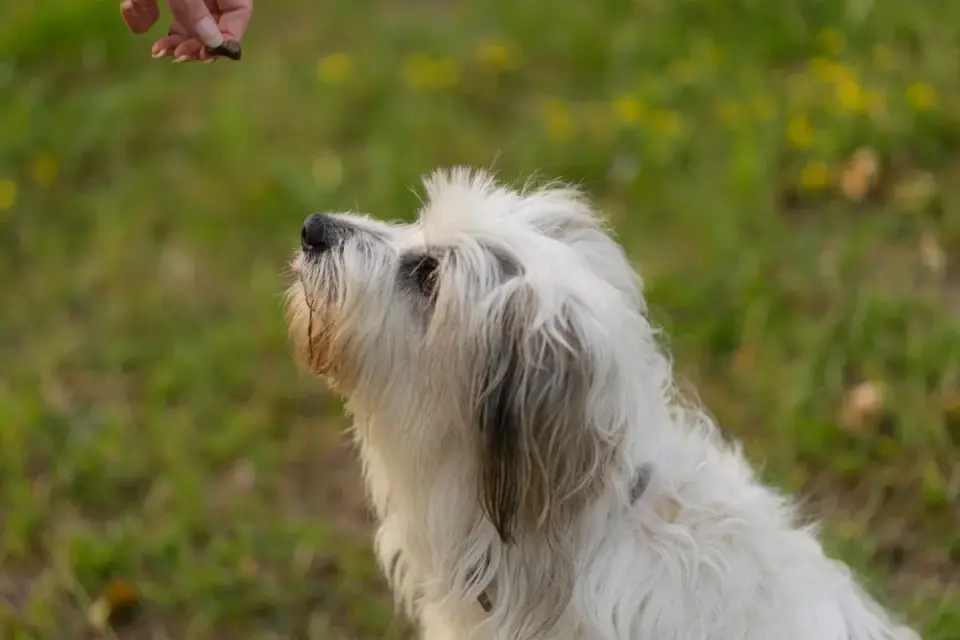
A treat that takes fifteen or twenty seconds to chew breaks the timing loop a dog needs to connect a reward to the behavior that earned it. That’s the whole argument for going smaller than feels natural: the goal isn’t to satisfy the dog, it’s to mark a moment. Trainers commonly aim for pea-sized pieces for medium and large dogs, dropping to something closer to a grain of rice for toy breeds, whose full daily calorie allowance is small to begin with. If you’re working with a small-breed dog on structured movement or recall work, the calorie math gets tight fast — our guide to exercise for toy and small breeds covers how little daily surplus these dogs actually have to work with, which is the same constraint that shapes treat sizing.
The 10% rule, and why it isn’t arbitrary
The most consistent guidance across veterinary nutrition resources is that treats — training rewards included — should stay under roughly 10% of a dog’s total daily calories, a figure both AKC and Purina point to. Go much past that and treats start displacing the nutritionally complete food that’s actually formulated to meet a dog’s daily requirements. That’s a bigger deal during an active training phase than most owners expect, because a 20-minute session can easily involve 30–50 individual rewards. Trimming the regular meal slightly on heavy-training days, or switching part of the session to a lower-calorie reward, keeps the math from creeping.
Soft, crunchy, or freeze-dried: matching texture to the moment
These three formats aren’t interchangeable, and picking the wrong one for the setting costs you training speed. Soft and semi-moist treats break down almost instantly and release scent fast, which is why they dominate high-distraction work like recall around other dogs. Crunchy biscuit-style treats take longer to eat and work better for calmer, repetitive drills where speed matters less than variety. Freeze-dried single-ingredient treats — often liver or meat — sit in between: they crumble quickly like soft treats but usually carry a stronger, more distinct scent, making them a reasonable high-value option for dogs that have gone stale on their usual soft treat. None of these formats is objectively best on its own — the setting decides which one earns its keep.
Reading the label like it matters, because it does
Check for a named protein source listed first, a stated calorie count per treat or per gram, and ingredient panels that avoid vague catch-all terms. According to UC Davis Veterinary Medicine’s treats guidance, treats are not required to be nutritionally complete the way a dog’s primary diet is, which is exactly why the calorie count and ingredient quality deserve scrutiny — a treat doesn’t have to carry the full nutritional load, but it shouldn’t work against the rest of the diet either. Dogs with known food sensitivities benefit from single-ingredient or limited-ingredient options, and it’s worth checking a treat’s protein source against anything already flagged in a dog’s diet.
A short note here: no treat substitutes for consistent mechanics. The best-formulated reward in the world won’t fix unclear timing or an inconsistent marker cue.
Matching the treat to the job
High-value, strong-scent treats aren’t just for recall — they matter most anywhere a dog needs extra motivation to work past distraction or discomfort. That includes desensitization work, like building tolerance around handling for a dog that startles at touch, which our piece on why a dog growls when petted discusses in the context of reading stress signals during counterconditioning. It also applies to dogs learning a hand-signal vocabulary in place of verbal cues — our guide to training a deaf dog with hand signals leans on the same principle: the reward has to be fast and unmistakably worth the effort, since there’s no verbal praise to bridge the gap between behavior and treat.

When to fade treats out
Once a behavior is reliable across contexts, most trainers shift from a treat on every repetition to an intermittent schedule, then eventually to occasional reinforcement mixed with praise. This isn’t about weaning a dog off food rewards entirely — it’s about not needing a treat in hand for a behavior the dog already performs on cue nine times out of ten. If a previously solid behavior starts breaking down, that’s usually a sign to step back up to a higher-value treat and a shorter distance from distraction, not a sign the dog has forgotten the cue.
Start with the checklist at the top of this guide the next time you’re standing in the treat aisle. Size and calorie count will tell you more about how a treat performs in a real session than anything printed on the front of the bag.
Frequently asked questions
How many treats can I give my dog during a single training session?
There's no fixed number — the limit is calories, not count. Because AKC and Purina both point to keeping treats under roughly 10% of daily intake, a session with 20–30 rice-grain-sized rewards at under 1 calorie each usually fits easily into that budget, especially if you trim the dog's regular meal slightly on heavy-training days.
Do I need a different treat for puppies versus adult dogs?
Not structurally — the same size and calorie logic applies — but puppies often need higher-frequency, higher-value rewards early in shaping a new behavior, then can transition to lower-value treats or praise as the behavior solidifies.
Can I use regular kibble as a training treat?
Yes, for easy or well-established behaviors. Kibble is low-value precisely because it's familiar, which makes it useful for maintenance repetition, but it rarely competes with a distracting environment the way a soft, aromatic treat does.
Sources
- How Many Treats Can I Give My Dog? — AKC
- How Many Treats Per Day for Dogs? Healthy Snacking Guide — Purina
- Treats Guidelines for Dogs — UC Davis Veterinary Medicine