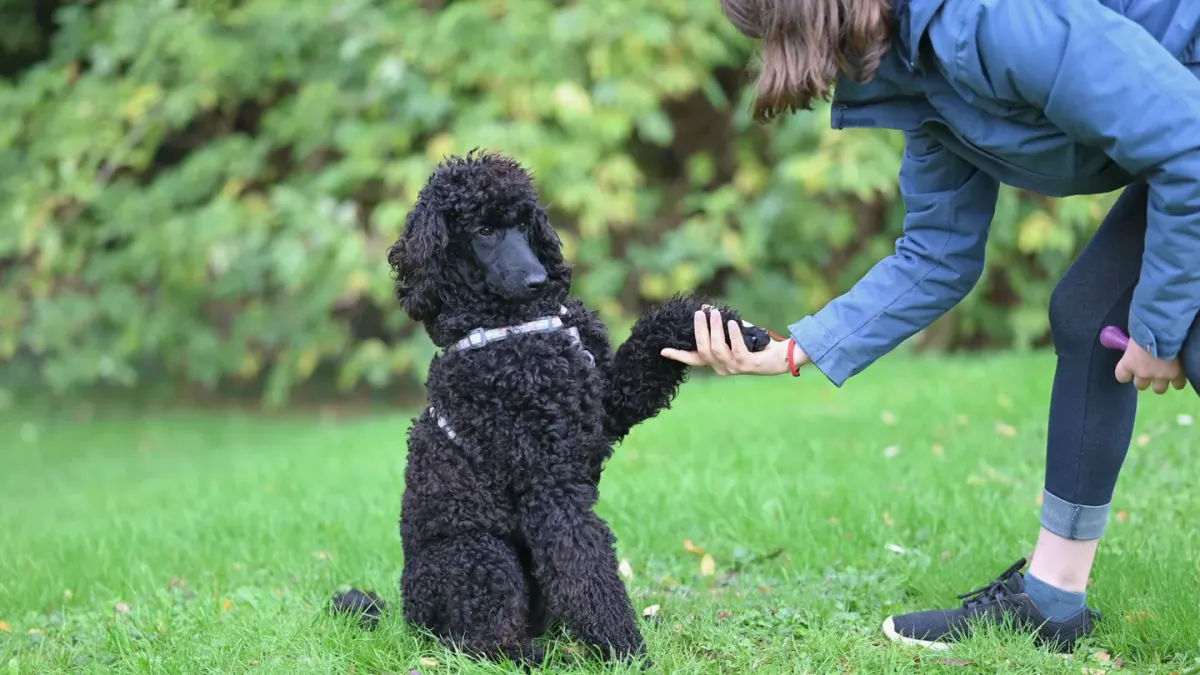
Expectation first: your deaf dog can learn every core skill, but only through sight, touch, and routine. Hearing is not required for sit, down, loose-leash walking, or recall when you replace sound with a clear visual system.
Run through this checklist before your first session:
- Pick one visual marker — thumbs-up or open-flash hand — and pay within 2 seconds every time
- Teach check-in first, cues second; attention is the foundation
- Keep hand signals large, distinct, and one-handed so the leash hand stays free
- Swap the clicker for vibration or light: stomp, collar buzz on lowest setting, or porch-light flash
- Manage startle with a gentle shoulder touch routine, never a grab from behind
- Proof recall on a 30-foot long line before any off-leash time
A 7-month-old medium-mix rescue, 34 pounds and newly adopted, came in after two weeks of no response to her name at home. The owners were weighing two paths: repeat verbal cues louder, or switch fully to visual cues. We chose visual that day. Within four sessions across 10 days, she was offering eye contact at the back door and sitting to a raised palm at 8 feet. The number that mattered was not speed. It was 8 feet of voluntary attention without a leash pop, which told us the marker was landing.
Visual marker first, everything else second
Hearing dogs learn that a click means food is coming. Deaf dogs need the same contract in light. According to AVSAB, reward-based methods may help support learning while protecting welfare, which fits deaf dogs especially well because they cannot hear a warning tone.
Pick a thumbs-up held at chest height. Show the signal, then treat. Repeat 15 to 20 times across two short sessions. You are not teaching a trick yet. You are building the baseline: signal means pause and food happens. Keep treats pea-sized and soft so you can keep rhythm, a point covered in more detail in Best Training Treats for Dogs: A Buyer’s Guide to Size, Value, and Ingredients.
Then add behavior. Lure a sit, flash your marker the instant hips touch, then treat.
Hand signals your whole household can keep
Keep it preventive and simple. Dogs read large body cues better than finger spelling.
- Watch me: point two fingers from your eyes to the dog
- Sit: raised flat palm, palm forward
- Down: flat palm sweeping toward the ground
- Stay: palm forward, then step back one step
- Come: big sweeping arm to your chest
- Good: your marker, thumbs-up
Train one cue at a time for three to five minutes, two to three times daily. Say the verbal anyway if you like, since other household members and future caregivers may use it, but do not wait for the dog to hear it.

A 3-year-old cattle-dog type, solid and strong, had learned to sit beautifully in the kitchen yet blew up on walks after six evening walks in a row ended in lunging. The owner had tried waving treats in front of his nose at the park, which failed because the dog never looked up in the first place. We stepped back to the driveway for five nights and paid only for voluntary check-ins, no cues asked. By night five he was checking in 12 times in 10 minutes. That count changed the plan more than any new cue would have.
That is the tradeoff to accept. Distance and distraction work looks slower because you are rebuilding attention, not testing obedience. If you skip it, signals fall apart outside.
Short sessions protect that progress.
Expectation first on timelines: most adult dogs need four to six weeks of daily practice for reliable indoor cues, longer for outdoor recall. That is normal learning, not stubbornness.
Startle, sleep, and recall safety
This is where deaf-dog handling bends away from standard advice. A hearing dog hears you approach. A deaf dog may startle awake and snap if touched suddenly.
Teach a wake-up routine. Stomp lightly to vibrate the floor, then toss a treat near the nose before touching the shoulder. Practice the same gentle shoulder tap as your “hey” during the day: tap, marker, treat. The American Kennel Club notes similar vibration-based attention steps for deaf dogs living indoors.
For recall, use layers. A vibrating collar on the lowest perceptible setting may help support attention, never as correction. Pair buzz with high-value food until the dog whips around to find you. Practice inside, then yard, then long line. Flashing a porch light at night can mean the same thing as your come signal. Avoid off-leash areas until recall holds around squirrels, dogs, and kids at 30 feet on a long line.
A senior terrier mix, deaf since age 11 and living in a fenced half-acre, showed where routine advice has to bend. Standard recall drills across the yard failed because she stopped scanning beyond about 40 feet and napped through light flashes in sun. We changed the job. Instead of distance recall, we taught a patio check-in every 3 to 4 minutes with a floor stomp and a white towel waved once as her personal signal. Her owner counted 9 of 10 successful returns in one afternoon. Less range, more rhythm.
If you are choosing between formats for coaching these skills, compare Group Classes, Private Lessons, or Online Coaching: How to Pick the Right Training Format. Many deaf dogs do better starting privately, then joining a quiet class for proofing.
What should you practice this week? Marker, check-in, sit, and shoulder-tap manners. Film two minutes and watch for blinking, lip-licking, or turning away, which means shorten the session. Which part of your routine will become visual first?
Frequently asked questions
How do you discipline a deaf dog?
Redirect and manage rather than punish. Interrupt gently with a visual block or leash guidance, then show and reward the behavior you want. Avoid spray bottles, scruff grabs, or vibration as correction.
Can a deaf dog learn recall?
Yes, with a visual or vibration cue paired with food and practiced on a long line. Keep expectations realistic around wildlife and off-leash parks, and maintain a long line until recall is consistent at distance with distractions.
What is the best marker for a deaf dog?
A thumbs-up or open-hand flash held where the dog can see it. Use it the same way every time and follow with a treat within a couple seconds.