
On this page
Pick your recall lane now: will you test off-leash freedom and hope for the best, or will you proof one reliable recall that holds when a squirrel bolts across the trail?
Expectation first, the way I counsel it in the exam room: most pet dogs can learn a strong recall, but no recall is 100% around prey. Your job is to build baseline behavior through prevention and practice, then manage risk with a long line until the pattern is solid. That timeline is weeks, not one weekend.
A stocky 2-year-old beagle mix came to mind while I planned this guide, all nose and bounce on Saturday walks. His owner worked in a fenced tennis court twice a week for three weeks, calling from just 15 feet with boiled chicken. By session six, his head whipped off a pigeon at 20 feet and he spun back for the recall word, tail wagging. That 15-foot win changed the plan from frustrated shouting at the park to short, paid reps where the dog could succeed.
Build the foundation before you add squirrels
Start indoors where your dog can win. Say the cue once, in a bright tone, then pay with three tiny treats in a row when your dog turns and trots to you. Keep sessions to two minutes. Repeat three times a day.
Use one recall word for emergencies and protect it. Do not use it to call your dog for a bath, nail trim, or end of play. You want that word to predict the best payoff in the house. The ASPCA outlines this same come-when-called sequence, and I point clients there for the mechanics of calling once and rewarding at your feet.
Choose gear that keeps training honest
Work on a 20- to 30-foot nylon or biothane long line with a back-clip harness. Hold the middle, not the end, and let it drag in safe open space. It prevents self-rewarding chase without a leash pop.
Score your own setup on the same rubric I use hands-on: fit, comfort, durability, and value. A wide, padded harness that does not ride into the armpits wins on comfort. A line that rinses clean and does not burn your hands wins on durability. Skip retractable leashes for this work; the constant tension teaches pulling.
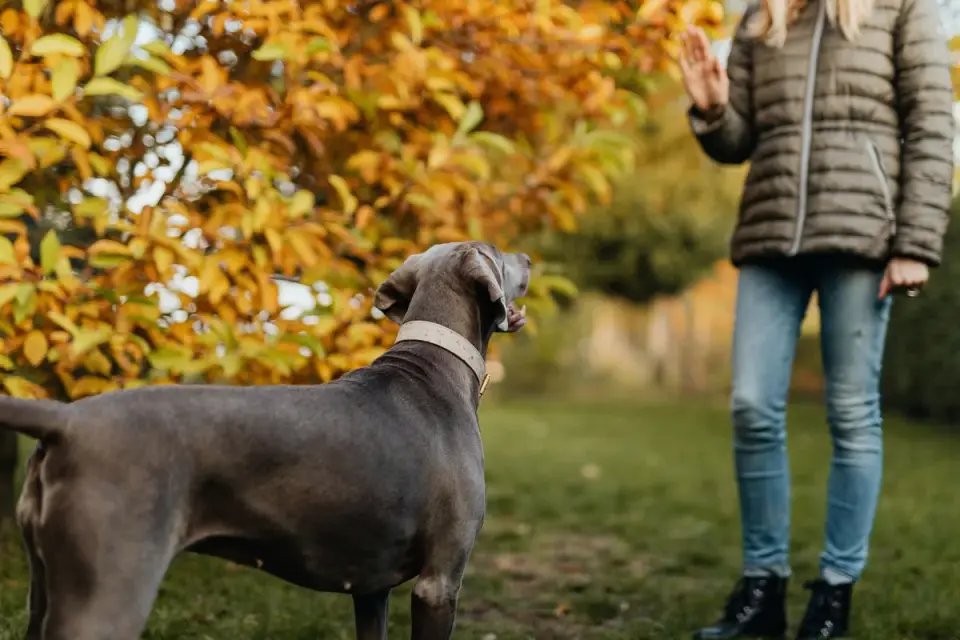
Proof in layers: distance, duration, then distraction
Move outside only when indoor recall hits eight out of ten tries. Then add one variable at a time.
First, add distance in your yard. Call from 10 feet, then 20 feet, then from around a corner. Next, add mild distraction at close range: a tossed toy, a family member walking by, dinner smells from the kitchen door. Save squirrels, deer scent, and off-leash dogs for last.
Pay on a sliding scale. Easy reps earn kibble. Hard reps around movement earn meat, cheese, or a 30-second tug game. For help matching texture and size to fast reps, see Best Training Treats for Dogs: A Buyer’s Guide to Size, Value, and Ingredients.
The drill I prescribe for squirrel zones
Try this three-step loop on the long line:
- Let your dog notice the trigger at a distance where ears perk but feet stay still.
- Say the recall word once and jog backward two steps.
- Mark the turn with “yes” and feed four treats in a row at your legs, then release back to sniffing.
That release matters. Coming to you should not always end the fun.
I think about an 8-month-old Labrador I coached through this last spring, big, joyful, and deaf to recall near geese. The owner had spent 14 straight days calling her off the pond with no line and no reward, then punishing the slow return by ending the walk. On day 15 she stopped coming at all. We reset to a 30-foot line, stopped repeating the cue, and paid every check-in for 10 short sessions. Her turn-back speed improved because coming close stopped predicting trouble.
The American Veterinary Society of Animal Behavior supports this reward-based approach for humane, effective training, which fits a preventive plan centered on low-stress handling.
When the usual plan has to bend
Some dogs cannot start with a standard recall rep. Sighthounds, terriers, and adolescent herding breeds often lock onto motion so fast that food cannot compete at first. For them, I flip the order: teach a stop-and-check pattern before a formal come.
Practice “stop on cue” at 10 feet on the line. Toss a low-value toy, say “wait,” step on the line, then walk in and reward disengagement. Add a hand touch as an alternate target if your verbal cue gets lost in arousal. Our explainer on Hand Signals vs. Verbal Cues: Which One Should You Actually Train First? walks through that choice, and Clicker vs Verbal Marker Word: Which One Should You Actually Use? can help you pick a consistent marker.
An 11-year-old cattle-dog cross I followed for arthritis rechecks showed why bending matters. At 48 pounds and stiff in the mornings, she could not sprint back from 40 yards anymore. Her owner switched the goal from a fast front sit to a steady turn-and-trot to a hand touch within 6 seconds, practiced on level grass after her joint supplement and morning potty walk. The measured change was not speed; it was reliability on flat ground without stairs. We kept her on leash near roads and deer trails.
That is the exception that proves the rule. For most healthy adult dogs, I defend paid long-line reps as the core method. For seniors, dogs with mobility limits, or dogs with a bite history around triggers, management plus a short-range recall is the safer call.
What to do on tomorrow’s walk
Keep it simple and repeatable. Warm up with five indoor recalls. Clip the long line and harness. Work three reps at a distance where your dog notices but can still respond. Pay big, release often, and quit while you are ahead.
Avoid the classic traps in Common Dog Training Mistakes Beginners Make: repeating the cue, calling only to leave, and jumping from kitchen to squirrel park in one day. The AKC also stresses practicing on leash and never punishing a slow return, which may help support long-term recall behavior.
One short line to carry home: distance is your dial, chicken is your paycheck, and the long line stays on until easy looks boring.
Frequently asked questions
How do I get my dog to come back with heavy distractions like squirrels?
Shorten distance until your dog can succeed, use a 20- to 30-foot long line for safety, call once, and pay recalls near wildlife with high-value meat or play. Add distance and distraction one at a time.
Should I punish my dog for not coming?
No. Going to your dog calmly, shortening distance next rep, and rewarding the next success builds a stronger pattern. Punishing a slow return teaches dogs to avoid you.
When can I drop the long line?
When your dog recalls eight out of ten times around moderate distractions for two full weeks, try short off-leash reps in a fenced area first. Keep the line on near roads and wildlife.
Sources
- Position Statements — American Veterinary Society of Animal Behavior