Gentle nose games and soft chewing may help support comfort while your dog rests and heals.
On this page
Watching a dog you love come home groggy, sore, and confused is hard, and wanting to cheer him up is natural. Rest may help support healing best in these first days, with comfort and quiet company coming before activity.
Rest first or keep him busy
The decision is not whether enrichment matters, but how much movement it asks for. A dog recovering from a minor procedure needs mental comfort without stretching, jumping, wrestling, or mouthing at stitches.
Choose rest-first enrichment when your dog is sleepy, reluctant to eat, guarding the incision area, or on strict exercise restriction. Choose slightly more engagement only when he is alert, eating normally, seeking gentle interaction, and cleared by discharge instructions for short, leashed potty breaks.
The American Veterinary Medical Association reminds families to treat written discharge instructions as the plan, with activity limits and recheck timing guiding every choice at home. When in doubt, less movement is the safer offer.
A calm-day checklist you can use today
- Protect the incision: cone or suit on as directed, no licking, no scratching, no off-leash play.
- Keep everything on one level: bed, water, and enrichment within a few steps, with ramps or gates blocking stairs and furniture.
- Favor nose and tongue over feet: sniffing, licking, and soft chewing from a lying position.
- Keep sessions short: five to ten minutes, then rest, with one new idea at a time.
- Watch and adjust: panting, restlessness, lip licking, turning away, or swelling and discharge mean stop and call your veterinary team.
- Keep the mind settled in the evening: dim light, low sound, and a familiar routine, as described in Why Your Dog Won’t Settle in the Evening.
Comfort comes first.
What a slow week at home can look like
Helen lives in Chesapeake, Virginia, with Kash, a 3-year-old neutered male Whippet mix recovering from a minor skin-mass removal with a 10-day activity limit. On day two Kash stood at the back door and whined, and Helen had to weigh a short free sniff in the yard against the risk of running and pulling at sutures.
She kept him leashed for a three-minute potty walk, then laid a towel flat on his bed with five small treats folded inside for a lying-down find-it game. Vets often see this restless second day, when anesthesia has worn off but tissue is still tender, and small nose tasks from one spot may help support settling without adding steps.
Low-movement ideas that protect healing
Sniffing from bed asks little of the body and much of the brain. Scatter three to five treats in a snuffle mat or folded towel, hold a closed hand with a treat inside for a gentle nose touch, or let your dog sniff a safe herb, cardboard box, or your worn T-shirt while lying down. For dogs that cannot exercise at all, these same lying-down scent games are explored further in How to Mentally Tire a Dog That Can’t Exercise.
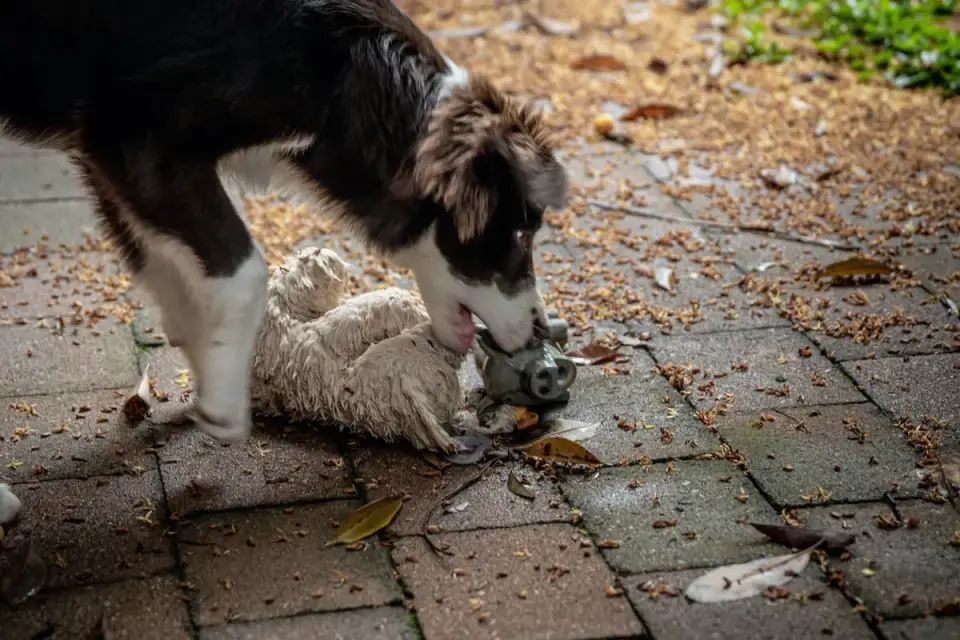
Licking and soft chewing may help support calm when offered in small amounts that fit the post-procedure diet. A thin smear of wet food or plain peanut butter without xylitol on a lick mat, a small frozen stuffed rubber toy eaten while lying on the side, or a low-calorie chew held between paws can fill ten quiet minutes. The Merck Veterinary Manual notes that appetite, stool, and comfort after procedures deserve close watching, so keep portions small and skip anything hard, crumbly, or new if the stomach is unsettled.
Short connection also counts as enrichment. Speak softly, stroke the chest if your dog leans in, practice two or three known cues such as chin rest or touch from a down position, and reward stillness. Comparisons of mouth-based play in Chew Toys vs. Puzzle Toys: What Each One Is Actually Doing for Your Dog’s Brain show why soft licking often suits recovery better than vigorous chewing or puzzle chasing.
Skip fetch, tug, wrestling, dog parks, long puzzle feeders that roll across the room, and anything that invites jumping on and off furniture. If your dog wears a cone, raise bowls slightly, widen the resting space, and choose flat mats over deep bowls he must push into.
Where I would start
For most dogs in the first three to five days, I favor one lying-down sniff game in the morning and one short lick-mat session in the afternoon, with quiet company in between. It protects tissue, honors fatigue, and still gives the day shape.
That rhythm stops winning once boredom turns into pacing, barking, or chewing at bandages. That is a signal to call your veterinary team rather than add harder puzzles, since pain, nausea, or an ill-fitting cone often sits underneath the restlessness.
Frequently asked questions
How much enrichment should a dog get right after a minor procedure?
Keep it brief and lying down, often two short sessions of five to ten minutes per day, with rest in between and activity limits from your discharge instructions guiding every choice.
What signs mean I should stop enrichment and call the vet?
Stop and call if you see ongoing panting, restlessness, loss of appetite, vomiting or diarrhea, swelling, redness, discharge, opening of the incision, or repeated licking or chewing at the site.
Sources
- Pet Care — American Veterinary Medical Association
- Dog Owners — Merck Veterinary Manual