
Last spring I counseled an owner weighing a 600-mile drive versus a short flight with her 4-year-old, 58-pound deaf Catahoula mix who napped through thunderstorms but startled at unfamiliar floor vibration. At home on familiar trails he offered a visual check-in about every 40 seconds, tail loose and eyes flicking back. At a busy rest stop the week before, that check-in stretched past two minutes when a flapping banner caught his eye and he drifted toward the parking lane, entirely unreachable by voice. The fork was clear: pick travel that preserved line of sight and touch, or pick speed and accept containment stress.
Start with this checklist before you book anything:
- Visual recall baseline: three hand signals your dog answers reliably under distraction — watch me, come, settle
- Containment that fits: secured crate or harness with no head slip, no chafing, and room to stand, turn, and lie down
- Touch and light language: a consistent shoulder tap or floor stomp pattern for attention, never a grab from behind
- Leash redundancy: flat collar with ID plus a fitted harness and a backup connection for transfers
- Sleep and startle plan: covered crate, familiar bedding, and a wake-up routine that uses vibration before touch
- Low-stress handling rehearsal: practice fuel stops, elevator waits, and crate loading at home first
Your baseline determines your itinerary. A dog with a solid visual check-in can handle a road trip with planned sniff breaks. A dog who still loses focus outdoors needs tighter containment and fewer transitions.
Drive first, fly only with a reason
For most deaf dogs I recommend driving with a secured crate as the default, and flying only when distance or health makes driving harder. Sound does not anchor a deaf dog, so movement, vibration, and visual novelty carry more weight. A crate controls those inputs. It gives a consistent den, limits sudden visual triggers, and keeps transfers predictable.
The strongest counterargument deserves attention: many owners find deaf dogs fly more calmly because engine roar and cabin announcements never register. That can be true for baseline temperament. I still land on the crate-and-car plan for most teams because recovery from a missed cue is harder without hearing. On the road you can pull over, re-establish eye contact, and reset. In an airport you cannot control crowd flow, announcements you cannot hear for your dog, or a tarmac handoff you cannot narrate.
Fit beats features here. Score restraint the same way every time: fit, durability, comfort, and value. A crate wins on fit when the dog can stand without crouching and lie on the side without pressing the walls, and wins on comfort when bedding stays flat and airflow stays open in summer heat. A harness wins on fit when two fingers fit snugly at the chest and the dog cannot back out during a startle. Where a soft carrier falls short is durability under scratching and shape loss after washing, which matters for a dog who paws when uncertain. For help choosing restraint, see Dog Car Seat Belt vs Crate vs Barrier: Which Restraint Is Safest? and for flight-specific logistics see How to Fly With a Dog: The Complete Guide.
Line of sight is your recall.
Train the travel language before you pack
The American Kennel Club describes hand signals, facial expression, and consistent visual markers as the core language for deaf dogs, with touch used as information rather than correction. That maps directly to travel. Pick three signals and keep them large, distinct, and identical across handlers. I counsel a high, open palm for watch me, a sweeping arm to the chest for come, and a flat palm down for settle. Pair each with a relaxed face and a food reward at first, then practice at increasing distance in the yard, then on a quiet street.
Two summers ago an owner tried to shortcut this with a vibration collar on a weekend lake trip, assuming buzz meant come. Her 6-year-old, 44-pound deaf shepherd mix had worn it twice at home without a conditioning plan. By day 3 at the campground the dog began freezing at the buzz, then avoiding the owner, then refusing to re-enter the cabin. The observable change was stark: latency to orient stretched from two seconds to more than 20 seconds. The tradeoff was trust for convenience. We retired the collar, rebuilt a hand-signal come with 15-foot line guidance, and travel improved within ten days because the cue became predictable again. Vibration tools can have a place with structured conditioning, but they do not replace a taught visual recall.
Expectation first: plan for two to three weeks of five-minute sessions before travel, not an overnight fix. Keep structure and function language in mind. Training may help support attention and settle behavior under novelty, with realistic timelines tied to repetition in new places.
Containment, transfers, and the hotel reset
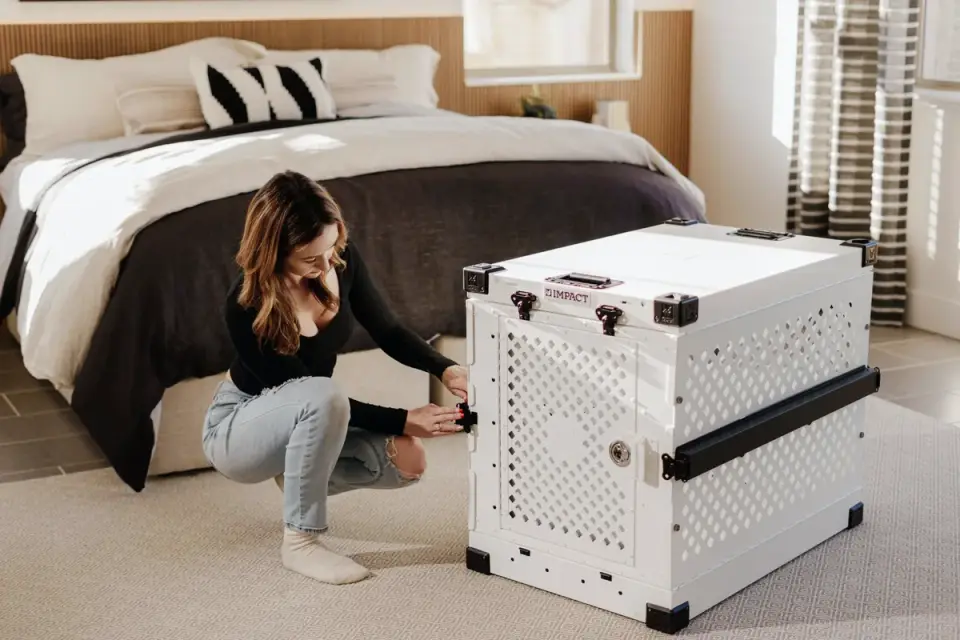
The American Veterinary Medical Association advises securing dogs in a well-ventilated crate or carrier during car travel and planning for confinement, identification, and acclimation. For a deaf traveler, add transfer discipline. Every door, hatch, elevator, and trailhead is a gap where voice cannot close distance. Load with the leash already attached inside the car. Clip the backup tether before you unlatch the crate. Step out together only after eye contact.
Test gear hands-on before you trust it on a trip. Load the crate in the driveway, drive around the block, unload at a new curb, and watch behavior. Durability shows in latches that still align after a bumpy road and fabric that does not sag onto the dog. Comfort shows in a dog who chooses to enter and sighs into a down within five minutes. Value shows in washable bedding and replaceable hardware rather than a whole replacement. Where hard crates win is chew resistance and stack stability. Where they fall short is weight and hotel maneuverability, which is why some teams use a hard crate in the car and a familiar pop-up crate for the room.
An edge case changed how I brief senior dogs. An 11-year-old, 35-pound deaf terrier mix with cloudy eyes traveled well for years, then began snapping awake in hotels when a bed vibrated or a light flicked on. Three weeks into a new visual routine at home — floor stomp, pause, then gentle chest touch paired with a treat — nighttime startles dropped from nightly pacing to brief head lifts followed by resettling. The lesson was not disobedience. Combined vision and hearing loss raised startle on waking, and travel amplified it. For older dogs, keep lighting low and consistent, keep the crate covered on three sides, and wake with vibration before touch every time.
Paperwork still matters, even on road trips. The U.S. Department of Agriculture outlines pet travel requirements that vary by mode and destination, including health certificates and vaccination timing. Carry printed vaccine records, a recent health certificate when required, ID with a mobile number, and a photo of markings. Microchip registration should list a contact who answers while you drive.
What would shift on your next route if you treated eye contact, not voice, as the safety system you maintain at every stop?
Frequently asked questions
Can a deaf dog travel as easily as a hearing dog?
Many do once visual cues and containment are reliable. Expect to manage line of sight, transfers, and startle on waking more deliberately, especially in new places.
Should I use a vibration collar for recall while traveling?
Only after a gradual conditioning plan at home that pairs the sensation with reward and a clear visual cue. Without that baseline, travel novelty can create freezing or avoidance.
Crate or harness in the car for a deaf dog?
A secured, well-fitted crate is my default because it limits visual triggers and keeps transfers predictable. A fitted harness with backup connection works for dogs with crate distress once fit and comfort are tested.
How do I wake a deaf dog in a hotel without a startle?
Stomp lightly to send vibration, pause for orientation, then offer a gentle chest touch and treat. Keep lighting steady and keep the crate partially covered.
Sources
- Traveling With Your Pet — American Veterinary Medical Association
- Pet Travel — U.S. Department of Agriculture