On this page
Picture the fork in the road every dog owner eventually hits at the pet store aisle: buy the seat belt harness that clips into the existing belt, build a crate into the cargo area, or just drop a mesh barrier behind the back seat and call it done. Each option looks reasonable. Only one of them has been through a real crash sled test the way a child car seat has.
That gap matters more than most owners realize. In my practice, the question rarely comes up until after something has already gone wrong — a sudden stop, a dog thrown into the footwell, a scraped chin or a strained shoulder. I had a client bring in a 34-pound mixed-breed dog, about four years old, after a hard brake on a two-lane road sent him sliding off the back seat into the center console. He wasn’t seriously hurt, but he came in tender along one side and reluctant to jump onto furniture for almost two weeks. The owner had a barrier installed, which kept him out of the front seat, but nothing kept him from sliding sideways when the car decelerated. That’s the distinction owners miss: a barrier controls where a dog can go inside the cabin, not what happens to that dog’s body during a collision.
What Crash Testing Has Actually Measured
The nonprofit Center for Pet Safety runs the closest thing the pet industry has to the federal sled tests used for child safety seats, and its findings are blunt. In the 2013 harness study, of eleven harness products tested, only the Sleepypod Clickit Utility met every pass criterion — no catastrophic failure, consistent performance across dog sizes, the dog staying on the seat, and a tether short enough to limit forward travel. The rest failed at least one of those benchmarks, according to the 2013 Harness Study Results.
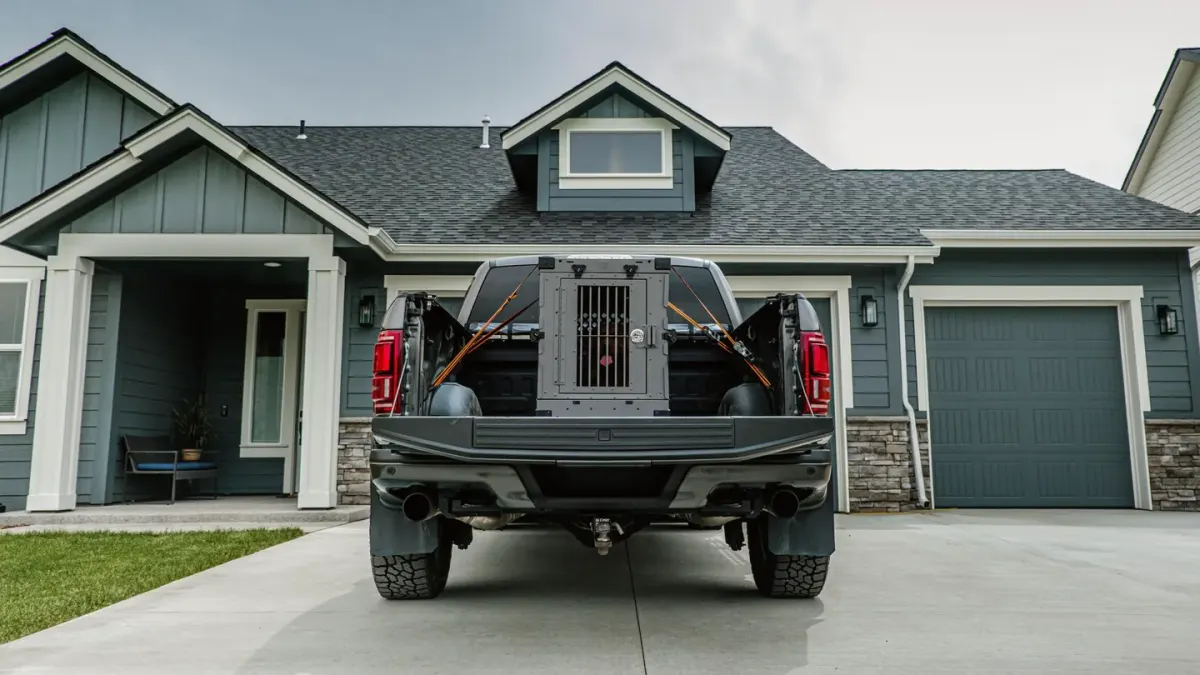
Crates fared worse as a category. In CPS’s 2015 crate testing, close to nine out of ten products tested failed certification, and the strap hardware turned out to matter as much as the crate itself — rubber tie-downs offered essentially no crash protection, while strength-rated cargo straps kept tie-down brackets intact and limited crate deformation, per the 2015 Crate Study Results. That’s a meaningful caveat: a crash-rated crate paired with the wrong straps is not a crash-rated system anymore.
Barriers have never gone through comparable independent crash testing as a restraint device, because that isn’t really their job. A barrier’s function is containment — keeping a dog out of the driver’s lap or off the dashboard — not deceleration management. It does nothing to stop forward momentum when the vehicle itself stops suddenly.
Why the Physics Favor a Secured Crate
Momentum is the whole story. An unrestrained dog in a moving vehicle keeps moving at the car’s original speed until something stops it — the dashboard, a window, another passenger. Force scales with weight and speed, which is why a small dog isn’t automatically safer unrestrained than a large one. According to the AAA-affiliated overview in Your AAA Network, a 10-pound dog in a 50 mph crash can exert roughly 500 pounds of force, and an 80-pound dog in a crash of only 30 mph can exert around 2,400 pounds. A crate distributes that force across a rigid structure anchored to the vehicle frame; a harness relies on the dog’s chest and shoulders absorbing deceleration through webbing, the way a child’s car seat harness does. A barrier absorbs none of it — the dog simply has less cabin to travel through before hitting something.
That’s the reasoning I walk owners through, expectation first: a crash-tested crate, properly tied down with strength-rated straps, is the restraint most likely to keep a dog’s body contained and decelerating with the vehicle rather than against it. A crash-tested harness is the practical second choice, especially for dogs who ride in the back seat rather than a cargo area. A barrier is worth having, but as an addition, not a substitute — it keeps a dog from becoming a driving distraction, which AAA’s own research flags as a real risk given that a large share of owners admit to being distracted by their dog while driving.
Where the Counterargument Lands
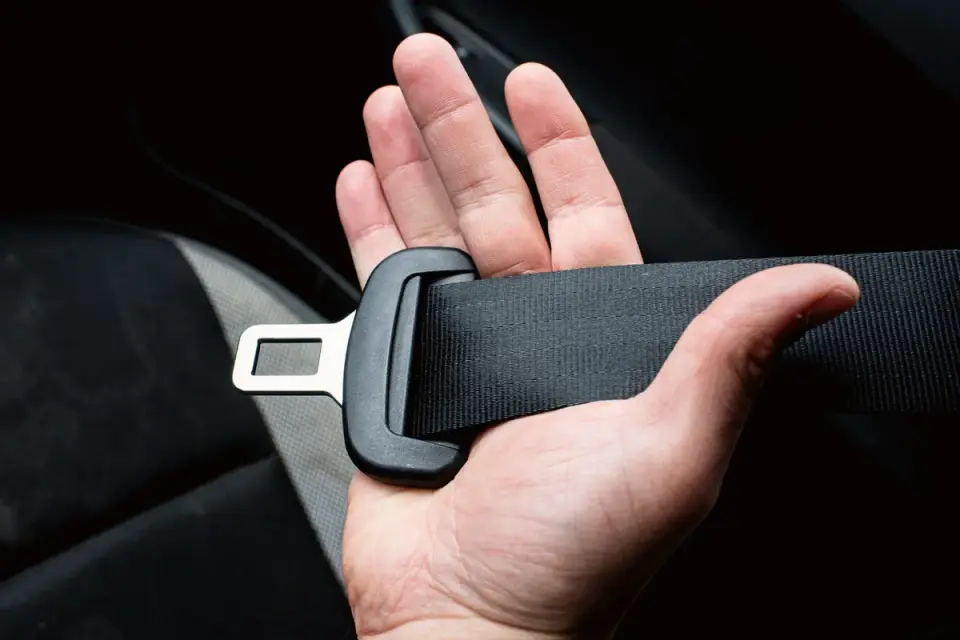
The honest pushback is that not every dog tolerates a crate in the car, and not every vehicle has room for one. A large, anxious dog who paces and pants inside an enclosed crate may genuinely do better, from a stress standpoint, in an open harness setup where they can see out the window. I don’t dismiss that. Structure and function matter, but so does a dog who can settle. If a crate turns every car ride into a fight, the safety margin on paper may not translate into how gear performs when a nervous dog is scrabbling against the door. In those cases, I’d rather see a crash-tested harness used correctly, with a short tether and a properly fitted chest strap, than a crate the dog refuses to accept.
For crate travel specifically, the mechanics of the setup matter as much as the crate model — see this publication’s guide on how to secure a dog crate in the car for the anchor-point and strap details that separate a crash-tested crate from one that only looks secure. Owners raising a puppy who will eventually need to travel should also look at how to set up a crate for a new puppy’s first night, since early positive crate association makes car crates far easier later.

I think about that 34-pound dog again every time this question comes up. He recovered fully, and the owner switched to a crash-tested harness within the month because a crate genuinely didn’t fit her hatchback’s cargo space. That’s the real-world negotiation most owners are making — not a lab’s ideal setup, but the safest option that actually fits their car, their dog’s temperament, and their budget. It’s worth remembering that restraint choices intersect with other travel-day judgment calls too, like what’s within reach in the cabin; a dog loose enough to reach a snack bag is also a dog who might get into something dangerous, which is part of why we cover risks like whether grapes are safe for dogs and onion toxicity elsewhere on this site — car trips are exactly when snacks get shared without much thought.
The Bottom Line
If your vehicle and your dog’s temperament allow it, a crash-tested crate anchored with strength-rated tie-down straps is the strongest option the current data supports. If a crate isn’t workable, a crash-tested harness with a short tether is the next best choice, worn correctly and clipped into the existing seat belt system. A barrier is a useful add-on for keeping a dog out of the driver’s space, but it isn’t a substitute for either. Going forward, I’d like to see more independent testing on barriers specifically, since so many owners currently treat them as a complete safety solution rather than the containment tool they actually are.
Frequently asked questions
Is a dog seat belt harness enough on its own?
Only if it's a crash-tested design with a short tether — most seat belt clip-in harnesses on the market have not passed independent crash testing, according to the [2013 Harness Study Results](https://centerforpetsafety.org/2013-harness-crash-test-study-results/).
Do rubber tie-down straps work for a car crate?
No. CPS testing found rubber straps provide essentially no crash protection, while strength-rated cargo straps kept the crate and its anchor points intact, per the [2015 Crate Study Results](https://centerforpetsafety.org/2015-crate-study-results/).
Is a barrier a safe restraint on its own?
A barrier limits where a dog can move inside the cabin but does nothing to slow the dog's body during a crash, so it's best used alongside a crate or harness, not instead of one.
Sources
- 2013 Harness Study Results — Center for Pet Safety
- 2015 Crate Study Results — Center for Pet Safety
- What You Need to Know About Dog Car Restraints — Your AAA Network