
On this page
The first night is rarely quiet. A family brings home an eight-week-old puppy, exhausted from the ride and the strange new smells, and by ten o’clock the crying starts from the crate in the corner of the bedroom. Everyone in the house lies awake, wondering if they’ve made a mistake. They haven’t. That first night is simply the loudest part of a transition that gets easier fast once the setup and the routine around it are right.
This guide is built around what actually eases a puppy through that first night: the crate itself, where it sits, what goes inside it, and the bedtime habits that make the next nights shorter and quieter than the first.
Getting the size right
A crate that’s too big undoes the whole point of crating. Dogs have a natural reluctance to soil the space where they sleep, and a crate sized for an adult dog gives an eight-week-old puppy enough room to use one end as a bathroom and the other as a bed. According to AKC, the crate should let the puppy stand up, turn around, and lie down comfortably, but no larger; a divider panel is the standard fix for a crate bought to fit the adult dog they’ll become. Buying the full-size crate now and blocking off the extra space is usually cheaper than buying twice.
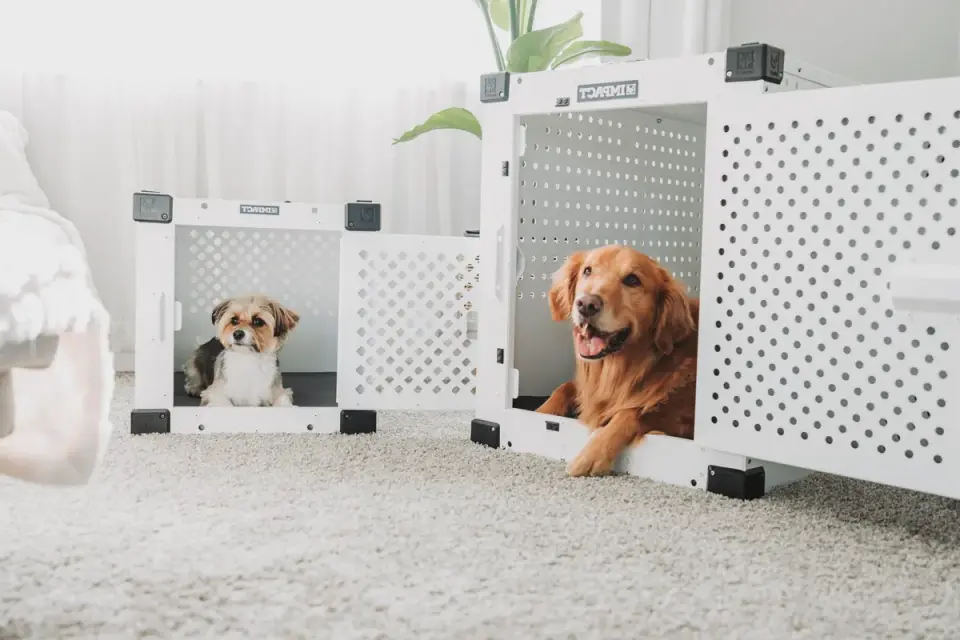
Where the crate goes
Placement matters as much as size. A puppy just separated from litter mates is coping with real loss, not stubbornness, and proximity to a person softens that. Keep the crate in the bedroom for at least the first few weeks. That’s it. Close enough that the puppy can hear breathing and smell a familiar person is often the difference between twenty minutes of settling and two hours of crying.
Inside, a low-sided water bowl, a blanket or towel that carries a scent from the puppy’s littermates or mother if the breeder can provide one, and a single safe chew toy are usually enough. Skip a pile of bedding a very young puppy could burrow into and overheat under, and skip anything with loose strings or stuffing they could chew loose overnight.
Building a bedtime routine
A predictable bedtime, whether it’s eight o’clock or midnight, helps a puppy learn what’s coming rather than reads bedtime as sudden abandonment. Take the puppy out for a last bathroom trip right before crating them, keep that last outing boring and businesslike, and give a small treat for walking into the crate on their own. Consistency, more than the hour on the clock, is what the puppy is learning to trust. According to Humane World for Animals, short, calm, positive crate experiences during the day build the association that makes nighttime crating easier, so the first night shouldn’t be the puppy’s first time in the crate at all.
When the crying starts anyway
It usually does, at least for a few nights. Some puppies settle within minutes; others cry on and off for what feels like hours. When it happens, a quiet, boring trip outside for a potty break, then straight back into the crate without play or extended comforting, tends to work better than pulling the puppy out to console them at length. That second part matters: a puppy who learns that crying reliably ends with cuddles on the couch has just been taught to cry longer next time.
A few nights of a hand resting near the crate door, or the crate positioned right beside the bed, can bridge that gap without starting a habit of sleeping in the bed itself. It’s a small accommodation for a small animal facing a genuinely disorienting change, not a training failure.
How long is too long
A young puppy’s bladder can’t hold overnight the way an adult dog’s can. ASPCA Pet Insurance notes that crate time should roughly track the puppy’s age in months, and that puppies shouldn’t be expected to hold it through a full night until they’re closer to four to five months old. A middle-of-the-night bathroom trip for a very young puppy isn’t a setback; it’s biology, and expecting otherwise sets both the puppy and the exhausted family up to feel like they’re failing when they aren’t.
What helps most, across the families who come through this rough first stretch, isn’t a specific product. It’s sizing the crate honestly, keeping it close, and repeating the same calm routine every night until the puppy stops needing to test whether it’s safe.
Frequently asked questions
Should I cover the crate with a blanket on the first night?
A light cover over the top and sides can help a puppy settle by dimming the space, but leave the door end uncovered for airflow and so you can check on them. Watch for chewing or pulling at the fabric before leaving it on unsupervised.
Is it okay to let a crying puppy sleep in my bed instead?
You can, but only if that's where you want them sleeping long-term, since the habit sticks. A closer compromise many families use is moving the crate next to the bed so a hand can rest near the door.
How many nights of crying should I expect?
It varies by puppy, but most families see real improvement within the first week once the bedtime routine and potty schedule settle in. Crying that continues well beyond that, or looks like distress rather than protest, is worth a call to your veterinarian.
Sources
- A Beginner's Guide to Crate Training — AKC
- Crate Training 101 — Humane World for Animals
- How to Crate Train a Puppy — ASPCA Pet Insurance