On this page
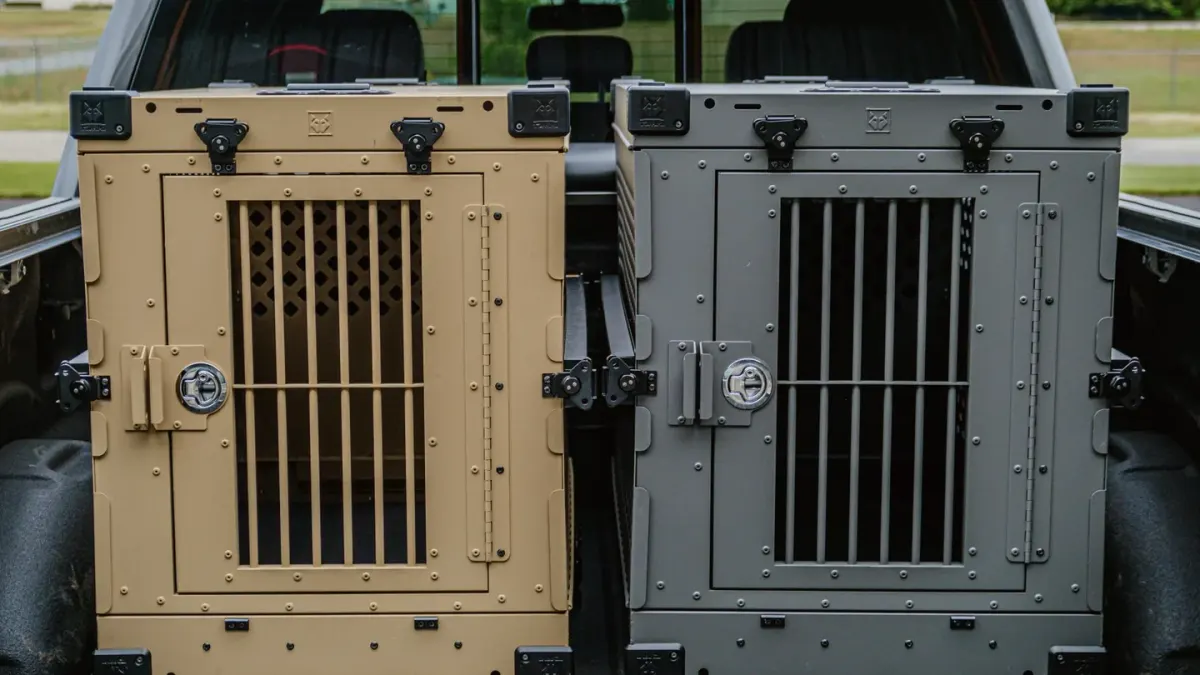
Here’s the short version: a crate sitting loose in your trunk isn’t a safety device, it’s a very large, very hard object waiting for a reason to move. Securing it properly changes that — but “properly” is more specific than most people assume, and it’s worth walking through before your next road trip.
Why an unsecured crate is a real risk, not just a theoretical one
Center for Pet Safety has spent years crash-testing pet crates and carriers, and its 2015 program is still the most cited independent data in this space. The organization found that simple wire crates, when unanchored, allowed the test dummy to become a projectile with enough force to break through a seat back in a simulated collision — the kind of outcome that endangers everyone in the car, not just the dog. Its top performer that year was a rigid crate paired with 8-foot tie-down straps rated for the load, which held together and stayed in place. The lesson isn’t “buy an expensive crate.” It’s that the crate and the tie-down system are one unit; neither does much good without the other.
There’s a regulatory gap worth knowing about, too: no U.S. agency currently sets a mandatory crash-test standard for pet crates, so “crash-tested” claims on packaging vary a lot in what they actually mean. That makes your own anchoring job more important, not less.
Where to put the crate before you strap anything
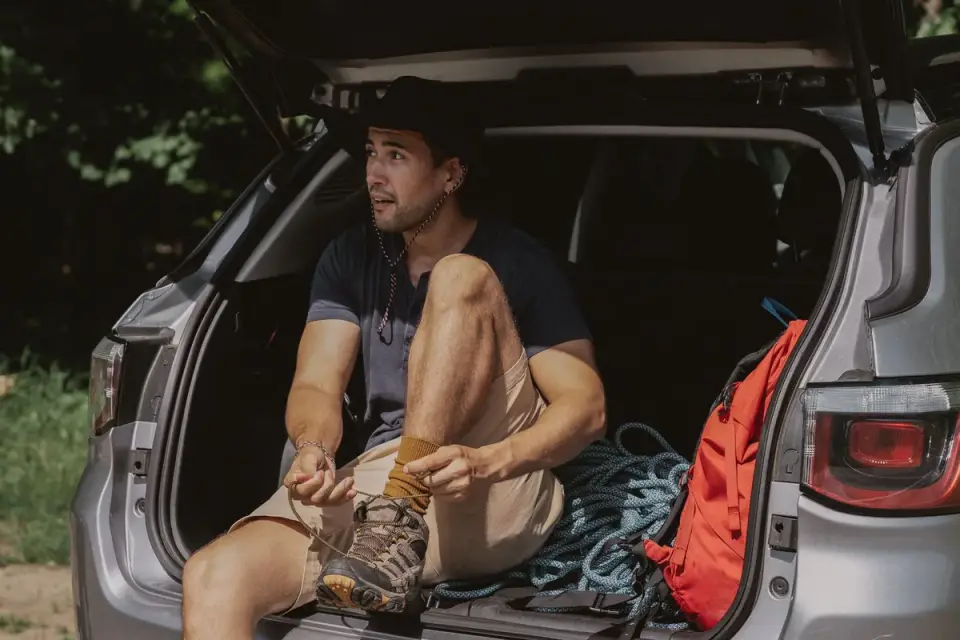
Position matters before straps ever come into play. Center the crate as close to the middle of the vehicle as the space allows, and keep it low — on the cargo floor rather than stacked on top of folded seats or luggage. A crate perched up high has more room to tip, slide, or become airborne on a hard brake. The American Veterinary Medical Association: AVMA recommends this centered, low placement specifically because it reduces both the crate’s own momentum and its exposure in a side impact.
If you’re working with an SUV or wagon, the cargo area behind the second row is usually your best bet. In a sedan, the back seat can work, but only if the crate is small enough to sit flat and low rather than balanced on the seat cushion where it can roll.
The actual anchoring steps
Most cargo areas have built-in anchor points — small D-rings, hooks, or loops bolted into the floor or side panels, usually meant for cargo nets or luggage. These are what you’re tying into.
- Locate the crate’s own anchor points. Hard-sided travel crates typically have reinforced holes or loops at each of the four base corners, in addition to the carry handles on top. The base points are what you want for a car — they resist tipping in a way that top handles alone don’t.
- Run a rated tie-down or ratchet strap from each base corner to the nearest vehicle anchor point. Two straps at diagonal corners is a minimum; four points is better if your vehicle’s anchors allow it.
- Pull the straps snug, then push the crate firmly from the front, back, and both sides. It shouldn’t shift more than an inch. If it does, tighten.
- Recheck after the first few miles. Straps can settle slightly once the vehicle is moving and the load has shifted into place.
A non-slip mat under the crate adds a bit of extra friction, but it’s a supplement to strapping, not a substitute for it.
Dogs who fight or panic in a crate make this whole setup harder to trust, since a stressed dog can rock even a well-anchored crate. If your dog struggles with car travel generally, our guide on how to get a dog used to tooth brushing covers a similar desensitization approach — short sessions, low pressure, building tolerance gradually — that transfers well to crate-in-car acclimation, even though the topic is different.
A few things that quietly undermine a good setup
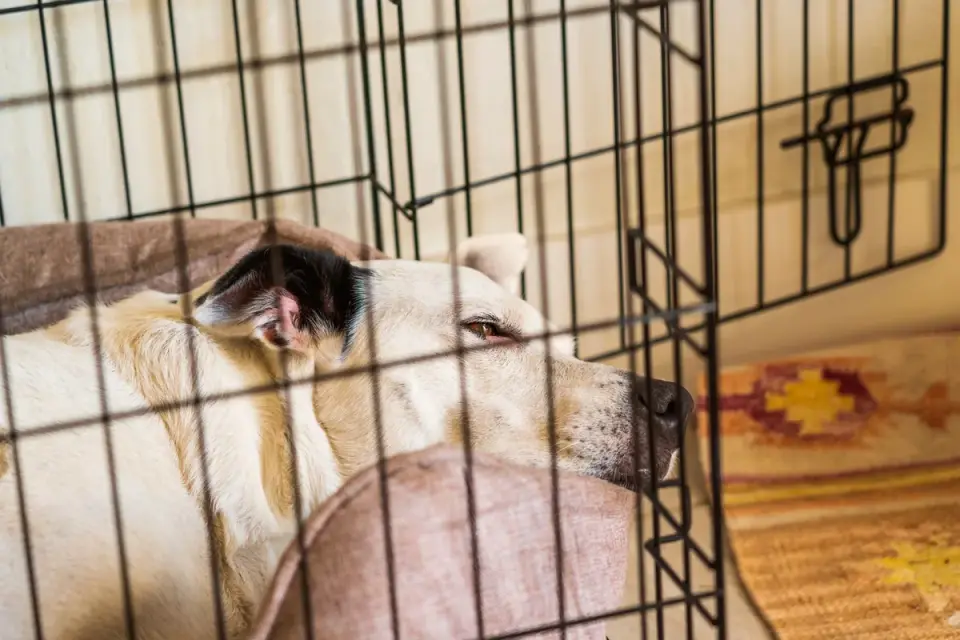
A strap that’s rated for cargo but not specifically for the pull-force of a crate carrying a large dog can stretch or fail differently than expected — check the weight rating, not just the strap’s presence. Cracked or sun-brittled plastic anchor loops on an older crate are another quiet failure point; inspect them the way you’d inspect a leash clip, not just once at purchase. And a crate that’s the wrong size for the dog — enough that the dog can build up momentum by throwing its weight side to side — puts more strain on the same anchor points than a properly fitted one would.
Heat is the other half of car safety that has nothing to do with straps at all. The AVMA’s transport guidance is blunt about this: a parked car’s interior temperature climbs fast enough to be dangerous even on mild days, regardless of how well the crate is secured. Securing the crate solves a collision-risk problem, not a heat problem — they need separate attention.
If your dog also travels loose in the cabin sometimes rather than crated, the AVMA’s AVMA Policy: transport policy treats a properly fitted harness restraint as the equivalent safety category to a secured crate — worth knowing if you’re weighing crate versus harness for a particular trip. Dogs prone to bolting once a door opens are a related but separate risk; if that’s a recurring issue for your dog, our piece on a GPS tracker for an escape-prone dog is a useful next read, since a secured crate and a way to find a dog that gets loose at a rest stop solve two different failure modes.
So is your current setup actually secure?
Grab your keys, walk out to the car, and push on the crate the way a hard stop would. If it barely moves, you’ve done the job. If it slides, rocks, or lifts at a corner, you now know exactly which strap to tighten before the next trip — which is really the whole point of building this check into a habit rather than a one-time setup.
Frequently asked questions
Is it safe to put a dog crate in the back seat instead of the cargo area?
It can work if the crate is belted in through its anchor loops using the seatbelt or a strap, and it's small enough to sit low and stable rather than perched on the seat cushion. A crate that can tip or slide off the seat during braking isn't doing its job.
Do I need a crash-tested crate, or will any hard crate do?
A wire or mesh crate that isn't anchored can let a dog become a projectile in a hard stop, according to Center for Pet Safety testing. A rigid crate that's actually tied down at multiple points is safer than an untethered one, crash-rated or not, but a crash-tested model paired with its rated straps is the best-supported option.
How tight should the tie-down straps be?
Snug enough that the crate doesn't shift when you push on it firmly from the side and front. If you can rock the crate more than an inch or two, the straps need to come in a notch.
Sources
- 2015 Crate Study Results — Center for Pet Safety
- Pet safety in vehicles — American Veterinary Medical Association
- Safe non-commercial transport of pets in motor vehicles — AVMA Policy