On this page
- Step 1: Decide cabin or cargo — before you book anything else
- Step 2: Call the airline and get the current rules in writing
- Step 3: Handle documentation on the right calendar
- Step 4: Know what security screening actually looks like
- Step 5: Weigh breed-specific risk honestly
- Step 6: Pack for the actual flight, not the ideal one
- Bottom line
So you’ve booked the flight, and now the dog needs to get there too. What actually has to happen between now and boarding?
The honest answer is that almost everything that goes wrong with flying a dog traces back to a decision made too late, not a rule that was impossible to follow. Below is the order we’d tackle it in if this were our own dog.
Step 1: Decide cabin or cargo — before you book anything else
This is the fork in the road that determines everything downstream: which airlines are even options, what the carrier needs to look like, and how much lead time you need for paperwork.
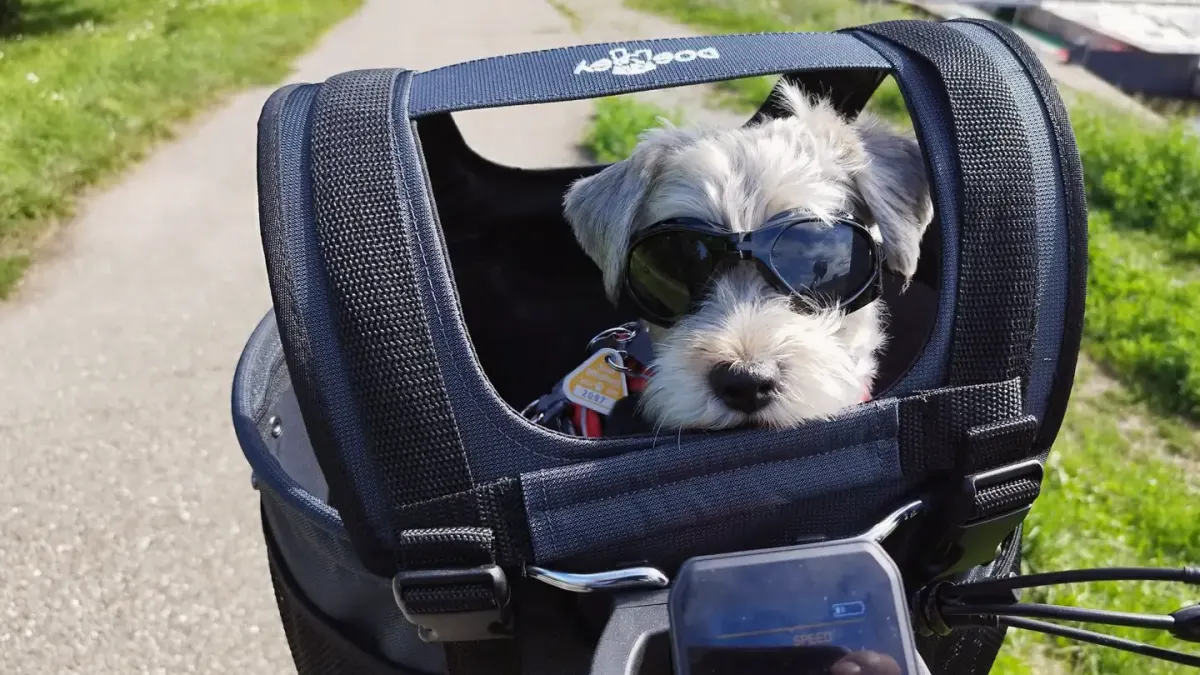
In-cabin travel means your dog rides in an airline-approved soft-sided or hard-sided carrier that fits under the seat in front of you. Airlines cap this by weight (dog plus carrier) and by carrier dimensions, and those caps vary by airline and even by aircraft type. Cargo travel means your dog rides in a temperature- and pressure-controlled hold, in a crate that meets IATA-style specifications, typically booked as a separate cargo shipment rather than as checked baggage tagged to your itinerary.
Most healthy, medium-to-small dogs that fit under a seat do best in-cabin, where you can see them and they stay with you through the whole trip. Larger dogs, or trips where no in-cabin slot is available, often mean cargo — and that’s a bigger decision than it sounds, because cargo comes with its own set of breed, temperature, and scheduling restrictions.
Step 2: Call the airline and get the current rules in writing
Do this before you buy tickets, not after. Airlines change pet policies — carrier dimensions, per-flight pet caps, embargo dates during extreme heat — often enough that a six-month-old blog post (including this one) can be out of date on specifics. Ask directly: is there space left for a pet on this specific flight, what are the exact carrier dimensions and weight limit, and is there a seasonal cargo embargo in effect for the route.
Get the answer confirmed on your reservation, not just spoken over the phone. A verbal yes from a call center doesn’t always survive a gate agent checking the system on travel day.
Step 3: Handle documentation on the right calendar
This is where trip planning either holds together or falls apart, and it’s almost entirely a function of when you start.
For domestic US flights, requirements are lighter — usually proof of recent vaccination, sometimes a state-level interstate health certificate — but airline-specific documentation still applies, so confirm with the carrier. For international travel, the USDA APHIS pet travel program is the federal starting point, and it’s not something you can rush: an accredited veterinarian has to examine your dog and complete the health certificate, and depending on the destination country, that certificate may need USDA endorsement through the agency’s electronic system before you fly. Because both the veterinary exam and the endorsement have their own turnaround times, and some destination countries require the certificate to be dated within a narrow window before arrival, start this conversation with your vet as soon as you have a travel date — not the week before.
Step 4: Know what security screening actually looks like
Here’s the part first-time flyers underestimate: your dog has to come out of the carrier at the checkpoint.
Per TSA guidance, the empty carrier goes through the X-ray belt like any other bag, while your dog is screened separately — either carried through the walk-through metal detector or walked through on a leash. TSA officers may also swab your hands for an explosive trace check. If your dog isn’t used to being picked up and handled by a stranger in a loud, crowded space, that’s worth practicing at home before the trip, not discovering for the first time at the checkpoint with a line building behind you.
Step 5: Weigh breed-specific risk honestly
Brachycephalic, or snub-nosed, breeds — think French Bulldogs, Pugs, Boston Terriers, English Bulldogs — carry real physiological risk in flight, particularly in cargo. Their shortened airways make it harder to regulate body temperature and manage respiratory stress, and that risk is amplified by the heat, confinement, and reduced oxygen that can occur in a cargo hold. According to AVMA guidance on short-nosed dogs and air travel, this is why most major US carriers restrict or outright refuse brachycephalic breeds in cargo, and some extend that caution to checked baggage as well.
That doesn’t mean these breeds can’t fly. Many can travel in-cabin if they meet the size and carrier requirements, which keeps them in a climate-controlled space at your feet rather than in the hold. If your dog is brachycephalic and cargo is the only option on a given route, that’s a decision worth making with your vet, not just with the airline’s booking page.
Senior dogs, dogs with heart or respiratory conditions, and very young puppies deserve the same honest conversation. A flight that’s routine for a healthy adult dog is a different calculation for a dog with an existing medical condition.
Step 6: Pack for the actual flight, not the ideal one
Skip a heavy meal in the hours before departure to reduce the odds of an upset stomach mid-flight. Bring a leash that clips on fast, a collapsible water bowl, and something familiar-smelling — a worn t-shirt or a small blanket — inside the carrier. Attach ID tags and make sure a microchip is registered and up to date, since a carrier can get separated from a dog during a layover in ways a leash usually prevents.
Don’t sedate your dog for a flight without talking to your vet first. Sedation can interfere with a dog’s ability to regulate temperature and balance, which is part of why many airlines discourage or prohibit it for pets traveling in cargo.
Bottom line
The logistics of flying with a dog are learnable, and none of the individual steps are hard on their own. What trips people up is sequencing — trying to book documentation after the ticket, or discovering a breed restriction at the counter instead of during the planning call. Start with the airline’s current policy, build your paperwork timeline around your vet’s availability and the destination’s requirements, and treat the checkpoint and the cabin itself as the easy, well-rehearsed part of the trip.
Frequently asked questions
Do all airlines require a health certificate to fly with a dog?
Domestic flights within the US generally don't require a federal health certificate, but individual airlines may ask for recent vaccination records, and some states require one for interstate pet travel. International flights almost always require a USDA-endorsed health certificate — check both APHIS pet-travel guidance and your destination country's specific rules well before booking.
Can my dog stay in the carrier during TSA screening?
No. TSA requires you to remove your dog from its carrier before the carrier goes through the X-ray belt; the dog is screened separately, either carried through the metal detector or walked through on a leash, per TSA's published guidance.
Are snub-nosed breeds banned from flying entirely?
Not from flying in general, but most major US airlines will not accept brachycephalic breeds in cargo, and some restrict them from checked baggage. Many of these dogs can still fly in-cabin if they meet size and carrier requirements — confirm with the airline and your vet, per AVMA's guidance on short-nosed dogs and air travel.
Sources
- Travel With a Pet — USDA APHIS
- Can I take my pet through the security checkpoint? — TSA
- Air travel and short-nosed dogs FAQ — AVMA