On this page
Expectation first: your senior dog can learn a new cue, but you will train comfort and clarity before you train speed or distance.
Will you adjust the plan to fit an older body, or will you run a young-dog plan and hope the joints keep up? I want you to pick the first lane every time. That choice shapes session length, surface, reward type, and how you measure progress.
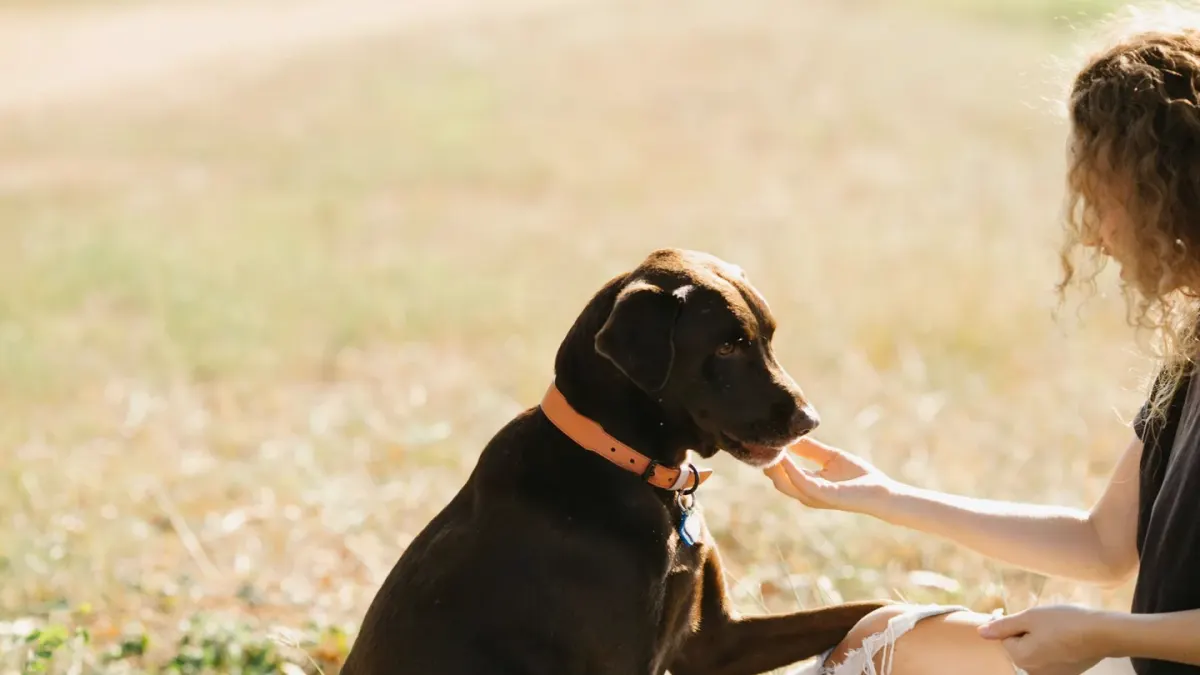
I saw this tradeoff with a 12-year-old, 68-pound Labrador mix who needed a chin rest for nail trims. His owner had tried three 15-minute kitchen sessions in one evening, and he laid down and stopped taking cheese by the third rep. We switched to two 3-minute sessions per day on a yoga mat, paid for weight shifts toward the hand target, and by day 5 he held his chin for 4 full seconds without sighing or shifting his elbows. The cue did not change. The setup did.
That is the pattern I counsel for seniors. Behavior follows baseline. Pain, stiffness, hearing loss, and cloudy vision change how a cue looks even when learning is intact. A pre-training check may help support better sessions, which is why the AAHA senior care guidance emphasizes regular exams, weight trends, mobility, and comfort screening for older dogs.
Will you train the joints first or the cue first?
Train the joints first. Pick a cue that respects what your dog offers easily right now. Touch, chin rest, station on a mat, or a standing hand target often fit better than sit, down, or spin for a stiff dog.
Score your setup on the same rubric I use hands-on: fit, comfort, durability of focus, and value per minute. Fit means non-slip footing and no stairs. Comfort means your dog can stay in one posture without shifting. Durability means attention holds up across days. Value means you get clean reps without fatigue.
If your dog hesitates on hard floors, licks lips when asked for down, or needs two tries to stand, change the picture before you repeat the cue. Lower criteria, raise rate of reinforcement, and keep it kind.
Set the baseline your senior dog is actually starting from
Keep it preventive and simple. Watch one normal day and write down sleep, stiffness after rest, appetite for training rewards, hearing, and vision in dim light.
Most seniors do best with two to three sessions per day, 2 to 4 minutes each, with at least an hour of rest between. Use pea-sized soft treats or lickable food if chewing is slow, and keep total training food under 10% of daily calories. Train after a short potty walk, not after a long hike or right after waking when joints are creaky.
Reward placement matters more than reward brand. Deliver at nose height for a chin rest, low and forward for a mat station, and right at your side for loose-leash position. That precision may help support low-stress handling and fewer repeated lures. The American Veterinary Society of Animal Behavior position statements favor reward-based methods and low-stress handling, which is especially relevant when an older dog cannot afford a physical correction or a flooding session.
The low-impact plan I actually recommend
Pick one cue for 14 days. I like “touch” or “place” because you can shape them without bending the spine.
Days 1-3: charge the marker and pay for interest. Say the cue once, present your palm 6 inches away, mark and reward any nose movement toward it. Aim for 8 to 10 easy wins per session.
Days 4-7: add one inch of distance or one second of duration, never both. Ask on different surfaces but keep sessions short.
Days 8-14: add real-life context. Practice before meals, at the door, or on a walk pause. If accuracy drops below about 7 out of 10, go back one step for a day.
It helps to avoid the traps in Common Dog Training Mistakes Beginners Make and to set up your pouch and timing with How to Use a Training Treat Pouch Effectively. Small, fast delivery keeps older dogs in the game.
Short sessions win.
When luring backfires and what holds up instead
A 9-year-old, 24-pound beagle mix taught me this lesson again last spring. She knew sit but popped up after 2 seconds, and her owner kept lifting a treat higher to hold her there. Over six sessions across 4 days the sit got slower, not stronger, and she started turning her head away at rep 12. We stopped the overhead lure, paid four rapid-fire treats for settling onto a raised 2-inch foam bed instead, and shaped a chin drop rather than a tucked sit. Her hold climbed back to 10 seconds without the neck craning.
Overhead lures often punish stiff necks and sore shoulders. Shaping small choices, marking the exact moment, and letting the dog reset on their own usually holds up better. If you use food, match texture to the moment with ideas from Best Training Treats for Dogs: A Buyer’s Guide to Size, Value, and Ingredients.
You want willing repetition, not tired compliance.
When aging changes the rules
Some seniors need the usual advice bent. Deafness means swapping a verbal cue for a hand flash or floor tap. Cloudy vision means using scent and touch targets instead of distant hand signals. Morning stiffness means training at noon. Cognitive change means keeping the environment identical for a week.
I think of a small 14-year-old terrier type I counseled who paced at night and forgot her recall at a 20-foot distance in the yard. Her owner worried she was being stubborn. We moved training indoors to a 10-foot hallway, switched to a hand touch paired with a thumbs-up visual cue, and did eight 2-minute sessions over 10 days. Her daytime touch response steadied to 8 out of 10 indoors, even though nighttime pacing still needed veterinary follow-up. We did not fix aging. We fit the cue to it.
That distinction matters. If you see new confusion, house-soiling, night waking, or staring, pause training changes and book a veterinary exam. The Cornell Riney Canine Health Center notes that cognitive dysfunction can mimic training problems, and medical issues should be ruled out before you push criteria.
Your practical next step: pick one joint-friendly cue, run two 3-minute sessions tomorrow on grip-friendly footing, and track wins out of 10. Comfort first, then criteria.
Frequently asked questions
How long should training sessions be for a senior dog?
Keep sessions to 2 to 4 minutes, 2 to 3 times per day with rest between. End while your dog still wants more, and cut criteria if attention fades or movement stiffens.
What is the easiest new cue for an older dog?
A nose touch to your palm, a chin rest, or going to a mat usually fits stiff joints best because they need little bending, no jumping, and clear reward placement.
Sources
- 2023 AAHA Senior Care Guidelines for Dogs and Cats — AAHA
- Position Statements — American Veterinary Society of Animal Behavior