On this page
- Why Reward Timing Determines How a Treat Pouch Earns Its Keep
- What a Pouch Does That a Pocket Cannot
- Loading the Pouch Before the Session Starts
- Positioning: Where the Pouch Sits Matters
- Timing the Reward: The Window That Actually Teaches
- Fading the Pouch as Training Progresses
- Common Mistakes That Blunt a Pouch’s Usefulness
Why Reward Timing Determines How a Treat Pouch Earns Its Keep
A treat pouch looks like a simple storage accessory, but the reason trainers rely on one has to do with timing, not tidiness. Dogs form associations between a behavior and its consequence most strongly when the two happen close together. The AVSAB frames reward-based methods as the foundation of humane, effective training, and that foundation only functions well if the reward actually lands close to the moment the dog did the right thing. Fumbling in a pocket, walking to a treat jar, or digging through a bag adds seconds that a learning dog’s brain treats as noise rather than signal. A pouch worn on the body removes that delay by putting the reward exactly where the working hand already is.
This is the mechanism worth understanding before picking equipment: a pouch is a timing tool that happens to also hold food, and every design choice below should be judged against how well it protects that timing window.
What a Pouch Does That a Pocket Cannot
A pocket holds treats. It does not keep them accessible with one motion, and it does not keep crumbs, oils, and moisture away from clothing over a twenty-minute session. A dedicated pouch solves three things at once: a wide-mouth opening a hand can enter without looking, a liner that wipes clean between sessions, and a way to carry treats that stay separated from keys, poop bags, or a phone.
Opening style
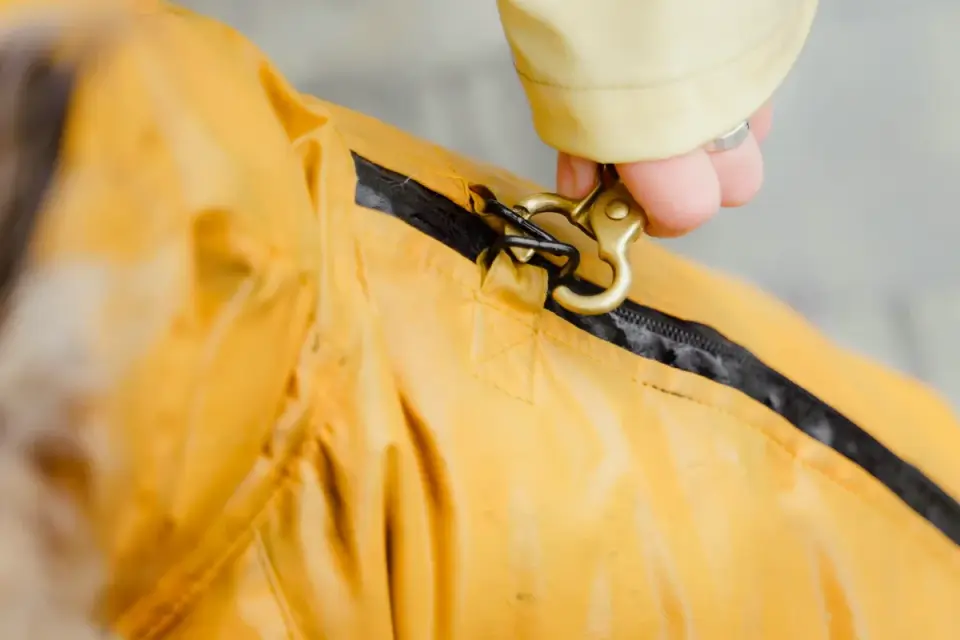
Magnetic or spring-hinge openings stay closed on a walk but pop open with light pressure, so a hand can reach in without a zipper pull breaking focus. Drawstring pouches are cheaper but slower to access mid-session, which works against the timing goal above.
Capacity and cleanability
A pouch sized for a single session, not a whole bag of treats, keeps portions honest and is easier to rinse or wipe after use with soft, moist training treats.
Loading the Pouch Before the Session Starts
Load the pouch before the dog is even leashed up. Pea-sized, soft pieces work better than large or crunchy treats because a dog needs to swallow quickly and refocus rather than chew, which the American Kennel Club also notes when describing effective reward-based sessions. Twenty to thirty small pieces cover most five-to-ten-minute working sessions without overfeeding. Mixing in a slightly higher-value treat for the hardest parts of a session, such as a new cue or a distracting environment, gives room to raise the stakes only when needed.
Positioning: Where the Pouch Sits Matters
Most pouches clip to a waistband, belt loop, or a dedicated strap worn hip-level on the dominant hand’s side. That placement keeps the reaching hand’s travel distance short and consistent, which matters more than it sounds like it should — a dog watching a handler’s hand learns the path to reward almost as fast as it learns the cue itself. Cross-body pouches work for handlers who prefer both hands free of a waist clip, though they add a slightly longer reach.
Timing the Reward: The Window That Actually Teaches
The delivery window most often cited for effective reinforcement is roughly one to two seconds after the correct behavior, based on how operant learning is described by VCA Animal Hospitals. Beyond a few seconds, a dog is likely to be already engaged in some other behavior, and the treat risks reinforcing that instead. A verbal marker word, delivered the instant the behavior happens, bridges any unavoidable gap between the moment and the treat reaching the dog’s mouth. The marker becomes the signal; the treat from the pouch becomes the follow-through.
Short sessions beat long ones for this reason.
A tired handler’s reach slows down, and a slower reach widens the timing gap exactly when consistency matters most.
Fading the Pouch as Training Progresses
Once a behavior is reliable in a low-distraction setting, the ratio of treats to repetitions can drop gradually rather than all at once. A dog that gets a treat every third or fourth correct sit, paired with consistent verbal praise, tends to hold the behavior about as well as one on a full-treat schedule, and this intermittent pattern is part of why trainers keep using pouches even for dogs well past the beginner stage — the pouch stays useful for jackpot rewards on harder tasks even after everyday cues no longer need food every time.
Common Mistakes That Blunt a Pouch’s Usefulness
Overfilling with large treats slows the reach and adds unnecessary calories over a session. Wearing the pouch inconsistently, so a dog only sees it during “real” training, can create treat-seeking behavior tied to the pouch itself rather than the cue. And leaving treats in a closed pouch between sessions without cleaning it can leave residue that dulls how appealing the next batch smells, particularly with soft or oily treats.
Used well, a pouch disappears into the background of a session — the dog responds to cues and praise, and the pouch simply keeps the mechanics of reward delivery fast enough to keep up.
Frequently asked questions
How many treats should go in a training treat pouch?
Enough for the session, not the day. Most working sessions run five to ten minutes and use small, pea-sized pieces, so loading twenty to thirty pieces before starting is usually plenty without turning the pouch into a snack bag.
Should the treat pouch stay on the same side every time?
It helps early on. A dog that is still learning a new cue benefits from a consistent hand-to-pouch path; once the behavior is reliable, switching sides or hands does not undo the learning.
Is a pocket good enough instead of a pouch?
A pocket can work for a single short session, but fumbling for treats slows delivery past the one-to-two-second window that matters for reinforcement, and pocket lint or crumbs make treats less appealing over a full session.
When should treats be phased out of training?
Gradually, once a behavior is reliable across settings, not all at once. Most trainers move from a treat on every repetition to an intermittent schedule while keeping verbal praise consistent, so the pouch becomes a lighter tool rather than a required one.
Sources
- Position Statement on Humane Dog Training — AVSAB
- 4 Tips for Training Your Dog With Rewards — American Kennel Club
- Using Reinforcement and Rewards to Train Your Pet — VCA Animal Hospitals