On this page
Should an arthritic dog swim or walk? Start here before you commit to one:
- If the dog is flaring, sore, or freshly diagnosed — favor swimming or hydrotherapy first; it loads the joint least while the inflammation settles.
- If the dog is stable and on a maintenance plan — short, frequent walks on flat, non-slip ground do more for the muscle that actually protects the joint.
- If stairs, jumping onto the couch, or rising after a nap have gotten visibly harder — that’s a cue to loop in your veterinarian before choosing either activity, not just a coincidence.
- If the dog is overweight — swimming lets you build cardiovascular fitness without hammering the hips and stifles the extra pounds are already stressing.
- If the goal is long-term joint support, not just the next walk — pair either activity with a vet-reviewed nutrition and supplement plan; exercise alone rarely closes the gap.
Neither activity wins outright. They solve different problems, and an owner who picks only one is usually leaving half the job undone.
Why this isn’t really an either/or question
I’ve had this conversation more times than I can count, and it almost always starts the same way: an owner asks me to just tell them which is “better.” The honest answer is that swimming and walking stress the joint in nearly opposite ways, so the real question isn’t which wins — it’s which one the dog needs right now, and how you sequence the two over weeks and months.
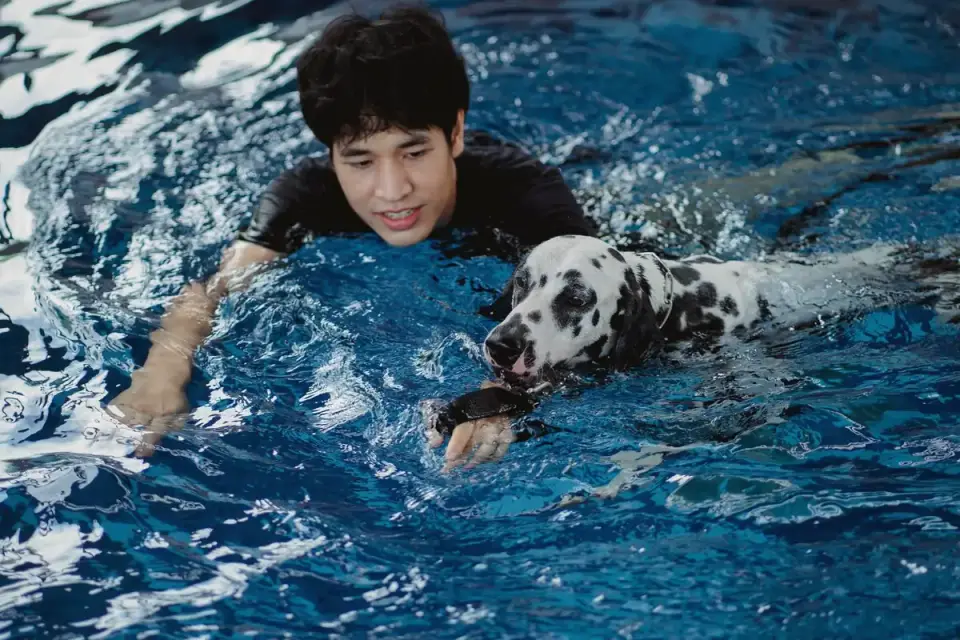
Swimming is buoyant, low-impact, and lets a dog move a stiff joint through a fuller range of motion than gravity usually allows. Walking is weight-bearing, which is exactly the property that keeps the muscles, tendons, and bone around an arthritic joint from atrophying. A joint that never bears weight loses the very tissue that stabilizes it. A joint that only bears weight, with no low-impact recovery work, stays inflamed longer than it needs to.
What swimming is genuinely good at
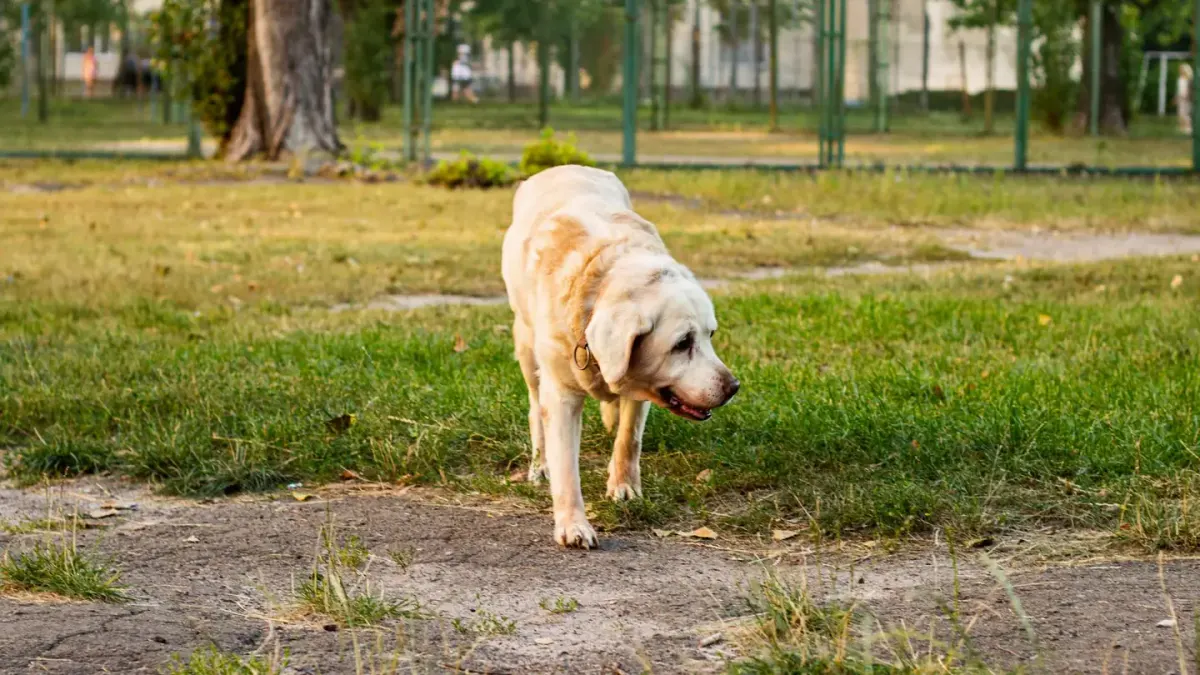
In my practice I once worked with a twelve-year-old Labrador mix named Daisy — sixty-eight pounds, hind-end stiffness that her owner first noticed as a reluctance to jump into the back of the car on cold mornings in late October. By the time she came in, she was taking the stairs one at a time, pausing on each step, something her owner said had crept in over about six weeks. We started her on twice-weekly hydrotherapy sessions before layering in short leash walks. Within a month, her owner reported she was initiating stairs again without the pause, and she was noticeably more willing to follow the family into the yard after dinner. That’s one dog’s course, not a study result — but it’s the pattern I look for when deciding where to start.
Swimming reduces the compressive load on hips, stifles, and elbows nearly to zero while still working the cardiovascular system and the muscles around the joint. It’s the activity I reach for first when a dog is newly diagnosed, mid-flare, or recovering from a joint procedure, because it lets the dog move without the jarring heel-strike of pavement.
What walking still does that swimming can’t
Walking is where the muscle actually gets built. A dog that only swims can lose conditioning in the quadriceps and gluteal muscles that stabilize the hip and stifle from the outside — and those muscles are doing real work every time the dog stands, turns, or gets up off the floor. Short, frequent walks on grass or a soft trail, kept well under the distance that provokes limping, are what maintain that muscular support over months and years, not just weeks.
The trick is dosing it. A fifteen-minute walk twice a day generally beats one long walk, because it gives the joint recovery windows without letting the muscle deteriorate between sessions. Watch the dog’s gait in the last five minutes of the walk, not the first five — that’s when compensation shows up if you’ve pushed too far.
Where nutrition and supplements enter the decision
Exercise addresses the mechanics of the joint. What’s happening at the tissue level — cartilage integrity, synovial fluid quality, inflammatory load — is a separate lever, and it’s one where I weigh what a supplement can realistically do for a dog’s diet, mobility, and recovery rather than treat it as an afterthought.
Glucosamine and chondroitin remain the two most-studied joint ingredients in dogs, and the evidence base, while mixed in places, is more substantial than for most alternatives. A Journal of Veterinary Medical Science review notes that glucosamine HCl can help prevent experimentally induced cartilage degradation in vitro — a mechanistic finding, not a clinical cure, but a reasonable piece of the rationale for including it. Separately, research published in Frontiers in Veterinary Science found that chondroitin supports healthy synovial fluid homeostasis, which matters because synovial fluid is what actually lubricates a joint moving through the range of motion swimming demands.
Green-lipped mussel is the ingredient I get asked about most often now. A study in Nutrients found that mussel-derived compounds alleviated paw swelling in an animal model and reduced circulating markers of inflammation, including TNF-α and IL-17 — evidence drawn from an in-vitro and rodent model, not a canine clinical trial, so I frame it to owners as a reasonable inflammatory-support ingredient rather than a proven treatment. None of these ingredients replace a diagnosis or a rehab plan; they’re a supporting layer under exercise, not a substitute for it.
Building a rotation instead of picking a side
The owners I see most often want a single answer they can follow without thinking about it again, and I understand the appeal — but arthritis doesn’t stay in one state long enough for a single answer to hold. A dog having a rough week does better with more pool time and less pavement. A dog that’s stable and slightly deconditioned does better with more frequent short walks. The mistake I see most is an owner locking into one activity because it worked once, then sticking with it even as the dog’s needs shift under them.
If you’re also weighing how a treadmill compares to outdoor walking for building that muscle without the joint impact, our guide on Dog Treadmill vs. Outdoor Walking covers that tradeoff directly. For dogs who can’t do much of either activity during a flare, see Mental and Physical Enrichment When Your Dog Can’t Exercise. And if you’re managing a smaller arthritic dog whose joints load differently than a Labrador’s, our piece on Exercise Ideas for Toy and Small Breeds is worth reading alongside this one.

So which one should your dog do this week — the pool or the sidewalk? Ask what the last flare looked like, what the last vet visit said about muscle mass around the joint, and let that answer the question instead of a general rule.
Sources
- Effects of chondroitin on synovial fluid homeostasis — Frontiers in Veterinary Science
- Glucosamine HCl and cartilage degradation — Journal of Veterinary Medical Science
- Blue mussel oil, green mussel oil, and mussel powder in arthritis models — Nutrients