On this page
I counsel owners to decide this on the ride itself, not the booking button: will your dog stay secure, cool, and calm from curb to terminal with flight timing built in?
If you can answer yes to all three, book it. If not, keep looking.
The checklist I run before I would book:
- What vehicle and restraint will my dog actually ride in — secured crate, crash-tested harness, or loose?
- Is the car climate-controlled with rear ventilation, and will the driver keep it running during waits?
- What is the driver’s animal handling experience and pet-specific insurance?
- How do you plan airport timing, flight tracking, and curbside waiting?
- What is the cleaning protocol between dogs, and are dogs ever mixed?
- What paperwork do you require, and what do you provide for airline check-in?
- What is the cancellation, delay, and backup-vehicle policy?
- Can I do a short trial ride first?
Run that list on the phone. A good operator answers without hedging.
Will your dog ride secured or just along for the ride?
A driver once told me about a pickup that looked simple on paper: a 4-year-old, 62-pound Labrador mix heading to departures for an early domestic flight, owner juggling a roller bag, carrier for a second small dog, and a leash looped around a wrist. Three weeks in conversation terms, this was day-zero planning. The decision was crate in the cargo area versus back seat with a harness. The owner worried the crate felt too confining for a 25-minute ride. On the trial sit, the Lab paced, panted, and stepped on the seatbelt buckle twice in five minutes, then settled within three minutes once loaded into a secured, right-sized crate with a non-slip mat. That observable change — pacing to sternal rest by minute three — made the choice concrete.
I land here for most airport transfers: a secured crate or a properly fitted vehicle harness may help support safer travel by limiting forward movement and driver distraction. Loose riding is what I reject for airport runs, even for calm dogs. Terminal traffic means hard stops.
Check what the company actually owns. Ask for crate dimensions, how crates are anchored, and which harness brands and sizes they stock. A blanket on the seat is not restraint. If you want background on options, read Dog Car Seat Belt vs Crate vs Barrier: Which Restraint Is Safest? before you call.
Ventilation matters as much as restraint. Ask whether rear vents reach the crate area and whether the driver stays with the vehicle with climate control on during check-in help. The American Veterinary Medical Association reminds owners to plan for heat risk and ventilation during car travel, and airport curbsides can run hot even in shoulder seasons.
When cheap and fast backfires at departures
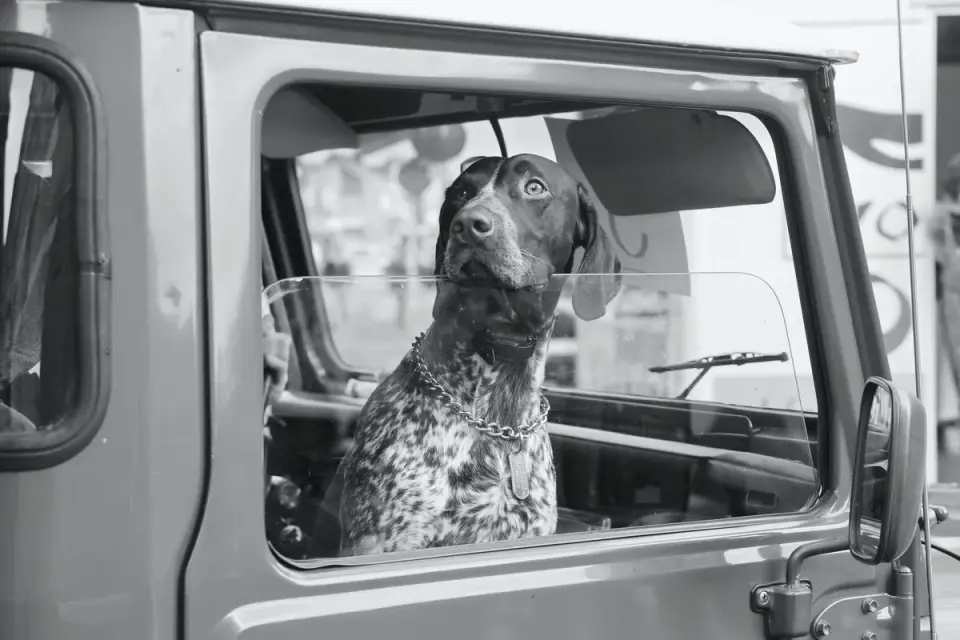
The tradeoff I see most is booking a standard rideshare to save money and assuming the driver will allow a large dog. One composite scenario I hear: an owner with a 7-year-old, 48-pound cattle-dog mix booked a regular sedan 40 minutes before a checked-baggage cutoff. The driver arrived with air fresheners, no seat cover, and a no-pets policy he enforced on sight. The owner tried a last-minute swap to a friend’s car without a crate. By day 10 retelling, the detail she remembered was not the missed flight — it was the dog panting hard and drooling through the second pickup attempt after 18 minutes on a hot sidewalk.
That failed approach complicates my crate-first recommendation, because the real failure was timing and screening, not equipment. A pet taxi earns its fee on airport-specific logistics: flight tracking, 15- to 30-minute buffers for pet check-in lines, knowledge of which terminal allows crated dogs beyond the doors, and a plan for where you wait together.
Ask directly: do you track flights, where do you stage for pickups, and what happens if my flight is delayed three hours? Get the late fee in writing.
How to book a taxi or rideshare with a dog
If a dedicated pet taxi isn’t available, you can still book a regular ride with a dog. The step owners skip is telling the driver before the car arrives.
- Say it at booking. Some rideshare apps offer a pet-friendly ride type in some cities; choose it where it exists. If you are calling a local taxi company, say you have a dog and give its size and weight, and whether it will be in a crate or carrier.
- Message the driver as soon as one is assigned. A short note (“one 50-pound dog, on a harness, I have a seat cover”) gives the driver the chance to decline before the pickup, not at the curb.
- Book a larger vehicle for a large dog or a crate. An SUV or van fits a crate and luggage; a sedan often does not.
- Build in time for a refusal. Unless your dog is a service animal, a driver can usually decline a pet. Book earlier than you would without the dog so a second request doesn’t cost you the flight.
- Know the service-animal rule. In the United States, taxi and rideshare drivers generally may not refuse a trained service animal. That protection does not cover pets or emotional support animals.
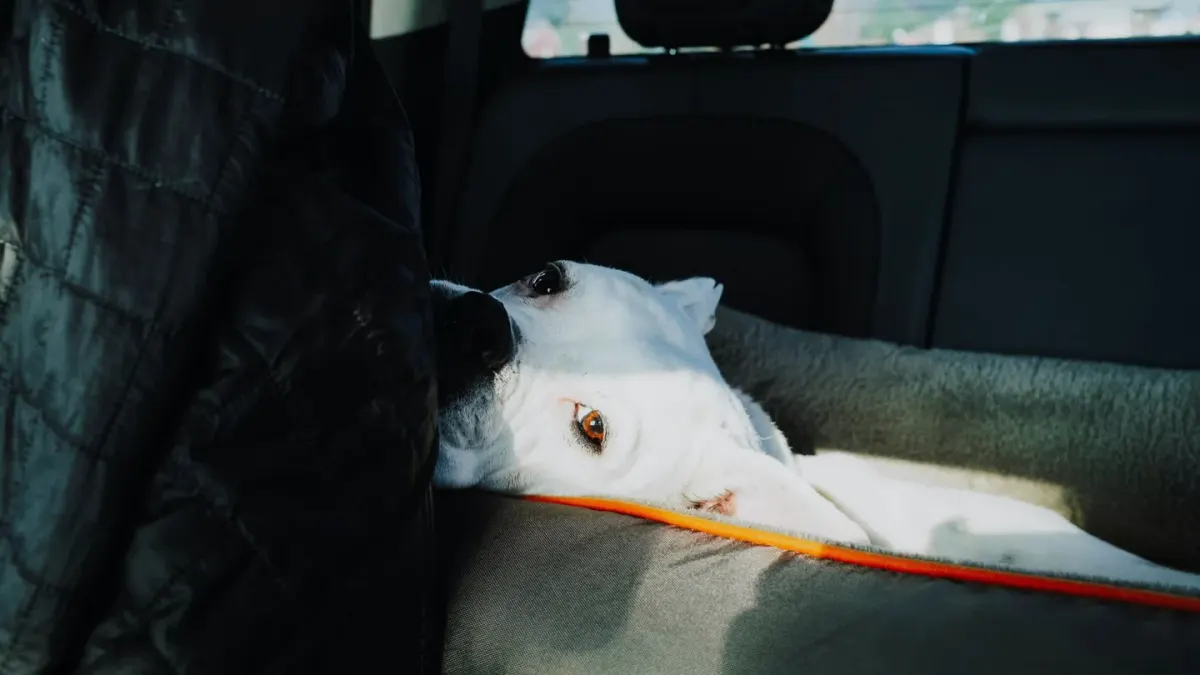
Bring a blanket or seat cover for the transfer
Even with a pet-friendly driver, bring your own cover: a washable blanket or a fitted back-seat cover protects the car from hair, mud and drool and makes the next pickup more likely to say yes. It also gives your dog a familiar-smelling surface to lie on, which can help a nervous dog settle. Choose one with a non-slip backing, keep it separate from the bedding you pack for the trip, and leave room for the crate or harness restraint to work as designed; a blanket is comfort and cleanliness, not restraint.
Paperwork, cleaning, and who else rode before you
Ask what vaccines and records they require. At minimum expect current rabies documentation and a clean bill for cough or gastrointestinal signs. This is preventive baseline care, not bureaucracy. Dogs sharing vehicles can pass kennel cough and intestinal parasites on straps and bedding. Ask how crates, covers, bowls, and seatbelts are cleaned between rides and how long they air-dry.
Ask whether dogs ever ride together. I prefer solo or same-household-only rides for airport transfers. Mixed loads raise stress and restraint risk.
For flights themselves, paperwork gets stricter. International arrivals in particular may need microchip, vaccines, and CDC forms completed ahead of time. The Centers for Disease Control and Prevention outlines current dog import requirements, and your taxi driver should ask where your documents are — not carry them for you, but confirm you have them in hand before leaving. Pair this with How to Fly With a Dog: The Complete Guide and How to Measure Your Dog for an Airline-Approved Carrier so the car crate and the airline carrier match your plan.
Confirm insurance too. Personal auto plus a pet-transport endorsement or commercial animal-care coverage is different from “we love dogs.” Ask for proof.
The edge case that changes the plan
Brachycephalic breeds, seniors, and anxious dogs rewrite the checklist. I think of a composite case: a 9-year-old, 18-pound French Bulldog with a history of loud breathing, booked for a summer midday pickup. The owner expected a standard crate in the back. On a 10-minute trial ride, the dog’s respiratory rate stayed elevated at 68 breaths per minute five minutes after loading, with open-mouth breathing that did not settle until the rear vents were redirected and the crate door was opened for airflow at a standstill.
That number changed the recommendation. For this profile, I prioritize direct airflow, shorter wait times, cabin seating with the owner present rather than an isolated cargo crate, and a driver willing to load last and unload first.
Expectation first: heat and stress may affect breathing and behavior, and no taxi setup promises to prevent that. What may help support a calmer ride is low-stress handling, familiar bedding, a pre-ride potty stop, and realistic timelines that avoid rushing. Ask if the driver will do a quiet load, skip strong fragrances, and allow you to ride in back with a small dog where local rules permit.
Trial rides are worth it here.
What I would book
Book the company that answers restraint, air, and timing questions in specific terms.
Solo ride, secured crate or fitted harness, running climate control, documented cleaning, flight tracking, and a written delay plan beat a lower fare every time.
A short trial tells you more than reviews.
Frequently asked questions
Should my dog ride in a crate or on a harness in a pet taxi?
For most airport transfers I prefer a secured, right-sized crate or a properly fitted vehicle harness anchored to the car. Loose riding raises injury and escape risk during hard stops and curbside unloading.
How early should a pet taxi pick us up for a flight with a dog?
Add 15 to 30 minutes beyond your normal airport buffer for potty stops, crate loading, and pet check-in lines, plus the company's flight-tracking plan. Get delay and wait fees in writing.
Sources
- Traveling with Your Pet — American Veterinary Medical Association
- Bringing a Dog into the United States — Centers for Disease Control and Prevention