On this page
- Why does a kitchen concentrate so much of the risk?
- What’s actually on the floor and counter edge that can hurt a puppy?
- How do you secure cabinets, trash, and cords a puppy can reach?
- Which foods need to move out of nose range specifically?
- How do you manage the kitchen while you’re actively cooking?
- When is a puppy actually kitchen-safe?
A new puppy in the kitchen is rarely dramatic. It’s quieter than that — a dropped grape, a cabinet door that doesn’t quite latch, a trash bag left one night too many. The families I talk with aren’t usually worried about the obvious stove-and-knife hazards. They’re worried about the thing they didn’t think to check, and that worry is fair.
Why does a kitchen concentrate so much of the risk?
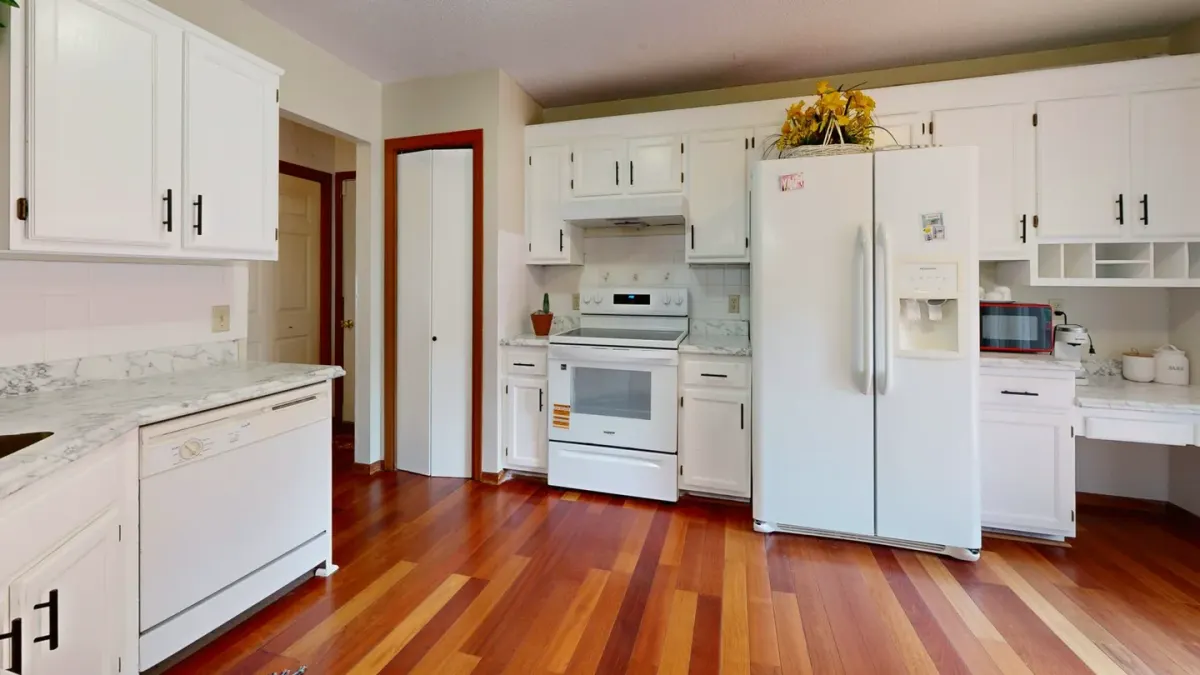
A kitchen puts three things in one room that a puppy’s mouth-first exploration style makes dangerous together: food residue at floor level, chemical products under the sink, and cords running along the baseboards. Puppies investigate the world by mouthing it, not by looking, so anything within nose-and-tongue range of the floor is functionally within reach even if it looks tucked away to an adult standing upright. That’s the mechanism worth keeping in mind as you walk the room: think from about eight inches off the ground, not from eye level.
What’s actually on the floor and counter edge that can hurt a puppy?
Start with food. Chocolate, xylitol, grapes and raisins, and onions or garlic are the four repeat offenders behind most kitchen-related poison-control calls, according to the ASPCA. Xylitol is worth understanding specifically, because the mechanism is fast: a dog’s body mistakes it for real sugar, releases a surge of insulin, and blood sugar can drop sharply within fifteen to thirty minutes of ingestion. That’s a mechanism the FDA flagged directly enough to issue a consumer alert, reported in detail by dvm360. Onions and garlic work differently — they damage red blood cells over hours to days rather than minutes, which is why a dog can seem fine right after eating a pan of sautéed onions and only show symptoms later, a pattern Pet Poison Helpline documents in its case data.
None of this means treating your puppy’s presence in the kitchen as an emergency every single day. It means being specific about what’s on the counter edge and the floor before the puppy is loose in the room.
How do you secure cabinets, trash, and cords a puppy can reach?
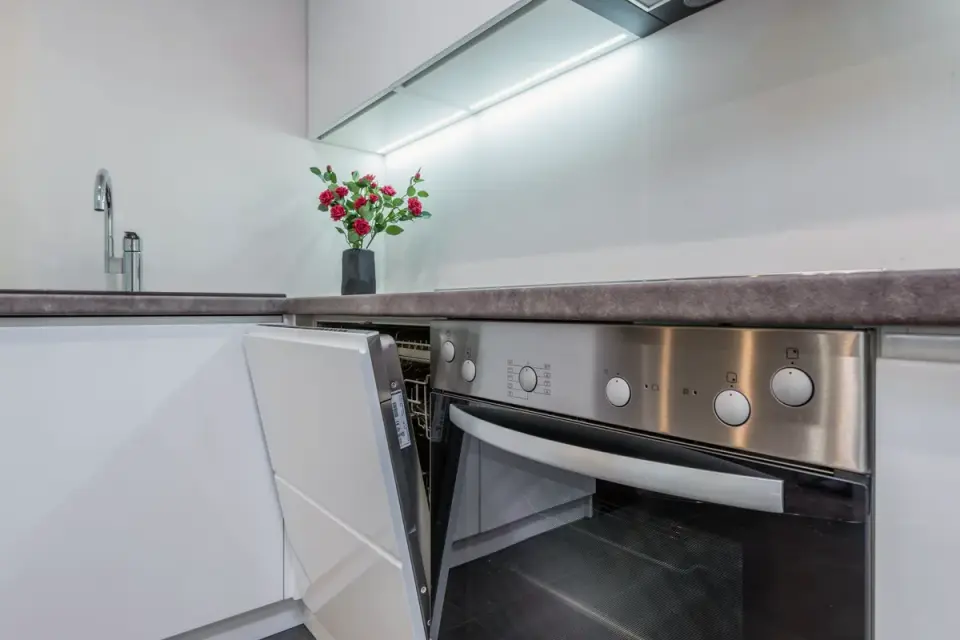
Cabinet latches on anything below counter height are the single highest-value fix, because they remove access rather than relying on supervision. A trash can with a locking lid, or one stored behind a latched cabinet, closes the second-most-common gap — puppies are drawn to food-scented trash regardless of what’s actually still edible in it. Cords for small appliances should run along the wall and out of chewing range where practical; a chewed cord is both an electrical risk and, less obviously, a choking risk if insulation comes loose in pieces.
If your kitchen doubles as a feeding station, the same floor-level review applies to bowls and mats. The Best Mat for a Messy Dog Feeding Station walks through material and shape choices that also reduce how much food debris ends up scattered where a puppy can graze on it between meals.
Which foods need to move out of nose range specifically?
Move sweetened items — gum, some peanut butters, baked goods — off any surface a puppy can reach by standing on hind legs, since counter height is not actually a reliable barrier for most breeds by four to six months old. Store onions, garlic, and alliums in a closed pantry rather than a bowl on the counter. If you’re introducing new foods intentionally, stick to ones with a known safety profile; Can Dogs Eat Sweet Potato? covers prep and portioning for one option that’s genuinely fine in moderation, which is a useful contrast to the four ingredients above.
How do you manage the kitchen while you’re actively cooking?
This is the highest-risk window, because attention is split and food is moving from counter to stove to table. A baby gate or exercise pen at the kitchen threshold is the simplest fix — it keeps a puppy present enough to feel included without being underfoot near hot surfaces or dropped ingredients. For puppies with a lot of pent-up energy who pace and beg during cooking time, a short structured outlet beforehand can take the edge off; Exercise Ideas for Toy and Small Breeds has age-appropriate options that don’t require much space.
When is a puppy actually kitchen-safe?
There isn’t a fixed age where supervision stops mattering — it’s a gradual handoff, not a switch. What changes over months is how reliably your puppy responds to redirection and how much you’ve already removed from reach. I’d rather see a family keep the gate up an extra few months than assume maturity that hasn’t quite arrived yet. What would it look like to treat kitchen access as something your dog earns gradually, rather than a space you either fully allow or fully block?
Frequently asked questions
How do I puppy proof the kitchen if I can't watch my dog every minute?
Use physical barriers rather than memory: latch lower cabinets, keep the trash can lidded or behind a door, and use a baby gate or exercise pen to block the kitchen when you're not actively supervising. Management that doesn't depend on you remembering is the most reliable layer.
What foods should never be left on a low counter or table edge?
Chocolate, anything sweetened with xylitol, grapes and raisins, and onions or garlic are the highest-risk items, since all four can cause measurable harm in amounts a small dog can reach in seconds.
Are cabinet locks really necessary if my puppy hasn't chewed anything yet?
Chewing behavior in puppies changes fast, often within weeks, so waiting for evidence of a habit before installing latches means reacting after an ingestion rather than preventing one.
Sources
- People Foods to Avoid Feeding Your Pets — ASPCA
- Onions Are Toxic To Dogs — Pet Poison Helpline
- FDA issues new warning about xylitol poisoning in dogs, ferrets — dvm360