On this page
A client of mine once brought in a Cavalier who’d started refusing kibble but would trot over for a bite of roasted sweet potato from the counter. Reasonable question, and a common one: is that actually fine, or just tolerated? The short version is that most dogs can eat cooked, peeled sweet potato in small amounts, though raw sweet potato poses real digestive risks worth taking seriously.
Cooked Versus Raw: The Distinction That Actually Matters
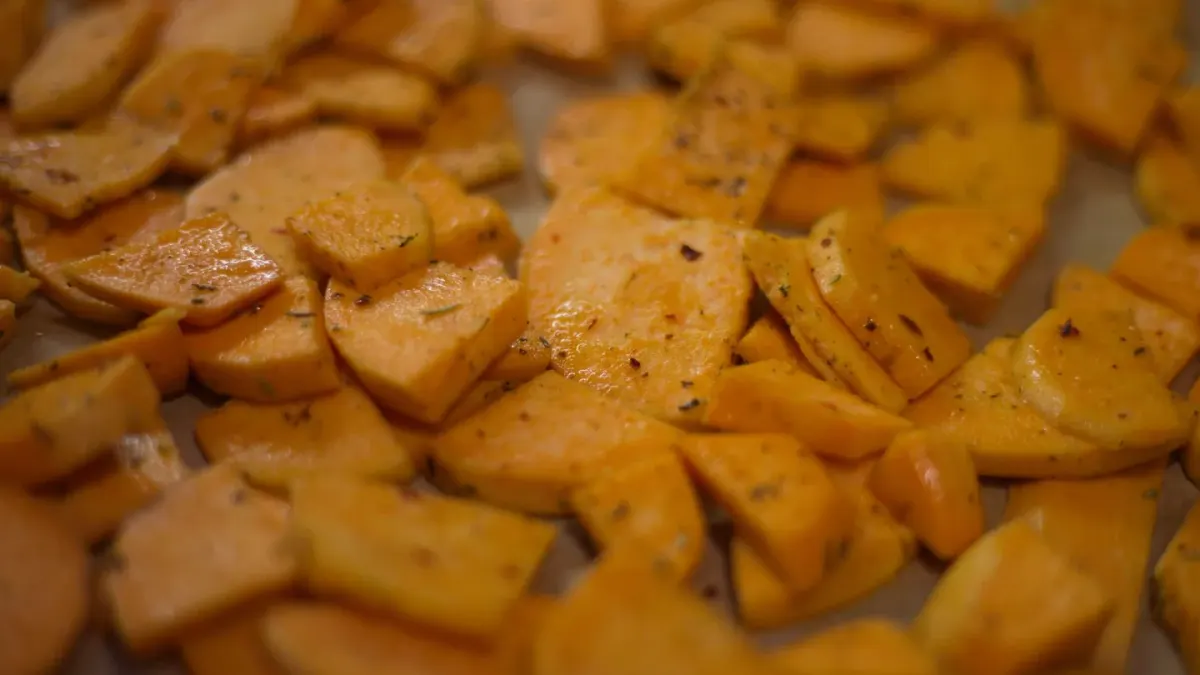
The prep method does more work here than the ingredient itself. According to the American Kennel Club, sweet potatoes offer dietary fiber along with vitamins A, B6, and C, plus calcium, potassium, and iron, and dogs process the cooked, softened form reasonably well. Raw sweet potato is a different animal entirely. It’s dense and starchy, hard on a dog’s teeth and gut, and the AKC notes it can upset a dog’s stomach and even raise the odds of an intestinal blockage in a smaller dog that swallows a chunk whole. Skin-on pieces carry a similar, if smaller, downside — tougher to digest, with little upside to offset it. Peel it, cook it until soft, skip the butter and salt, and you’ve addressed most of the practical risk.

Fiber and Vitamin A: Real Benefits, With a Ceiling
I weigh ingredients the same way I’d weigh a supplement: what can this food realistically do for a dog’s diet, versus what it’s being asked to do. Sweet potato’s fiber content can support normal digestion in a healthy dog eating it occasionally, and its vitamin A contributes to eye, skin, and nerve function, per the AKC’s veterinary source. That’s a legitimate structural benefit, not a cure for anything, and it comes with a ceiling. Fed in excess, vitamin A can build toward bone and muscle weakness over time. It’s also a carbohydrate-dense food with a notably high glycemic index, so it deserves extra caution in diabetic, overweight, or sedentary dogs whose blood sugar or weight is already a concern. None of this makes sweet potato dangerous. It just means the honest framing is “occasional side, not daily staple,” and that’s a distinction worth holding onto rather than glossing over.
The DCM Question, Answered Honestly
This is the part owners usually ask about once they’ve read enough forum posts to get nervous. The FDA opened an investigation in 2018 into diet-associated dilated cardiomyopathy after reports involving dogs eating grain-free diets heavy in peas, lentils, and potatoes. That’s a real, well-documented review, and it’s fair to bring up. But it’s also easy to overstate. The agency’s own case data centered on diets where potatoes or legumes functioned as a primary starch replacing grain across nearly every meal for months or years — not a dog getting a spoonful of cooked sweet potato as an occasional treat. The FDA never isolated a single ingredient as the confirmed cause, and it eventually stepped back from routine public updates because the picture stayed multifactorial. A single serving of cooked sweet potato and a diet architecturally built on potato starch are two different exposures, and treating them as equivalent risks isn’t supported by what the investigation actually found.
Weighing It the Way You’d Weigh Any Add-In
So where does that leave a dog owner standing at the stove with a leftover sweet potato? Cooked, peeled, unseasoned, and offered in small amounts, it’s a reasonable occasional food for most healthy dogs — one that contributes real fiber and vitamin content without asking it to replace a complete diet. Raw pieces and skin-on servings shift the calculus toward risk without adding meaningful benefit, and dogs with diabetes, obesity, or a sensitivity to rich foods deserve a more conservative approach or a vet’s input before it becomes a habit. Judge it on those terms, not on the ingredient’s reputation alone.
Frequently asked questions
Can dogs eat sweet potato skin?
It's better to peel it. The skin is tougher to digest and adds a choking or blockage risk without adding much nutritional benefit, per the American Kennel Club.
Can dogs eat raw sweet potato?
No. Raw sweet potato is hard to chew, harder to digest, and more likely to cause stomach upset or a blockage than the cooked form.
Are sweet potatoes linked to heart disease in dogs?
The FDA's dilated cardiomyopathy investigation flagged diets heavy in potatoes and legumes as a possible contributing factor in some cases, but a specific ingredient-level cause was never confirmed. A single cooked serving is a different exposure than a diet built around potato as a primary starch.
How much sweet potato can a dog have?
Keep it small and occasional. Treats and extras, sweet potato included, are generally kept to a minor share of a dog's daily calories, with the rest coming from a complete, balanced diet.