On this page
If you’ve ever mopped kibble crumbs and water drips off the kitchen floor for the third time in a day, you already know the problem a feeding mat is solving. The question isn’t whether you need one. It’s which features actually earn their keep, and which ones are just packaging.
What a Feeding Mat Is Really Protecting Against
Most of the mess at a dog’s feeding station comes from three places: water sloshing out of a bowl as the dog drinks, kibble pieces that get flicked or dropped during enthusiastic eating, and the bowl itself sliding across a hard floor. A good mat addresses all three, but a lot of mats on the market only really solve one of them — usually the water.
Think about your own dog’s habits before you shop. A dog who drinks in careful sips needs less containment than one who dunks his whole muzzle in and comes up dripping. A dog who paws at an empty bowl to signal “more, please” needs a mat that won’t slide, not just one that’s absorbent.
Material Matters More Than the Marketing Copy Suggests
Silicone mats have become the default recommendation for a reason. They’re flexible enough to fold for travel, they don’t absorb odors the way fabric can, and cleanup is usually a rinse under the tap or a trip through the dishwasher. Rubber-backed fabric mats are the other common option — they tend to grip smooth tile a little more firmly than silicone does, and some owners find the fabric surface more comfortable underfoot for an arthritic dog who stands to eat.
Neither material is objectively superior. What matters is matching it to your situation: a determined chewer does better with a single-piece silicone mat that doesn’t have loose fabric edges to gnaw on, while a household with hardwood or tile that gets slippery benefits from whichever surface actually stays put in a real-world test, not just a store display.
Lip Height and Tray Design: The Detail Most Buyers Skip
A flat mat with no raised edge will still let water run off onto the floor the moment your dog nudges the bowl or drinks with any enthusiasm. A tray-style mat, with even a modest half-inch lip around the perimeter, changes that math substantially. It gives spilled water and dropped food somewhere to sit until you wipe it up, rather than a route straight to your baseboards.
If your dog is a heavy drinker or a fast, sloppy eater, prioritize lip height over almost every other feature. A taller lip does mean slightly more work to clean — you’re wiping a small basin instead of a flat sheet — but for a genuinely messy eater, that tradeoff is worth it.
Should You Elevate the Bowl Too?
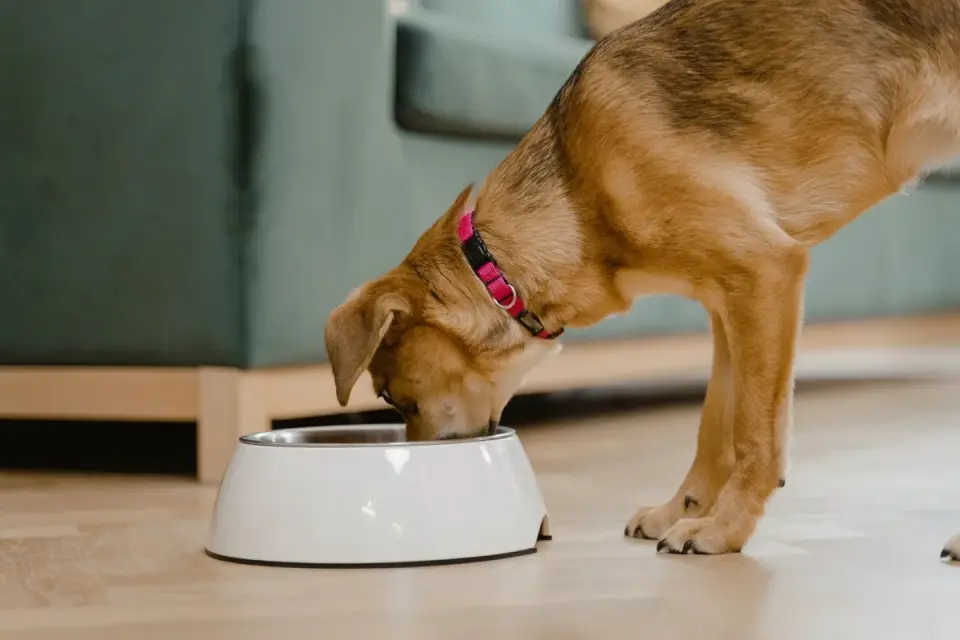
It’s tempting to pair a mat with a raised feeder, especially for a senior dog who seems to strain reaching down to the floor. I understand that instinct — watching an older dog struggle with something as basic as a meal is hard on a family, and comfort at mealtime matters. But the evidence here asks for caution rather than convenience. Research summarized by Whole Dog Journal found that large and giant-breed dogs eating from an elevated feeder carry an increased association with gastric dilatation-volvulus, the life-threatening stomach-twisting emergency commonly called bloat. The exact mechanism isn’t settled — one theory is that the higher head position encourages faster air-swallowing — but the same research also notes that floor-level bowls do not raise GDV risk in dogs of any size.
For a small or toy breed, that risk pattern doesn’t really apply, and a slightly raised bowl paired with a mat can still be reasonable if a vet has looked at your dog’s neck and spine and thinks it’s warranted. For anyone with a large or giant breed, or any dog with a known GDV risk factor, floor-level feeding on a good mat is the safer starting point. Ask your veterinarian before you elevate.
Fitting the Mat to the Dog, Not Just the Bowl
A mat sized only to your bowls will look tidy in the store and fail within a week of real use. Add margin — several inches on each side if your dog tends to push the dish around, more if you’re dealing with a puppy who hasn’t learned table manners yet. For multi-dog households, a single shared mat rarely works as well as two mats spaced apart; dogs guard resources, and crowding two bowls together on one surface can create tension at mealtime that has nothing to do with the mat’s design.
Non-slip backing is worth checking in person or in reviews, since “non-slip” is printed on packaging far more often than it’s true on a real kitchen floor. A mat that slides an inch with every bowl push isn’t really doing its job, no matter how absorbent the top surface is.
A Practical Next Step
Start with what your dog’s actual mess looks like this week — is it water, kibble, or a sliding bowl — and buy for that specific problem rather than the most expensive mat on the shelf. If you’re weighing a raised feeder for an older or arthritic dog, bring it up at the next checkup so your vet can factor in breed, size, and any GDV history before you make the switch.
Frequently asked questions
Should I use a raised feeder to help with a messy eater?
Not automatically. Large and giant-breed dogs who eat from an elevated feeder have a documented association with higher gastric dilatation-volvulus (GDV, or bloat) risk, according to research summarized by Whole Dog Journal. For most dogs, a floor-level bowl on a mat is the safer default; talk to your vet before elevating a large or giant breed's dish.
Is silicone or rubber better for a feeding mat?
Both work well for containing spills. Silicone tends to be more flexible and easier to fold for travel, while rubber-backed fabric mats often grip tile floors a little more aggressively. Neither is inherently 'better' — pick based on your dog's chewing habits and your floor type.
How often should I wash a dog feeding mat?
A quick rinse or wipe-down after each meal keeps bacteria and mold from building up in food residue, and a full wash (dishwasher-safe or hand wash, depending on the material) once or twice a week is a reasonable baseline for most households.
What size mat do I actually need?
Measure your bowls with a couple of inches of margin on every side, then add more if your dog tends to nose the dish around while eating. A mat that's too small just relocates the mess to its edges.
Sources
- All About Elevated Dog Bowls — Whole Dog Journal