On this page
Learning how to trim the hair around your dog’s eyes safely protects the cornea and reduces irritation. That’s the whole job in one sentence, but the mechanics of doing it without a nick or a startled dog take a little more explaining.
What you need before you start
A few things make this job go smoothly, and skipping them is where most at-home trims go sideways.
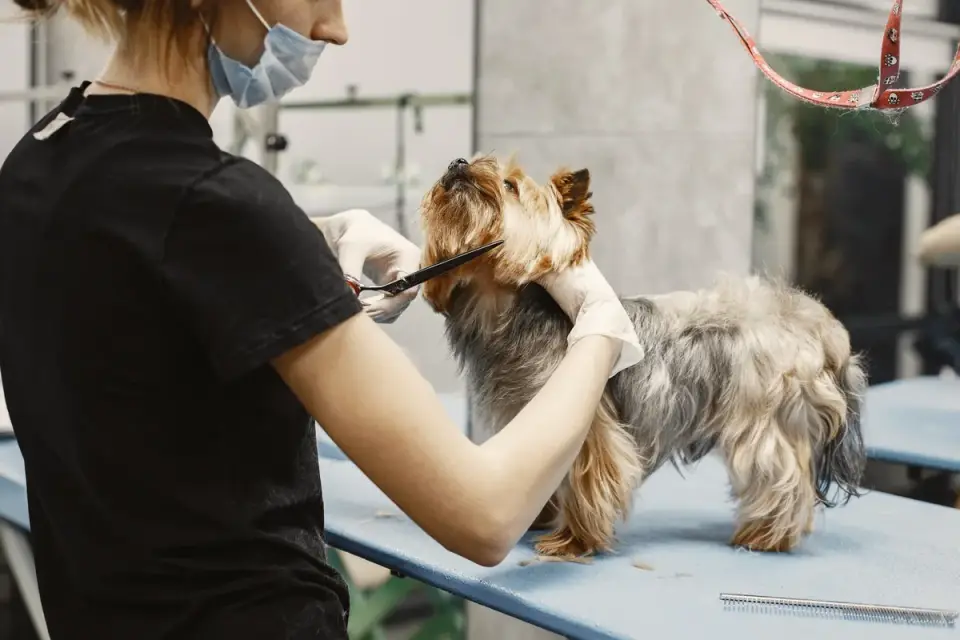
- Blunt-tip scissors, 4 to 6 inches. The rounded end can’t puncture skin the way a pointed shear can if your dog jerks mid-snip. This is the single most important tool decision in the whole process, according to Wahl’s grooming guidance.
- A steady light source and a calm room. You want to see individual hairs, not work from memory in dim light.
- A fine comb. Combing hair forward and away from the eye before you cut gives you a clean line to trim against instead of guessing where the eyelid ends.
- A second pair of hands, if your dog fidgets. Someone gently holding the head still is worth more than any tool on this list.
Matted or tangled hair belongs on a separate to-do item. Detangle or brush it out first, because pulling a mat mid-trim is what causes the sudden head-jerk that leads to accidents.
Why the hair around a dog’s eyes actually matters
It isn’t purely cosmetic. Hair that constantly brushes against the cornea can irritate or scratch it over time, and eyelashes that grow long enough to curl inward can do the same thing more directly. In some dogs, overgrown hair also physically blocks the tear duct opening, which contributes to the watery-eye pattern known as epiphora. VCA Animal Hospitals notes that epiphora has several possible causes, ranging from simple anatomy and blocked drainage to allergies or eyelid abnormalities, so hair is one contributing factor among several worth ruling out.
When tears do sit against damp fur for long stretches, that dampness becomes a favorable environment for the yeast and bacteria that cause reddish-brown staining. PetMD points to keeping the hair around the eyes short as one practical way to manage that staining, alongside treating whatever is driving the excess tearing in the first place.
The trim itself, step by step
Start with the dog seated or standing comfortably, head roughly level with your hands. Comb the hair forward and hold it between two fingers so you know exactly what you’re cutting before the blade closes.
Work in tiny increments. Cut two or three hairs at a time with the scissors held parallel to the face, never pointed toward the eye. Resting the flat of the blade lightly against the skin as you go gives you a steady reference point and keeps the tip from wandering. Trim a little, check the result, trim a little more — it’s slower than one long cut, but it’s also the difference between an even result and an accidental nick.
For the “bangs” over the forehead, comb them straight down and trim in a gentle line above the eyes rather than a hard, straight-across cut, which can look severe and leaves less margin for error near the brow.
Reading resistance instead of pushing through it
A dog who turns away, paws at its face, or tenses its jaw is telling you something. That’s worth listening to the same way you’d want a dog to signal discomfort during any close-contact handling — the same logic that shows up in reading a dog’s warning signs when petted applies here: small signals are easier to work with than a full flinch mid-cut.
If your dog won’t settle, stop for the day rather than muscling through. Short, low-stress sessions repeated over a week tend to produce a calmer dog and a cleaner trim than one long forced sitting. The gradual, short-session approach that works for getting a dog used to tooth brushing applies just as well to scissors near the face — familiarity with the tool and the handling matters more than finishing fast.
Breeds with heavy facial coats, including many that also benefit from other coat-management routines for thick-coated dogs, often need this trim on a recurring schedule rather than as a one-time fix, since the hair simply grows back.
When it’s more than just hair
A trim that goes well should leave your dog blinking normally within a few minutes. If your dog’s eye stays red, swollen, or held shut, or if there’s heavy discharge more than a day after grooming, that’s a reason to call your veterinarian rather than wait it out — it could indicate a scratched cornea, which needs an exam and, often, medication to heal properly.
If your dog has chronically watery eyes regardless of haircut schedule, mention it at your next visit. Persistent epiphora can have causes beyond hair, and a vet exam is the only reliable way to sort out whether it’s anatomy, allergies, or a blocked duct doing the work.
Bottom line: trimming the hair around a dog’s eyes is a routine grooming task, not a delicate surgical one, as long as you use blunt-tip scissors, work in small snips parallel to the face, and stop the moment your dog tells you to.
Frequently asked questions
What kind of scissors are safest for trimming hair around a dog's eyes?
Blunt-tip (rounded-end) grooming scissors, usually 4 to 6 inches long, are the standard choice because the rounded tip can't puncture skin or the eye if your dog moves unexpectedly.
How short should I trim the hair around my dog's eyes?
Aim to keep hair roughly a quarter inch clear of the eye surface. You don't need it flush against the skin; the goal is just to stop hair from touching the cornea or trapping tears.
Can trimming hair around the eyes help with tear stains?
It can help. Hair that stays damp with tears becomes a breeding ground for the yeast and bacteria that darken tear stains, so keeping the area short and dry is part of managing them, alongside addressing any underlying drainage issue.
My dog won't hold still for a trim near the eyes. What should I do?
Stop rather than push through. Short sessions, a treat-and-pause rhythm, and a helper to steady the head work better than forcing it, and a groomer or vet can finish the job safely if your dog is too wiggly for scissors at home.
Sources
- Eye Discharge (Epiphora) in Dogs — VCA Animal Hospitals
- Epiphora in Dogs: Causes and Treatment — PetMD
- How to Clean & Trim Around Your Dog's Eyes & Ears — Wahl