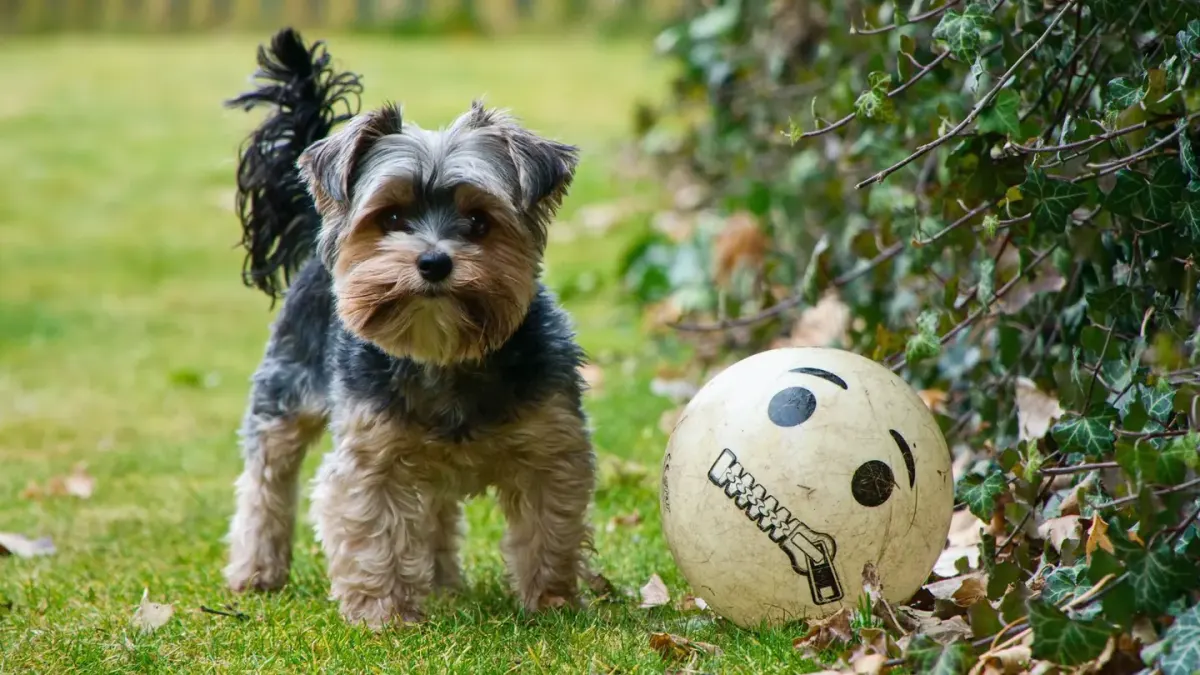
A three-year-old Labrador mix is vibrating at the edge of an open soccer field on a cool Saturday morning, ball already in his mouth, owner holding a new long-handled launcher for the first time. The decision is whether to air it out as far as it will go or keep throws low, short, and curved so the dog can track and gather without skidding. She chooses three warm-up tosses under 15 yards, watches his turns, checks that his breathing settles between reps, and only then adds distance. That first five minutes tells her more than the packaging ever could.
What should you decide before the first real throw? That opening choice — maximum distance versus controlled repetitions — shapes joint load, mouth safety, and arousal for the whole session. From a sports-medicine perspective, repetitive sprint-stop-twist cycles load shoulders, carpus, and the caudal cruciate complex more than steady trotting does. Nutrition and conditioning may help support normal mobility and recovery, but they do not offset poor mechanics. I weigh what a supplement can realistically do for diet, mobility, and recovery as background support, not as permission to over-throw. Ground an integrative claim in the nutritional evidence: omega-3s, balanced protein, and maintenance of lean body condition may help support joint comfort and everyday recovery after activity.
Set the field so the dog can succeed without a scramble. Walk the area for glass, holes, sticks, and fences. For manual launchers, confirm you have room to swing without clipping another person or dog. For automatic launchers, place the machine on flat ground with 20 to 30 feet of clear run-out in front and to the sides, pointed away from stairs, water, and roads. Use balls sized for the dog — too small is a choking and obstruction risk, too large changes grip and jaw strain.
Ball choice matters more than launcher brand. Smooth rubber balls that rinse clean tend to hold up better than felt-covered tennis balls, which trap grit and wear teeth with chronic chewing. I break down that tradeoff in Tennis Balls vs. Rubber Balls for Fetch: Which One Should You Actually Throw? and the cleaning routine that keeps mouths healthier in How to Clean and Disinfect Dog Toys.
Read the dog before you read the dial
A lanky adolescent Border Collie learned this lesson the hard way last summer at a neighborhood park. His owner, proud of a new automatic launcher, ran 12 consecutive launches on the medium setting with barely 20 seconds between balls. By throw nine the dog was cutting corners wide, by throw eleven he was mouthing the ball and shaking his head, and after throw twelve he lay down in the grass with a hard, roaring pant that did not soften for 10 full minutes of shade and water. The session ended early, the dog was sore that evening, and the owner retired the rapid-fire mode for good.
That failed rapid-fire round is common. Supervision means counting reps, watching gait, and calling breaks before the dog will. Look for widening turns, stumbling on the gather, lagging on the return, hard panting with a curled tongue, drooling, glassy eyes, or disinterest — all early stop signs. The American Kennel Club notes that heavy panting, thick drool, and lethargy can signal heat-related distress, which is why shade, water, and rest intervals belong in every fetch plan, not just summer plans.
Keep sessions short and interval-based. Most pet dogs do well with 5 to 10 minutes of fetch inside a longer walk or play outing, with 1- to 2-minute sniff-and-sip breaks between bursts.

Stop while your dog still wants one more.
Where to stand, where to aim, and when to unplug it
With a hand-held thrower, stand sideways to the flight path, call the dog back to your side before loading, and launch low and away from you. Never load while the dog is jumping at the cup, and never aim at the dog, at people, or toward hard surfaces. With an automatic launcher, train the drop separately from the chase: reward the dog for dropping the ball in the hopper, then pause, then cue the launch. Stay within arm’s reach of the power switch for the first several sessions so you can stop play if the dog crowds the chute, barks frantically, guards the machine, or tries to catch balls at the muzzle.
Teach a clear start and stop. A sit-wait before each throw and a reliable drop-it prevents mid-air collisions and keeps arousal in check. If the dog begins resource guarding the launcher, body-slamming it, or sprinting through fatigue, the toy gets put away — calm behavior restarts play. For dogs that escalate quickly, rotate to a calmer problem-solving game; I often point owners to Interactive Toys vs. Chew Toys: When to Use Each for that off-ramp.
General exercise guidance from VCA Hospitals emphasizes gradual conditioning, surface awareness, and watching for fatigue rather than pushing fixed quotas, which fits launcher play well: build distance and reps over weeks, favor grass or packed dirt over slick or abrasive ground, and skip high-velocity fetch on very hot, icy, or uneven terrain.
When the standard playbook needs a rewrite
A stiff-gaited senior beagle weighing 62 pounds showed how supervision has to bend with age and body condition. His owner wanted to keep their evening ritual alive but the usual 25-yard line drives left him coughing and slow to rise the next morning. Instead of quitting fetch, they moved to a quiet cul-de-sac at dusk, rolled balls 8 to 10 feet into grass for nose-first finds, and capped the game at six easy retrieves with massage and a short leash walk after. His recovery the next morning was visibly easier, with normal appetite and a willingness to climb the two porch steps without hesitation.
Puppies, brachycephalic breeds, dogs with cardiac disease, orthopedic history, or poor heat tolerance need that same kind of edit: shorter arcs, uphill-to-downhill adjustments, more sniffing, fewer sprints. The American Veterinary Medical Association reminds owners to tailor activity and preventive care to the individual dog in consultation with a veterinarian, and launcher play is no exception — when in doubt, ask for a movement check before adding speed.
After play, cool down, rehydrate, and inspect. Walk five minutes, offer small drinks rather than gulping a full bowl, check paws, nails, and mouth for abrasion, and rinse balls before storage. If limping, vomiting, collapse, pale gums, or labored breathing occur, stop and seek veterinary care promptly. For indoor backup on bad-weather days, I like low-impact alternatives like those in How to Exercise a Dog Indoors With Toys During Bad Weather.
My landing spot is firm: use the launcher to buy control, not just distance, and let the dog’s movement and breathing set the rep count every time.
Frequently asked questions
How long should a ball-launcher session last?
For most pet dogs, 5 to 10 minutes of active fetching with 1- to 2-minute rest, water, and sniff breaks is plenty. End early if panting stays hard, turns widen, or the dog lags on returns.
Are automatic ball launchers safe to leave with a dog unsupervised?
No. Dogs can crowd the launch chute, chew balls into pieces, guard the machine, or overheat without breaks. Stay present, control power, and train a separate drop-in-the-hopper behavior with pauses between launches.
What size ball should I use?
Use a ball too large to slip behind the canine teeth and be swallowed, matched to the dog's mouth and the launcher. Inspect for cracks, missing chunks, and gritty felt, and retire worn balls.
Sources
- Heatstroke in Dogs — American Kennel Club
- Dog Care — American Veterinary Medical Association