On this page
Why does it matter whether a dog gets to run around outside, as long as they get some activity? Because a bored dog and a tired dog are not the same animal, and toys are the fastest tool you have to close that gap when the sky won’t cooperate.
Why does indoor exercise matter when the weather turns?
A missed walk is not just a missed bathroom break. Dogs that go a day or two without adequate outlets for movement and problem-solving tend to get louder, more destructive, or more clingy — not because they’re being difficult, but because the energy and attention that would normally go into a walk has nowhere to land. The American Veterinary Medical Association frames regular activity as a baseline health need, not an optional extra, and notes that a dog’s tolerance for outdoor conditions varies by size, coat, and health status — which is exactly why storms, extreme heat, and deep snow are legitimate reasons to move the workout indoors rather than skip it.
Here’s the short version: indoor toy play is a real substitute for a walk on a bad-weather day, provided it asks something of both the body and the brain.
How much activity does a dog actually need indoors?
There’s no single number that fits every dog, but as a starting point, most healthy adult dogs benefit from at least 30 minutes of physical activity a day, split however suits their energy level and yours. A toy breed and a working breed are not chasing the same target, and our guide to exercise ideas for toy and small breeds goes into how body size changes what “enough” looks like. What matters indoors is the same as outdoors: sustained movement, not thirty seconds of chasing a ball before it rolls under the couch.
The American Animal Hospital Association’s 2019 Canine Life Stage Guidelines point out that an active lifestyle tailored to the individual dog — not a generic routine — supports healthy weight and reduces the odds of the comorbidities that come with excess weight gain. That’s a strong argument for building an indoor plan you can actually repeat on the third or fourth rainy day in a row, rather than a one-off burst of effort.

What kinds of toys actually work the body and the brain?
Not all toys pull equal weight. Fetch down a hallway is fine, but it’s mostly repetitive motion with little decision-making involved. The combinations that tend to produce a genuinely tired dog mix physical output with a puzzle to solve:
- Food puzzles and snuffle mats turn a meal into a foraging task, which taps into a dog’s natural sniffing and problem-solving behavior rather than just their appetite.
- Flirt poles (a toy on a long pole and cord) let a dog sprint, pivot, and pounce in a small space, which is closer to real running than fetch is.
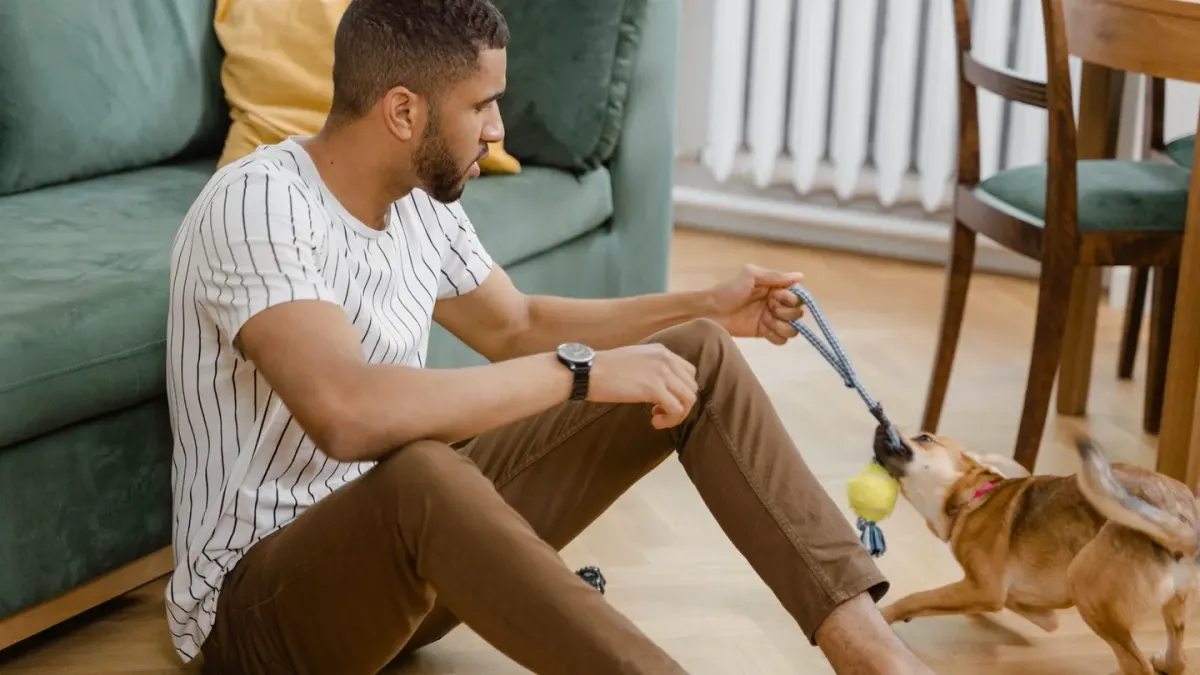
- Tug toys, played with clear rules around starting and stopping, deliver strength work and impulse control at the same time.
- Hide-and-seek games with treats or a favorite toy ask a dog to use memory and scent, which is mentally taxing in a way that plain repetition isn’t.
A pilot study published by the National Center for Biotechnology Information (NCBI) on environmental enrichment found that structured enrichment activities increased relaxed behavior afterward and reduced signs of alertness and stress — evidence that the payoff from a well-chosen toy session isn’t just physical fatigue, it’s a calmer dog once the session ends.
How do I build a simple indoor routine?
Start small. Pick two toy types — say, a food puzzle and a tug rope — and run 10-minute rounds, two or three times across the day rather than one long marathon. Rotate which toys are out; a toy a dog sees every single day loses its novelty fast, and novelty is a big part of what keeps them engaged. If your dog startles or shuts down during thunderstorms or other loud weather events, it’s worth reading about why dogs panic at sudden loud noises before assuming a toy alone will solve the problem — a genuinely frightened dog usually needs the fear addressed first.
Put down a rug or mat under high-movement games on hardwood or tile. It sounds minor, but a slipping dog is a dog who either stops playing or gets hurt trying to keep going.
When is indoor play not enough?
Indoor toys are a bridge, not a permanent fix. If bad weather stretches into a bad-weather season, a dog still benefits from real outdoor exposure — different footing, temperature, smells, and social contact that no living room can fully replicate. And if a dog suddenly seems less interested in play, tires unusually fast, or shows any limping or stiffness getting up, that’s a reason to call your veterinarian rather than assume they just need a more exciting toy. Fatigue and reluctance to play are common early signs of pain, and no puzzle toy is a substitute for a physical exam.
Bottom line: a dog can genuinely get a real workout indoors with the right toys, but the goal is the same as any walk — movement plus mental effort, done consistently, with a vet in the loop if anything about the dog’s activity level changes unexpectedly.
Frequently asked questions
Can toys really replace a walk when the weather is bad?
For a day or two, yes, especially if you combine a flirt pole or tug session with a food puzzle. Long-term, dogs still benefit from outdoor exposure, varied terrain, and the sensory input a walk provides, so treat indoor play as a bridge, not a full swap.
How long should an indoor play session last?
Short, frequent sessions work better than one long one. Three or four 10-minute rounds spread across the day, mixing a physical toy with a puzzle toy, generally tire a dog out more evenly than a single 30-minute block.
My dog gets more anxious, not calmer, during storms — will toys help?
Sometimes, but a genuinely fearful dog often can't engage with a toy until the underlying stress response settles. If storms or loud noises are the trigger, it's worth reading about how situational fear presents before assuming a toy alone will fix it.
Is it safe for a senior or arthritic dog to play indoors on hard floors?
Add a rug or yoga mat under play areas to reduce slipping, and favor puzzle toys and gentle tug over jumping games. Ask your veterinarian about a safe activity level if your dog has diagnosed joint disease.
Sources
- Walking or running with your dog — American Veterinary Medical Association
- Effects of Environmental Enrichment on Dog Behaviour: Pilot Study — National Center for Biotechnology Information (NCBI)
- 2019 AAHA Canine Life Stage Guidelines — American Animal Hospital Association