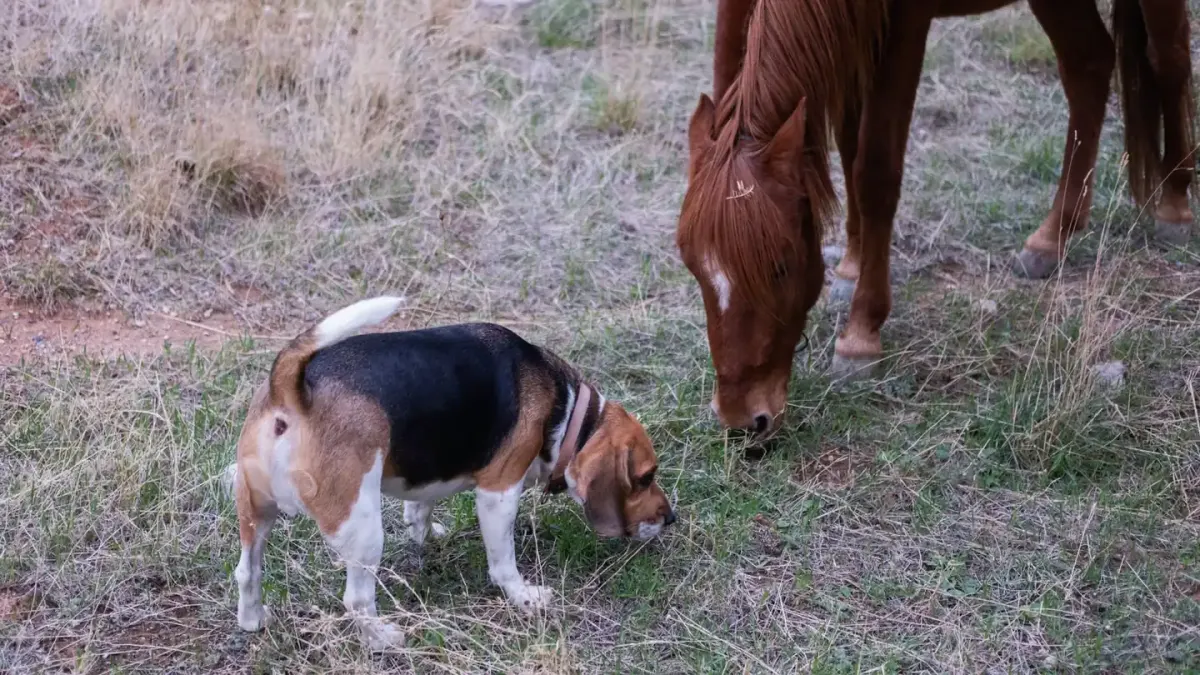
Your weekday decision is simpler than the toy aisle makes it look: does your dog need to sniff or to chew before you leave for work.
I think of enrichment as targeted activation of foraging, olfactory, and oral circuits, not as entertainment. Sniffing recruits the olfactory bulb and piriform cortex and downstream limbic pathways tied to search and reward. Chewing and licking recruit rhythmic oral motor patterns that may help support calmer arousal in many dogs. The Merck Veterinary Manual describes normal canine social and exploratory behavior as a need to express, not a luxury to add if time allows. That mechanism view is why I reach for both the imaging study and the acupuncture needle. I want the neuroanatomy and the whole-patient pattern at once.
Mornings in a working house tell the truth fast. A 4-year-old, 52-pound pit mix paces the kitchen from 6 to 7 while her owner fills a coffee and a laptop bag, then she barks at the door as the lock turns and shreds a throw pillow by 9 on the pet camera. The owner worried she needed a longer run, but the observable pattern was frantic sniffing on the short potty walk and gulping breakfast in under a minute. We moved breakfast into a rolled towel and a slow feeder and added three minutes of scatter feeding in the grass. By day 10, the camera showed settling by 8 instead of circling until 9.
Pick the morning circuit: nose-first or mouth-first
Nose-first dogs scan, pull toward grass, and take forever on the potty walk. Mouth-first dogs carry socks, gnaw the leash, and finish meals fast. Pick one lane for the morning because you do not have time for both before work.
For nose-first dogs, make breakfast a foraging task. Scatter half the kibble in grass, roll half in a towel, or use a snuffle mat for five minutes. For mouth-first dogs, make breakfast a licking and chewing task with a smeared lick mat or a frozen stuffed puzzle you prepped Sunday. My rubric from hands-on testing is simple: fit for your schedule, durability for your chewer, comfort with arousal after, and value in cleanup time.
I lean nose-first for most working weekdays. Olfactory work is thought to work through sustained search effort followed by natural disengagement, which often leaves a cleaner off-switch than high-excitement tug or fetch before confinement.
What the midday break is actually for
Midday is about interrupting rest deprivation and restlessness, not tiring the dog out. The strongest counterargument to my plan is that a tired dog is a good dog, so midday should be vigorous exercise. For young athletic dogs that is sometimes true, but for most working-day dogs vigorous midday play raises cortisol and arousal without teaching settlement.
Stay anchored to how a modality is thought to work, not what it might cure. A 10-minute sniff walk is thought to work by letting the dog control pace and odor sampling. A 5-minute training burst is thought to work through focused prefrontal engagement and reward prediction. A chew is thought to work through repetitive oral behavior that pairs with rest.
If you come home at lunch, try 8 minutes of sniffing plus 2 minutes of sits, downs, and hand touches. If you use a dog walker, ask for sniff time in grass rather than extra mileage. Guidance from UC Davis Veterinary Medicine frames enrichment as daily sensory, feeding, and social variety, which maps well to this short midday reset.
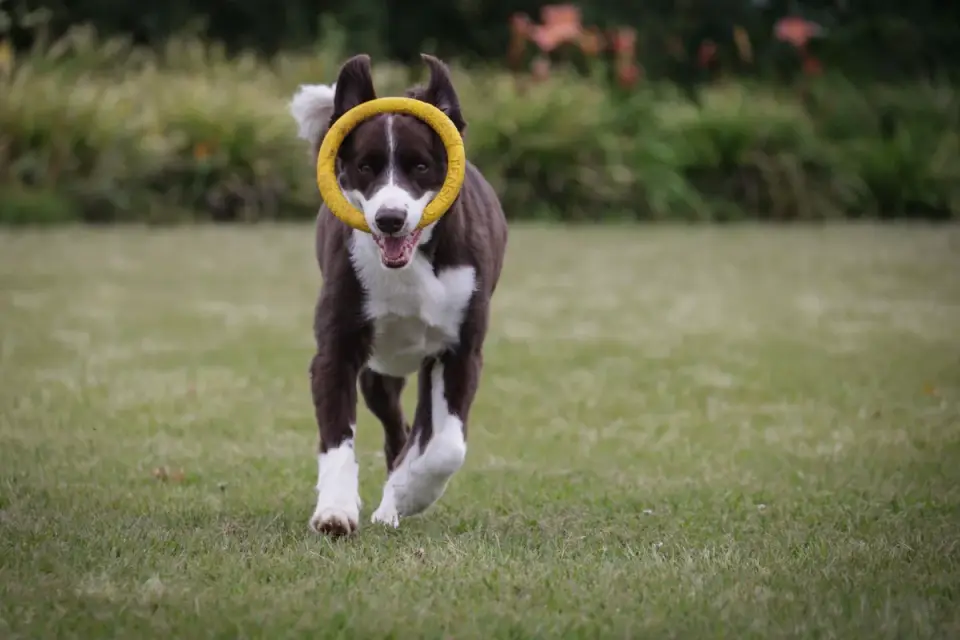
The failure mode I see is the lunch-hour marathon. A 2-year-old, 38-pound border collie mix got a 30-minute ball session every lunch hour in a small yard, then spent afternoons panting, circling, and nipping at the couch cushions when the owner logged back on. The owner assumed more fetch would fix it and added a second session by week two, but sleep never consolidated. We cut fetch to twice weekly, replaced lunch with a food puzzle plus a short decompression walk, and the dog finally napped from 1 to 3 by the end of three weeks in.
Shorter often settles better.
Build the evening downshift without a second job
Evening enrichment should discharge the last arousal and protect sleep. Keep it low-lift and repeatable. I score evening gear on whether I will actually wash it on a Wednesday night.
Rotate two options across the week rather than offering everything nightly. One night is a chew on a washable mat while you cook. The next night is three minutes of find-it with three hidden kibble piles while dinner heats. Keep tug or rope play brief and rule-based, then end with licking or sniffing, not with peak excitement. For ideas on matching the tool to the drive, see Chew Toys vs. Puzzle Toys: What Each One Is Actually Doing for Your Dog’s Brain and Snuffle Mat vs Lick Mat: Which Does Your Dog Need?.
Research on activity, rest, and problem behavior reminds us that total daily rhythm matters more than any single toy, a pattern reviewed in work indexed on PubMed. That is why the evening anchor is rest. Dim the play, keep the last outing sniffy, and give the chew before the final potty, not after.
The edge case is the senior dog who looks bored but is actually uncomfortable. A 11-year-old, 64-pound Labrador Retriever stood by the toy basket at 7 p.m. but lay down after two steps, then licked his front carpus through the night. The owner wanted stronger puzzles for canine cognitive support, but the exam pointed to forelimb stiffness and early-night restlessness rather than understimulation. We shortened the evening walk, moved dinner to a lick mat at floor height, and scheduled a veterinary recheck. Within two weeks the night licking dropped from hours to brief settling, which changed the plan from more challenge to more comfort.
Where does that leave a working owner.
Use sniffing to start the day, a short reset at midday, and chewing or licking to close the evening. Prep two frozen puzzles on Sunday, keep one snuffle option clean, and protect a consistent bedtime. If you need help troubleshooting meals that vanish too fast, compare Puzzle Feeders vs. Slow Feeder Bowls: What Each One Is Actually Solving and How to Mentally Tire a Dog That Can’t Exercise.
What would change if you measured success by faster settling, not by minutes filled.
Frequently asked questions
How much enrichment does a dog need on a workday?
Most adult dogs do well with 15 to 25 total minutes spread across morning foraging, a short midday reset, and an evening chew or sniff walk, plus protected rest.
Is a walk enough enrichment before work?
A potty walk helps, but adding 3 to 5 minutes of sniffing or scatter feeding better engages foraging circuits and often supports faster settling after you leave.
Sources
- Canine Enrichment — UC Davis Veterinary Medicine
- Effects of Exercise on Canine Behavior — PubMed