
On this page
A patio sign that reads “dogs welcome” is a legal fact, not a comfort forecast. It tells you the establishment allows dogs; it says nothing about the concrete surface temperature at 2 p.m., the six-foot gap between tables, or whether the brewery’s outdoor speakers are loud enough to keep an anxious dog pinned under the chair for an hour. I think about this distinction constantly, because “allowed” and “suitable” get treated as synonyms by people who’ve never had to carry a limping dog back to the car.
The dog I remember most clearly on this front was a three-year-old Australian Shepherd named Wexler, about 55 pounds, whose owners brought him to a rooftop brewery patio on a 91-degree July afternoon because the venue’s website advertised a dog menu. Within twenty minutes Wexler was panting hard, refusing water, and pressing his body against the metal railing — which was itself radiating heat. His owner had checked that dogs were permitted. She hadn’t checked the surface material, the shade coverage, or the fact that rooftop decks trap heat differently than a shaded sidewalk. That trip ended early, with a stop at their regular vet to rule out heat exhaustion. He was fine by evening. But it’s the kind of near-miss that reshapes how a family plans the next outing, and it’s exactly the gap this guide is built to close.
Why “pet-friendly” is doing less work than owners assume
Businesses list themselves as pet-friendly for a range of reasons that have nothing to do with your dog’s actual experience there — a patio license that technically permits animals, a marketing decision, a single accommodating manager. None of that tells you about surface temperature, noise levels, spacing between tables, or whether staff are used to redirecting a dog who wanders toward another party’s food. Treat “dogs welcome” as a starting filter, not a green light.
Surface heat is the variable most owners skip
This is the single most common and most preventable mistake I see. On a sunny day with air temperature around 86°F, asphalt and dark concrete can climb into the range that burns paw pads within about a minute, according to guidance compiled by the American Kennel Club. Patios with dark pavers, metal decking, or unshaded concrete slabs behave the same way, even if the venue itself feels comfortable to a person standing upright. The seven-second rule — press the back of your hand to the surface, and if you can’t hold it there that long, it’s too hot for paws — works just as well on a brewery patio as it does on a sidewalk.
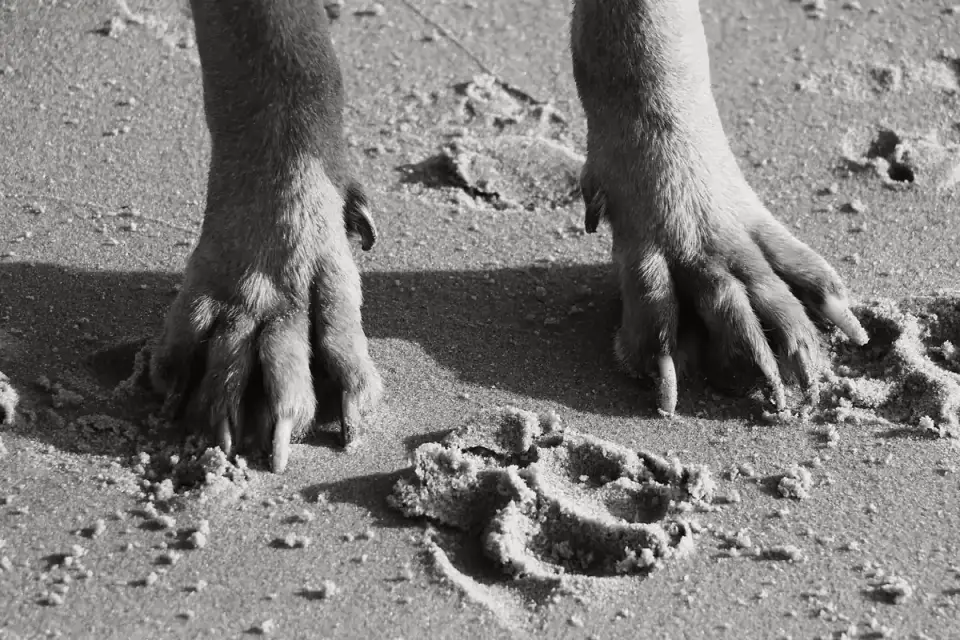
The American Veterinary Medical Association recommends keeping pets off hot asphalt entirely and avoiding outdoor exercise or extended exposure during the hottest parts of the day, noting that short-nosed breeds and overweight dogs carry extra risk during warm-weather outings. That guidance translates directly to patio planning: a midday reservation on a 90-degree day is a different proposition than the same table at 6 p.m., even at the identical address.
What actually makes a patio work for a dog, beyond the door policy
I weigh a handful of concrete factors before I’d call a patio genuinely dog-friendly, rather than just dog-tolerant. Shade coverage over at least part of the seating area matters more than square footage. Spacing between tables matters more than total capacity — a cramped patio puts unfamiliar dogs nose-to-nose, which is where most public friction starts. Ambient noise matters for dogs who startle easily; live music or a loud pour station near the seating area can turn a relaxed hour into a stressed one. And water access matters in a way that’s easy to overlook: a bowl by the host stand is a good sign, but check that it’s actually been refilled, not just present as decor.
None of these are things a website’s “dogs welcome” badge communicates. Calling ahead, or scanning recent photos on the venue’s page for tables in full sun versus shade, tells you more than the badge does.
Short walk. Short leash check. Long look at the ground before you sit down.
Reading your own dog before you read the venue
I’ve had this conversation with owners more times than I can count: the venue was fine, but the dog wasn’t ready for it. A dog who reacts to strangers at the front door is not going to relax at a table eighteen inches from six other tables. A dog who’s never practiced a settled down-stay for longer than a few minutes at home isn’t going to manage forty-five minutes on a patio without support. If your dog is still building that skill, working through structured training treats and reward-based practice at home first pays off far more than hoping the environment will teach the behavior for you. A crate-trained puppy who’s learned to settle during the first weeks at home often transfers that calm-in-a-confined-space skill to a patio table surprisingly well, because the underlying behavior — relaxing in a bounded space near their person — is the same one.
I saw this play out with a nine-year-old Labrador named Otis, overweight by his owner’s own account, whose family wanted to resume their Sunday brewery routine after a winter of less activity. Otis had done fine on patios for years, but that spring his owner noticed he was reluctant to get up from the concrete after twenty minutes, stiffer than usual on the walk back to the car, and less interested in his water bowl than normal. We talked through it, and the picture that emerged wasn’t heatstroke — it was a combination of extra weight, a warm surface, and reduced conditioning after a sedentary winter, exactly the combination the AVMA flags as higher-risk. The fix wasn’t cutting out the patio visits. It was shorter visits, a shaded table requested in advance, and a foam mat brought from home so Otis wasn’t lying on bare concrete. Small, specific changes, not an overhaul.
Building the habit for hot months and cold ones
A washable travel mat solves more problems than people expect — it insulates against a hot or cold surface, gives an anxious dog a defined “spot” that isn’t the middle of the walkway, and travels folded in a bag. Bring water regardless of what the venue provides; a collapsible bowl costs little and removes one variable entirely. If you’re building out a broader warm-weather routine at home too, the same shade-and-hydration logic that applies to a brewery patio applies to cooling strategies for thick-coated breeds and to backyard water play on hot afternoons — it’s the same heat-management thinking, just applied indoors versus out.

The recommendation
I land on a simple rule: treat the “dogs welcome” sign as permission, not a promise, and do the thirty seconds of homework yourself — surface, shade, spacing, noise — before you commit to a table. That’s a small ask compared to the alternative, which is a shortened outing, a stressed dog, or, in warm months, a genuine medical scare. The patios and breweries that are actually good for dogs tend to be the same ones every time, because the physical layout doesn’t change with the weather — only your judgment about when to use them does.
Frequently asked questions
How can I tell if a patio surface is too hot for my dog's paws?
Press the back of your hand against the pavement or decking for seven seconds. If it's too hot for you to hold it there, it's too hot for your dog to stand on, per guidance from the American Kennel Club.
Is a "dogs welcome" sign enough to trust a patio?
It confirms dogs are legally permitted, but it doesn't tell you about shade, table spacing, noise, or surface temperature — factors that determine whether the visit actually goes well.
Which dogs are at higher risk on hot patios?
The American Veterinary Medical Association notes that overweight dogs and short-nosed breeds carry extra risk during warm-weather outings and benefit from shorter visits and closer monitoring.
Sources
- How to Protect Dog Paws From Hot Pavement, Sidewalks — American Kennel Club
- Warm weather pet safety — American Veterinary Medical Association