On this page
Choosing the right dog clippers means matching motor power, blade size, and noise level to your dog’s coat.
Most first-time buyers grab whatever clipper has the best packaging and the highest star rating. That’s backwards. The clipper that works for a Poodle’s dense curl will bog down on a Golden Retriever’s undercoat, and a quiet trimmer built for touch-ups won’t get through a matted double coat at all. Start with the coat, then shop.
Quick Checklist Before You Buy
- Coat type first. Fine, single coats need less power than thick double coats or curly, matting-prone coats.
- Blade number. Lower numbers leave more length; higher numbers cut closer. A #10 is the standard all-purpose blade.
- Motor type. Rotary motors handle heavy, matted, or thick coats better than the lighter vibrating motors found in budget kits.
- Corded vs. cordless. Corded clippers hold torque through a full session; cordless is convenient but weakens as the battery drains.
- Noise and vibration. A loud, buzzy unit is often the reason a dog fights the clipper, not the trim itself.
- Guard combs included. Snap-on combs keep the blade off the skin and are the single easiest way to cut nick risk.
- Heat management. Look for a clipper that stays cool during use, or budget for a spare blade to swap in when one heats up.
Match Blade Size to Coat Length
Clipper blades are numbered, and the industry standard is consistent enough that a #10 blade behaves about the same whether it’s mounted on one major brand or another. A #10 leaves roughly 1/16 inch of coat and is the workhorse for sanitary trims, paw pads, and touch-ups. A #4 leaves a plush 3/8 inch and is a common choice when an owner wants shorter coat without a shave-down look. According to PBS Animal Health, blade numbers run from long-leaving skip blades down through very close finish blades, and guard combs can be added to most blades to lengthen the cut further without buying a second blade.
Buy one general-purpose blade plus a set of guard combs before you buy a second specialty blade. That combination covers the majority of home grooming needs.
Motor Power and Corded vs. Cordless
A clipper’s motor is what actually determines whether it can finish the job. Rotary motors deliver steady torque and are the standard on clippers built for thick or double coats; the lighter vibrating motors found in many budget or human-hair-crossover clippers tend to stall on dense fur and heat up faster while doing it.
Cordless convenience comes at a cost. Battery-powered clippers lose cutting speed as they discharge, and that drop-off shows up mid-trim on a big dog, right when you need consistent power the most. A corded model, or a cordless model rated specifically for pet coats with a swappable battery, avoids that mid-session slowdown.
Noise, Heat, and Comfort at Home
Noise sensitivity is a real reason clipper sessions go badly, and it’s worth solving before the first full trim rather than during it. Running the clippers nearby — off the dog, just turned on — while feeding treats over a few short sessions gives a dog time to associate the sound with something neutral instead of something alarming. The same gradual pairing that works for tooth brushing applies here, and it matters more for dogs who already startle at household noise, the way some dogs panic at a garbage truck.
Heat matters too. A clipper that’s warm to the touch after a few minutes is approaching the point where it can irritate skin on contact, separate from the cut itself. Pausing every few minutes to let the blade cool, and keeping blade lubricant on hand, keeps both the clipper and the dog more comfortable.
Preventing Clipper Burn
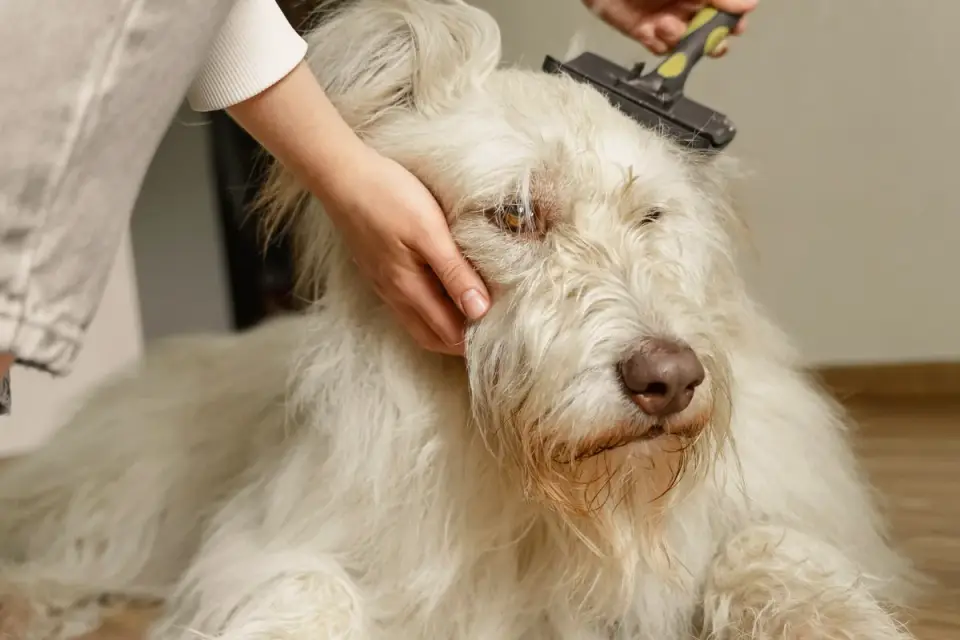
Clipper burn isn’t an actual burn — it’s skin irritation from a blade run too close, too long, or over a spot already tender from matting. Per Mission Veterinary Partners, it shows up as red, raw skin that a dog will often lick or scratch, and it may not become visible for several hours after the trim. Dogs with thin or sensitive skin, and areas already irritated by mats, are the most vulnerable spots.
The fix is mostly mechanical: use a guard comb instead of a bare blade on body coat, don’t press the blade into the skin to force a closer cut, and stop if your dog flinches or pulls away from a spot repeatedly. A dog that growls or stiffens when handled in a specific area during grooming is communicating discomfort, not being difficult — the same signal worth reading in everyday petting applies at clipper time too.
When to Call a Groomer Instead
According to Groomers Online, buying criteria for a home clipper should also account for blade material, speed settings, and ease of use — factors that matter more once a coat is genuinely matted rather than simply due for a trim. A mat pulled tight against the skin needs a closer, more deliberate cut than most home clippers or home groomers are equipped to do safely. If a mat won’t separate with a comb, or your dog won’t hold still for more than a few seconds, that’s the signal to book a professional rather than push through at home.
The bottom line: buy for the coat you actually have, not the clipper with the most reviews — a #10 blade, a rotary motor, and a set of guard combs cover most home grooming needs safely.
Frequently asked questions
What blade size should I buy first?
A #10 blade is the most common all-purpose choice for sanitary trims, paw pads, and touch-ups; pair it with snap-on guard combs if you want to leave more length on the body coat.
Are cordless clippers good enough for a full-body trim?
Cordless models are fine for touch-ups and thin coats, but they lose torque as the battery drains, which is a problem partway through a thick or double coat — a corded clipper holds consistent power longer.
How do I know if I should stop and see a groomer instead?
If the coat is matted down to the skin, if the clipper is bogging down and heating up, or if your dog won't hold still, stop — a professional groomer has the tools and restraint techniques to finish safely.
Sources
- Andis Blade Guide — PBS Animal Health
- Clipper Burns in Dogs: What Pet Owners Should Know — Mission Veterinary Partners
- How to choose the best dog grooming clippers for your dog — Groomers Online