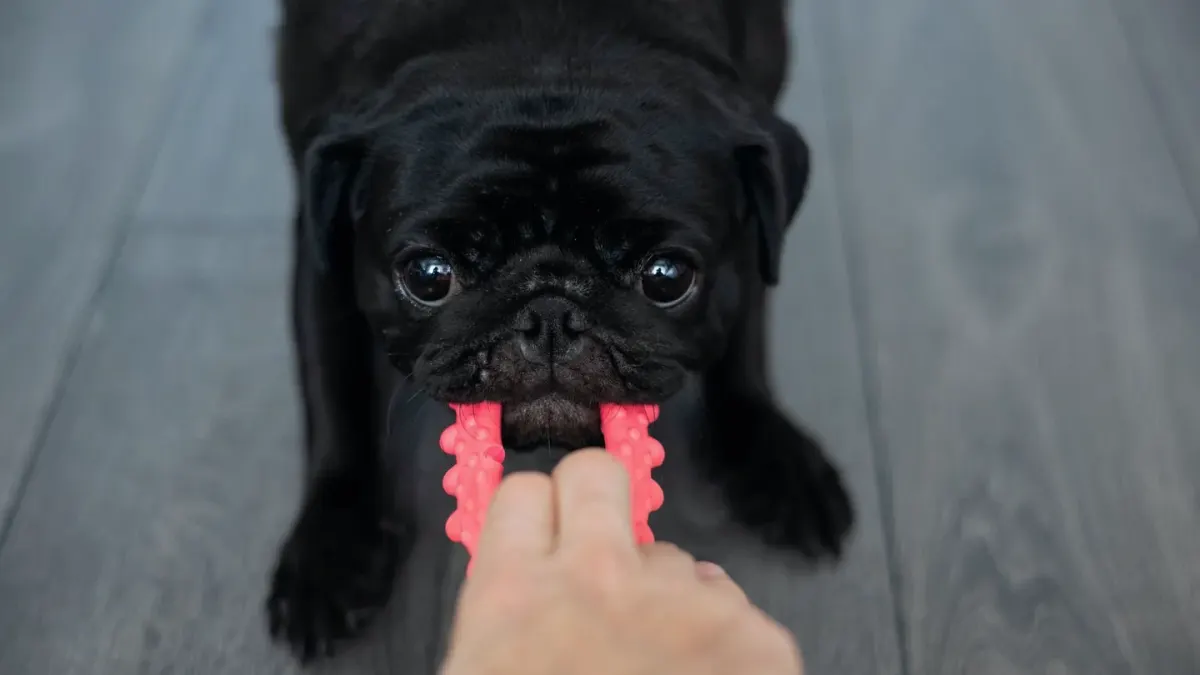
On this page
Lawrence knew the evening pattern in North Las Vegas all too well. His 9-year-old spayed Soft Coated Wheaten Terrier, Winona, would finish a 20-minute walk still pacing, nosing the pantry, then barking at the hallway. What changed the rhythm was not more mileage. It was a muffin tin with tennis balls laid over a few kibbles, offered for eight minutes before dinner, three nights in a row.
That fork — add another walk, or add thinking work — is where most owners get stuck. For a healthy adult dog with energy to burn, graded problem-solving often produces a calmer settle afterward than the same time spent walking, because sniffing, pawing, and choosing recruit focus that locomotion alone does not. The American Kennel Club frames mental stimulation as a core part of enrichment alongside physical exercise, and that distinction matters for toy choice.
Walk more, or let her figure it out?
Think of walks as general activity and puzzles as targeted effort. Walks support cardiovascular health, routine elimination, and exposure to the world. Puzzles support persistence, frustration tolerance, and calm disengagement.
From a nutrition and recovery lens, I weigh what food-based enrichment can realistically do for diet, mobility, and recovery. A puzzle that dispenses part of dinner may help support a slower eating pace and steadier evening routine in a dog that inhales meals, without adding calories when it replaces bowl volume. It will not condition joints the way controlled movement does, and it will not replace training for anxiety. That boundary keeps expectations honest.
Owners who see the best settle usually protect a short session rather than chasing exhaustion. Five to ten minutes, then put the toy away while interest is still high.
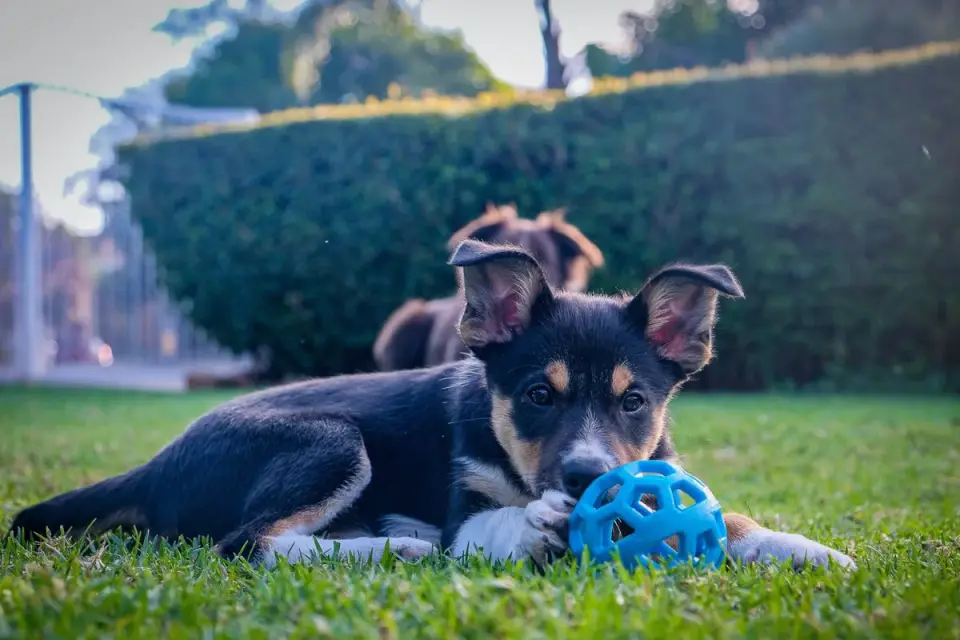
Start so easy she cannot quit
Most dogs abandon puzzles because the first one was too hard. Early success builds the habit of trying again.
Begin with one-step problems where food is visible and movement is obvious. A snuffle mat with kibble near the surface, a sliding lid left half-open, a rubber dispenser with large openings. Let the dog watch you load it. Reward any nose touch or paw swipe with access, not just the final solve.
Vets often see senior dogs like Winona hesitate at stiff sliders or tall compartments. In practice, joint comfort shapes persistence as much as cognition. Choose low, stable toys that do not slide across tile, and place them on a rug so an older dog does not have to chase the puzzle to work it.
If frustration appears — barking at the toy, biting edges, walking away — that is information. Lower the difficulty mid-session.
Short sessions prevent resource guarding around high-value fillings, too. For background on matching toy type to arousal, see Interactive Toys vs. Chew Toys: When to Use Each.
Progress beats pressure.
Raise difficulty one change at a time
Once a dog solves a level-one toy in under five minutes on two separate days, adjust a single variable. Add one more step, tighten one opening, or hide food slightly deeper. Do not change all three at once.
Common progressions owners can actually repeat include moving from open cups to flip lids, then to sliding panels, then to sequential actions where a slider must move before a drawer opens. Nose-driven dogs often prefer snuffle and scatter puzzles. Paw-driven dogs often prefer levers and rockers. Mouthy dogs need sturdier composite or rubber bodies and direct supervision.
Rotate two or three puzzles across the week rather than buying harder boxes every month. Familiarity with variation sustains novelty.
Cleanliness shapes safety here. Crumbs trapped in sliders grow rancid and change how a dog interacts with the toy. This cleaning routine for mouth-contact toys is worth building into the rotation: How to Clean and Disinfect Dog Toys.
Where food toys fit without unbalancing dinner
Food puzzles work best as delivery, not extras. Measure the day’s ration, set aside one-quarter to one-third for enrichment, and subtract what was earned from the bowl. For weight-prone breeds and seniors, use the regular kibble rather than rich pastes at first, then reserve small amounts of wet food, plain pumpkin, or soaked kibble for frozen dispensers on high-energy days.
The Cummings School of Veterinary Medicine at Tufts University has long emphasized that treats and extras should remain a small share of daily calories, which is exactly why portioning from meals keeps puzzle work sustainable.
Durability and diet meet in chew style. Dogs that shred rather than solve need a different category decision, covered here: Rope Toys vs. Plush Toys for Chewers: How to Actually Choose. And when weather shortens walks, indoor problem-solving can carry more of the load, as outlined in How to Exercise a Dog Indoors With Toys During Bad Weather.
Supervise every session. Remove loose fabric, cracked plastic, or dislodged sliders. The American Veterinary Medical Association reminds owners that safe play depends on choosing intact, size-appropriate toys and monitoring for ingestion risk.
For Winona, Lawrence landed on a workable week: two snuffle feeds, two frozen dispensers using dinner kibble soaked in water, and one slider puzzle left on easy mode. Total added time was about 30 minutes across five evenings. The pacing after dinner shortened, and the pantry-checking faded.
What would one easy win look like in your house this week?
Frequently asked questions
How long should a dog puzzle toy session last?
Five to ten minutes is enough for most dogs, ending while interest is still high. Senior dogs and beginners often do better with three to five minutes, then a rest.
Should puzzle toys replace walks?
No. Keep walks for movement, elimination, and social exposure, and use puzzles to add focused mental effort. Many owners find the combination settles dogs better than either alone.
What if my dog gets frustrated and quits?
Make the next repetition easier by opening lids, surfacing food, or removing one step. Two quick wins rebuild trying behavior faster than pushing through a hard level.
Sources
- Dog Care — American Veterinary Medical Association