
On this page
Picture the scene: you’re standing at the sink, brushing your own teeth, and your dog wanders in and gives you that hopeful look. Grabbing the same tube feels harmless — it’s just toothpaste, right? It isn’t, and the reason comes down to two ingredients most human pastes are built around.
What’s actually in human toothpaste that’s a problem?
Two ingredients do the damage: fluoride and, in many modern formulas, xylitol.
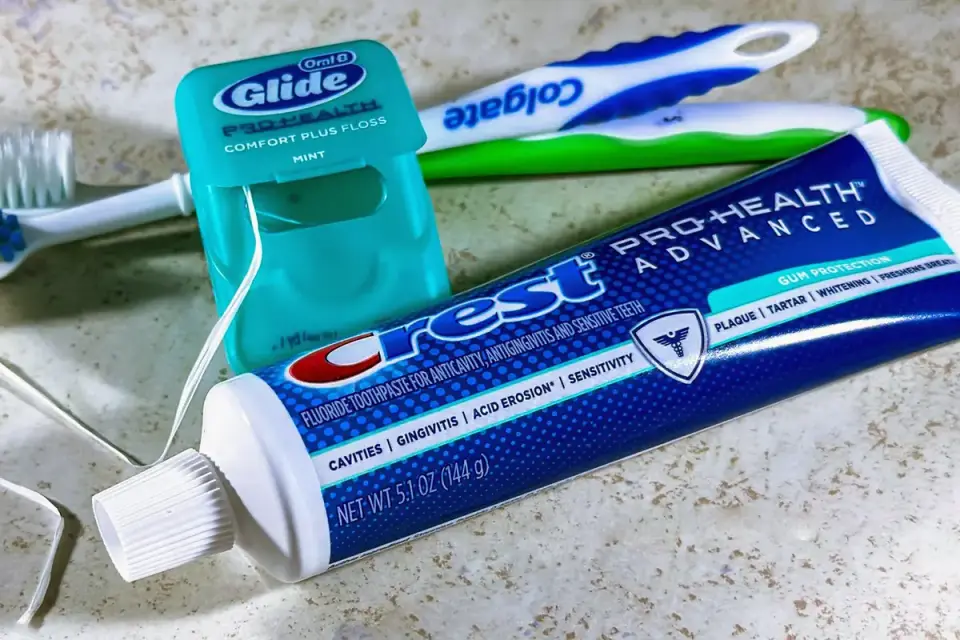
Fluoride is added to human toothpaste to strengthen enamel and fight cavities, and it’s safe for people because we spit it out after brushing. Dogs don’t spit. According to the Merck Veterinary Manual, sodium fluoride becomes toxic at doses well under a gram per kilogram of body weight, and a fatal dose isn’t much higher. A small dog swallowing a full brushing’s worth of adult toothpaste, repeated daily, can accumulate real exposure. Symptoms in a fluoride overdose run from vomiting and drooling to, in severe cases, irregular heart rhythm and dangerous electrolyte shifts.
Xylitol is the more urgent threat, and it’s increasingly common in “natural” or sugar-free human toothpaste. In people, xylitol is metabolized slowly and does essentially nothing. In dogs, it does the opposite: it’s absorbed fast and tricks the pancreas into releasing three to seven times the normal amount of insulin, according to VCA Animal Hospitals. That insulin surge crashes blood sugar within thirty minutes to an hour, and higher doses can begin damaging liver tissue within eight to twelve hours. This is not a slow-building risk you can watch and wait on.
Why does swallowing matter so much more for dogs?
Human oral care assumes a rinse-and-spit routine. A dog’s brushing routine assumes the opposite: everything goes down. That single difference in behavior is the whole reason the two product categories can’t be swapped. Foaming detergents, whitening agents, and strong mint oils in human pastes are all formulated around the expectation that most of the paste leaves the mouth in the sink, not the stomach. None of that assumption holds for a dog being brushed with a finger brush or a soft bristle brush at home.
That’s also why the technique matters as much as the product. If you’re still working up to a full brushing routine, our guide to getting a dog used to tooth brushing walks through a gradual approach that reduces both resistance and the amount of paste a dog gulps down in a struggle.
So what should go on the brush instead?
Dog-specific toothpaste is built around enzyme systems rather than fluoride or foam. According to GreatPetCare, enzymatic pastes commonly use glucose oxidase and lactoperoxidase, enzymes that interfere with plaque-forming bacteria without needing to be rinsed out. That’s a structural design choice, not a marketing detail: these formulas exist specifically because dogs swallow.
A short list of dog toothpastes also carry the Veterinary Oral Health Council’s Seal of Acceptance, meaning they’ve demonstrated measurable plaque or tartar control in testing — Virbac’s C.E.T. Enzymatic line and Petsmile Professional are both examples currently on VOHC’s list. Looking for that seal, or at minimum confirming a paste is labeled specifically for dogs with no xylitol on the ingredient panel, is a reasonable baseline before you buy anything.
Flavor is part of the design too. Poultry, malt, and beef flavoring in dog pastes isn’t just about compliance during brushing — it’s there because these products assume full ingestion, so the flavor profile is built for a dog’s palate rather than mint for a human one.
What if it already happened?
If your dog got into your toothpaste before you read this, don’t panic, but do act. Check the label. A plain fluoride toothpaste with no xylitol and a small amount consumed is unlikely to be severe, per Merck’s toxicology guidance, though gastrointestinal upset is common. Anything listing xylitol changes the calculus immediately — call your veterinarian or an animal poison control line right away, since early treatment before hypoglycemia sets in matters a great deal, per VCA’s clinical summary.
Going forward, the fix is simple: keep two separate tubes, store yours somewhere the dog can’t reach it during a counter-surfing moment, and build brushing into a habit with a product that was actually designed for a dog to swallow.
If brushing itself is still a fight more than a routine, that’s worth solving before ingredient choice becomes the bigger issue — our piece on how to get a dog used to tooth brushing is a good next stop, and diet-related dental questions, like what to feed alongside a brushing routine, are covered in our sweet potato feeding guide.
Bottom line: buy the small dog-specific tube. It costs a few dollars more than sharing yours, and it removes both the fluoride math and the xylitol risk from your daily routine entirely.
Frequently asked questions
My dog licked a small amount of my toothpaste off the counter. Is that an emergency?
It depends heavily on the toothpaste and the dog's size. A tiny lick of a fluoride-only paste is unlikely to cause more than an upset stomach, according to the Merck Veterinary Manual, but any toothpaste containing xylitol is treated as a potential emergency regardless of the amount, per VCA Animal Hospitals. Check the ingredient label and call your vet or an animal poison control line to be safe.
Are all human toothpastes equally risky?
No. Xylitol-sweetened toothpaste, common in 'natural' or sugar-free human formulas, is far more dangerous per gram than a plain fluoride paste, because it triggers a rapid insulin surge in dogs that human physiology doesn't share, per VCA Animal Hospitals. Either way, neither type was designed to be swallowed by a dog.
Does dog toothpaste actually work without fluoride or foaming agents?
Most dog toothpastes rely on enzyme systems, like glucose oxidase and lactoperoxidase, to interfere with plaque-forming bacteria rather than on fluoride or detergent foam, according to GreatPetCare. A short list of pastes, including Virbac C.E.T. Enzymatic and Petsmile Professional, also carry the VOHC Seal of Acceptance for measurable plaque or tartar control.
Sources
- Fluoride Poisoning in Animals — Merck Veterinary Manual
- Xylitol Poisoning in Dogs — VCA Animal Hospitals
- Enzymatic Toothpaste for Dogs: What it is and Products to Try — GreatPetCare