
A toy box overflowing onto the living room rug looks generous, but most dogs play harder and settle faster with fewer choices out at a time. About 11 toys were scattered across the floor in that first apartment visit I keep thinking about, a 9-month-old 38-pound cattle dog mix bouncing from squeaker to rope to ball without finishing anything. Her owner had bought more each week because nothing held attention longer than four minutes. You could see the loop: more novelty in, less focus out, then more buying. We put 9 of those toys in a closet bin and left out a rubber stuffer and one tug rope, and her settle on a mat stretched from restless circling to nearly 20 minutes that same evening.
That pattern is why I weigh what enrichment can realistically do for diet, mobility, and recovery the same way I weigh a supplement. Toys may help support activity and mental engagement as part of whole-patient health, and the nutritional evidence reminds us they do not replace food balance, rest, or training. A food toy that delivers 1/4 cup of dinner through problem-solving supports the day. A pile that encourages frantic switching does not.
Leave out two or three, store the rest
Choice overload is real for dogs. When everything is available, nothing is valuable, and play turns into sampling. I like two or three out: one for chewing, one for tugging or fetching with you, and one food puzzle if meals allow it.
Rotation keeps novelty without buying more. The Ohio State University College of Veterinary Medicine notes that rotating a small set keeps interest higher than leaving a large collection out all the time, which matches what I see in homes. Swap one toy every three to four days, wash what you can, and watch which category actually gets mouth time.
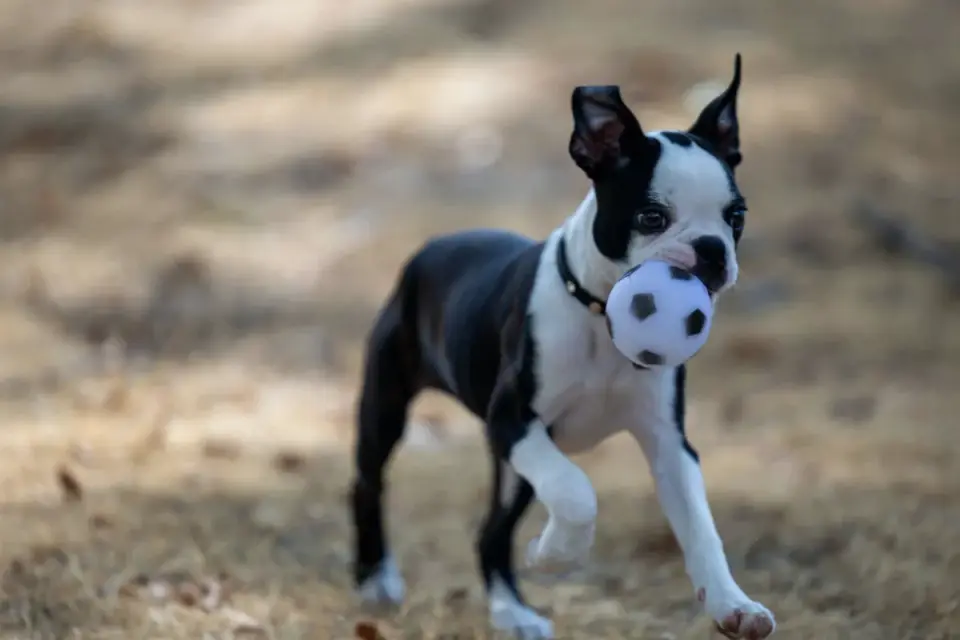
That small set also lets you inspect for damage. Loose squeakers, frayed rope ends, cracked rubber, and stuffing leaks are easier to spot among three toys than thirteen. For cleaning basics between rotations, see How to Clean and Disinfect Dog Toys.
When more toys mean less play
A second home showed the tradeoff clearly. A two-dog household had collected plush toys for months, and the younger terrier mix had started carrying three toys to doorways and stiffening when the older dog walked past. Over 5 nights the owners counted 4 hard stares and 2 growls around the pile, up from zero the month before. They had tried adding puzzle toys to tire him out, yet sessions ended faster because he guarded the new toy instead of solving it. We cut the floor to two toys per dog in separate spots, fed puzzles behind baby gates, and put plush toys away for a week. Guarding pressure dropped because there was less to defend and meals came through work, not competition.
Clutter also hides safety problems. The ASPCA advises supervising play and removing toys that start to break apart, since pieces and squeakers can become choking or intestinal hazards. That check takes two minutes with three toys. It rarely happens with a full bin, and small tears become swallowed stuffing.
If you are sorting chew options during a reset, Chew Toys vs. Edible Chews: What’s the Difference lays out where a durable chewer ends and a consumable begins.
The exception where I bend the small-set rule
Some recoveries need more quiet options, not fewer. A 6-year-old 52-pound Lab mix on two weeks of leash-only rest after a knee strain could not tug or fetch, and she shredded the single plush left to her out of boredom by day three. Her owner worried that adding toys would re-teach hyperarousal. Instead we built a small calm-only box: four low-noise licks, snuffles, and soft chews, offered one at a time in the crate and swapped every 45 minutes during evening rest. Licking time rose to about 30 minutes per session and whining after dinner faded. The usual advice still held — few out at once — but the bench had to be deeper for crate rest.
That is the right use for variety: match the job to the hour. Interactive Toys vs. Chew Toys: When to Use Each is useful here, and for bad-weather days that tempt owners to dump the bin, How to Exercise a Dog Indoors With Toys During Bad Weather shows how to work one toy at a time.
You will know the number is right when play has a beginning, middle, and end. The dog chooses, engages, then settles, and you can name which toy did what. Keep that rotation going and the closet bin becomes your best money saver.
Frequently asked questions
Is it bad to give my dog too many toys at once?
It is not toxic, but a large pile often shortens attention, increases guarding around high-value items, and makes damage harder to spot. Most dogs do better with two or three toys out and the rest rotated.
How many toys should be out at one time?
Start with two or three covering different jobs — chew, play-with-you, and food puzzle if diet allows. Swap one every few days and keep what is put away clean and intact.
What if my dog guards toys?
Reduce what is out, separate dogs during puzzle time, and avoid adding more high-value toys until tension drops. If stiffening, growling, or snapping continues, ask your veterinarian for a behavior referral.
Sources
- Enrichment for Dogs — Ohio State University College of Veterinary Medicine
- General Dog Care — ASPCA