A flirt pole is a lure toy that tires dogs in small yards when chases stay slow and wide.
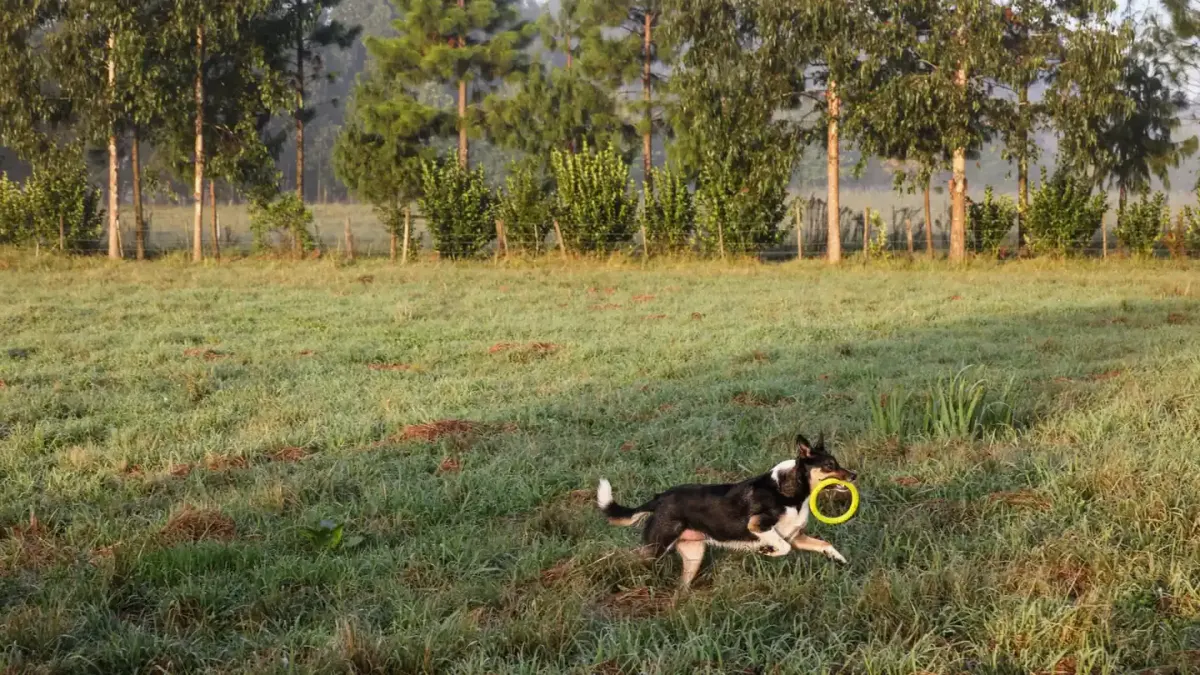
A flirt toy for dogs is a pole with a long rope and a lure that you drag in circles for your dog to chase and grab. Think giant cat wand, built for jaws. The American Kennel Club notes that exercise needs vary by age, breed, and health, and a flirt pole fits that gap for high-energy dogs without room to run.
Most versions have the same three parts. A rigid pole around 3 to 5 feet, a bungee or nylon line, and a soft lure made of fleece, rope, or faux fur. You move the lure along the ground, not high in the air, and your dog follows, stalks, chases, and gets brief tugs as a reward. That ground-based movement is what makes it useful in a 20-foot yard or empty garage.
How a Flirt Pole Works in a Small Space
The value is intensity in short bursts. Instead of a 30-minute walk, you run two to three minutes of trot, pause, and repeat for 10 to 15 minutes total. Keep the lure low and moving in big ovals so your dog can stride rather than skid. Let your dog catch it every 20 to 30 seconds, then cue a drop and restart.
That start-stop pattern also builds training into play. Ask for a sit or down before you move the lure, then release with a chase word. Owners often find that a chase toy on a pole makes it easier to practice stopping and waiting, because the game itself creates the impulse to control. Pair it with ideas from Interactive Toys vs. Chew Toys: When to Use Each to decide when to use the pole for training and when to offer a solo chew instead.
How to Keep Chases Slow and Turns Wide
Joint strain comes from speed plus sharp direction change. Puppies with open growth plates, seniors with stiffness, and short-legged or heavy-bodied dogs feel that combination most. Control the human end and the risk drops sharply.
Use grass, turf, or packed dirt with traction. Keep sessions short, warm up with a minute of walking, and keep the lure at nose height or lower. Move it in wide arcs at a trot, not a full sprint. Avoid snapping the pole, popping the lure uphill, or asking for leaps, spins, and sudden stops on slick floors.
Watch the dog, not the clock. Heavy panting, wide turns into stumbling, lying down, or disinterest means stop. Offer water, then switch to sniffing or a chew. Guidance on How to Support Your Dog’s Healthy Toy Chewing helps you transition from high arousal to calm chewing. Inspect the rope for fraying and wash the lure as you would other toys, as outlined in How to Clean and Disinfect Dog Toys.
Which Dogs Should Skip It or Modify It
Healthy adult sporting, herding, and terrier types often do best with this toy. Modify or skip it for puppies under 12 months, seniors with arthritis, dogs recovering from lameness or surgery, and breeds at higher risk for knee and back issues unless your veterinarian clears chase play.
Ashley in Huntington Beach offers a useful example. Fitz, her 10-year-old neutered male Labradoodle, still lights up for a chase but tires faster and turns stiffly after tight circles. She now uses only slow ground drags in straight lines for one minute, then trades the lure for a sniff walk. The game stayed fun once speed and turning were removed as goals.
Choose a lure your dog can grab without shredding. Fleece strips suit soft mouths. Knotted rope suits strong tuggers but needs inspection for loose fibers. Retire any lure your dog starts to dissect rather than chase, and store the pole where your dog cannot chew the line unsupervised.
Frequently asked questions
What is a flirt toy for dogs used for?
It provides short bursts of chase, stalk, and tug exercise in a small area, plus built-in practice for impulse control cues like wait and drop.
Is a flirt pole safe for puppies and seniors?
Use caution. Keep chases slow, low, and straight, keep sessions under a few minutes, and ask your veterinarian about chase play for growing puppies, seniors, or dogs with joint disease.
How long should a flirt pole session last?
Most adult dogs do well with 10 to 15 minutes total made of 2 to 3 minute rounds with rest breaks, ending before heavy fatigue.
Sources
- How Much Exercise Does Your Dog Need? — American Kennel Club