Learning to sanitize dog toys by material keeps slobbery favorites safer without wearing them out early.

On this page
Shaun knew Sacha needed a bath for her toys when his 8-year-old Shiba Inu mix started ignoring her favorite rubber ball, crusted with three weeks of park slobber in Pittsburgh, and choosing a fresh stick instead. The fork is familiar: throw everything in hot water together, or sort by material and wash on a schedule that preserves texture and shape.
Weigh what washing can realistically do for diet, mobility, and recovery — it does not balance nutrition or rehab a joint, but it may help support whole-patient health by lowering the daily load of saliva, food residue, and yard dirt a dog re-ingests during play.
Wash By Material, Or Wash Everything The Same?
A common question is whether one hot cycle works for the whole toy bin. In practice, it does not.
Rubber and hard plastic hold up to warm soapy water and thorough air-drying, while plush with squeakers, rope with knotted fibers, and nylon chews each fail in a different way when they get too hot, too wet, or stay damp. The American Kennel Club outlines the same material split, recommending machine-washing for many plush toys and hand-washing for harder toys with nooks where grime collects.
Start with the label and a quick hands-on check: if stuffing is lumpy, rope is frayed to thin strings, or rubber has deep cracks that trap food, set that toy aside for repair or retirement rather than sanitizing.
How Often Is Often Enough?
For most households, a weekly look and a monthly wash is the minimum, with food-dispensing toys cleaned after every use. Troy learned this with Lolo, his 4-year-old spayed Maltese in Topeka, when her puzzle feeder still smelled sour after two days of peanut butter refills and she began pawing at it instead of eating.
Peanut butter, wet food, and raw-coated treats turn a hollow toy into a food bowl. Rinse it like one. The Centers for Disease Control and Prevention emphasizes routine hand and pet-item hygiene as part of reducing germ spread between dogs and people, which is another reason food toys deserve the sink, not just a wipe.
A short rule holds up well across homes with one or two dogs.
If it holds food, wash it after use. If it only gets mouthed, inspect weekly and wash monthly, sooner after dog parks, beach trips, or illness.
How Do You Sanitize Each Type Without Ruining It?
Match water, heat, and drying time to the material.
Rubber, silicone, and hard plastic: Soak 10 to 15 minutes in warm water with unscented dish soap, scrub seams and treat holes with a bottle brush, rinse well, and air-dry completely. Top-rack dishwasher cycles can work for solid rubber marked dishwasher-safe, but skip high-heat dry for toys with squeakers or glued parts.
Plush and fabric: Machine-wash in a laundry bag on gentle with mild, fragrance-free detergent, then air-dry or tumble low. Heat helps sanitize, but high heat melts squeakers and mats filling, so inspect stitching first. For more detail on soap choice and bleach dilution safety, see How to Clean and Disinfect Dog Toys.
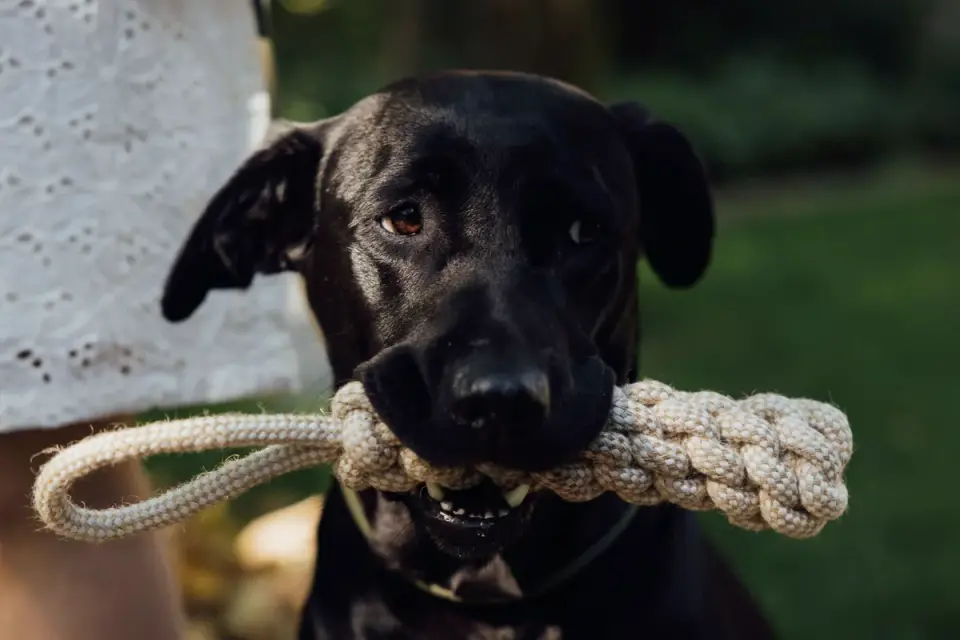
Rope and cotton: Hand-soak in warm soapy water, agitate to release saliva, rinse twice, then hang-dry fully to prevent mildew odor. Do not microwave wet rope to speed drying, since uneven heating can scorch fibers and metal threads. If fraying leaves long strings, trim or retire the toy — the choice between fiber types matters here, as explained in Rope Toys vs. Plush Toys for Chewers: How to Actually Choose.
Nylon and hard chews: Hand-wash with warm soapy water, rinse, and air-dry. Do not boil cracked nylon, and discard shards or sharp edges. Edible products follow different rules than durable toys, a distinction covered in Chew Toys vs. Edible Chews: What’s the Difference.
Diluted bleach and vinegar get mentioned often for sanitizing. Use them sparingly, rinse thoroughly, and never mix cleaners. Plain soap, friction, and complete drying do most of the work without leaving residue that puts dogs off food toys.
When Should Cleaning Become Replacing?
Retire toys that stay damp-smelling after drying, leak stuffing, expose squeakers, shed rope strands, or develop cracks that trap black grime. For dogs on restricted activity, rotation matters as much as washing — Quiet Toys for a Dog on Post-Surgery Crate Rest shows how to keep a small, clean set in circulation.
Going forward, keep two bins: ready-to-play and waiting-to-wash. That small habit makes a regular schedule automatic, and it preserves fit, texture, and durability far better than an occasional aggressive deep clean.
Frequently asked questions
Can I put dog toys in the washing machine?
Many plush toys can go in a laundry bag on gentle with mild detergent and air-dry after, but check for squeakers, glued parts, and weak seams first. Rubber, nylon, and rope toys are usually better washed by hand.
How often should I sanitize dog toys?
Wash food-dispensing toys after every use. For mouth-only toys, inspect weekly and wash at least monthly, and sooner after parks, beach play, boarding, or illness.
Is bleach safe for sanitizing dog toys?
Highly diluted bleach can disinfect some hard, nonporous toys when rinsed extremely well and air-dried, but soap, scrubbing, and complete drying are sufficient for routine care. Never mix cleaners and avoid strong residue on food toys.
Sources
- About Healthy Pets — Centers for Disease Control and Prevention