On this page
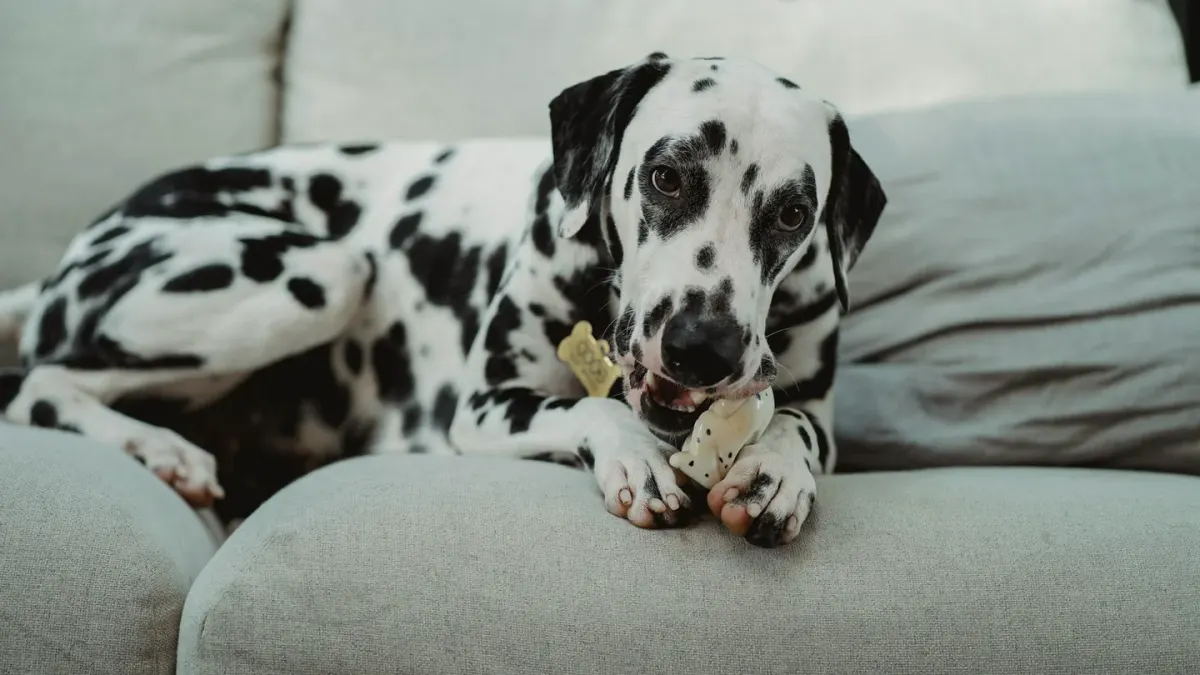
Quiet toys matter most when a dog on crate rest needs calm, low-noise enrichment instead of nonstop chewing or squeaking. Post-surgical confinement is boring for a dog that’s used to moving, and boredom left unaddressed shows up as whining, chewing the crate bars, or trying to stand and turn around when it shouldn’t. The fix isn’t more toys, it’s the right toys, chosen against a short list of criteria before you buy anything.
What to Look For First
Start with the criteria, not the toy aisle. A good crate-rest toy should:
- Reward staying down. The dog should be able to use it fully while lying flat, not standing, pouncing, or twisting.
- Make little to no noise. Squeakers and rattles tend to excite a dog into sudden movement, exactly what VCA Animal Hospitals warns against for post-op patients, since running, jumping, and other strenuous activity can strain a healing incision or surgical site.
- Take real time to finish. Slow-release food toys and licking mats occupy a dog for 10 to 20 minutes at a stretch, which matters more than a toy that’s used up in thirty seconds.
- Be soft enough not to snag stitches or an e-collar. Avoid textures with loops, fringe, or small parts that could catch on a cone or incision site.
That’s the whole filter. Anything that fails one of these should wait until your dog is cleared for normal activity.
The Toy Categories That Actually Work
Licking mats. Spread a thin layer of a vet-approved wet food or broth across a textured silicone mat and let your dog work at it lying down. The repetitive licking motion has a self-soothing effect for many dogs, which helps with the low-grade stress that comes from being confined, a mechanism dvm360 points to when discussing food-based enrichment for postoperative confinement.
Stuffed food puzzles. A rubber, food-dispensing toy filled with a paste your dog can only get out by licking, not chewing hard, keeps jaws busy without requiring the dog to sit up and gnaw with force. Freeze the filling for a longer-lasting version.
Soft chews. A plush or rope-free soft chew gives a dog something to gnaw on quietly, but skip anything that requires bracing a paw and pulling; that’s a full-body motion, not a crate-safe one.
Snuffle mats. Scattering a few pieces of kibble into a snuffle mat’s fabric strands turns mealtime into slow, seated foraging. It works well for dogs who need mental stimulation more than they need calories.
What to Avoid During Recovery
Keep this list short and firm. Skip hard rubber balls that bounce or roll out of reach, tug toys that invite a full-body pull, anything with a squeaker, and stuffed toys with parts a dog could shred and swallow while unsupervised. These aren’t bad toys in general, they’re simply wrong for this specific window.
Separately, if your dog is already noise-reactive, the quiet-toy strategy pairs well with reducing background startle triggers in the room. Our guide on why a dog panics at the sound of the garbage truck covers how sudden sounds compound stress in a confined dog.
How to Rotate Toys Without Overstimulating
Don’t hand over every toy at once. Offer one or two at a time and swap them out every day or two. Preventive Vet recommends this kind of rotation to keep a confined dog engaged without flooding it with novelty it can’t safely act on. If your dog also eats from a mat or tray as part of this routine, our guide to feeding-station mats has useful notes on material and cleanup that carry over to licking-mat enrichment.
A single sentence bears repeating here: no toy shortens a healing timeline, so always defer to your vet’s discharge instructions over any guide, including this one.
When You’re Cleared to Move Again
Once your vet signs off on normal activity, transition slowly. A sudden jump back into fetch or long walks undoes the patience you just spent weeks building. Our guide to exercise for toy and small breeds is a reasonable next stop for structuring that return to movement, even if your dog isn’t a toy breed; the graduated approach applies broadly.
Next step: before your dog comes home from surgery, set aside two or three of these low-noise options, a licking mat, a stuffed puzzle, and one soft chew, so you’re not scrambling for something safe on day one of confinement.
Frequently asked questions
Can I give my dog a stuffed Kong-style toy during crate rest?
Usually yes, and it's one of the better options. A food-dispensing toy filled with a vet-approved paste keeps a dog occupied while lying down. Confirm the filling matches any post-op diet restrictions first.
Are squeaky toys bad for a dog on crate rest?
Not unsafe on their own, but squeakers tend to trigger standing, shaking, and repeated pouncing motions, exactly the movement crate rest is meant to prevent. Save squeaky toys for after your vet clears normal activity.
How long should crate rest with enrichment toys last?
Follow your veterinarian's specific timeline, which commonly runs one to two weeks for soft-tissue procedures and considerably longer for orthopedic surgery. Toys don't shorten the healing window; they just make the confinement more bearable.
Sources
- Exercise Restriction in Dogs — VCA Animal Hospitals
- Crate expectations: Realistic strategies for postoperative confinement — dvm360
- How to Survive Crate Rest with an Energetic Dog — Preventive Vet