Postpone the trip or rebuild it around confinement, and that decision has to come before you load the car. A healthy dog can tolerate a long drive, a new rental, and missed naps. A dog recovering from surgery cannot, because tissue healing depends on restricted motion, clean incisions, and predictable medication timing.
I counsel owners to treat travel during recovery as a medical transport, not a vacation. If your veterinarian has prescribed crate rest, leash-only walks, and an e-collar for 10-14 days after a spay, cruciate repair, or mass removal, those instructions travel with you. The car, hotel, and schedule must support them, or the trip should wait.
A 6-year-old, 68-pound Labrador three days after cruciate surgery shows what that fork looks like in real life. Her owner had a four-hour drive to family booked, with a hotel stop and two young children in the back seat. At home her baseline was quiet crate rest, ice as directed, and short leash trips to urinate with a sling. On the road that same dog would face lifting in and out of an SUV, shifting weight around turns, whining that the kids would answer with attention, and a night in a strange room where she wanted to pace. Her incision looked clean on day 3, but she was still groggy by evening when pain medication peaked. The choice was concrete: delay departure by 10 days until sutures were out and weight-bearing was steadier, or drive with a second adult dedicated to her, a low-entry vehicle, and a no-visitors recovery room at the other end.
Healing tissue fails for mechanical reasons. In the inflammatory and proliferative phases, the incision gains strength slowly while swelling, fluid, and new capillaries bridge the gap. Stretch, shear, jumping, or licking can open the edges, introduce bacteria, or create a seroma that needs drainage. That is why postoperative guidance from the American Animal Hospital Association emphasizes consistent pain assessment, restricted activity, and protection of the surgical site during early recovery. Pain itself raises heart rate, reduces appetite, and makes dogs restless in a moving vehicle, which further increases motion at the incision.
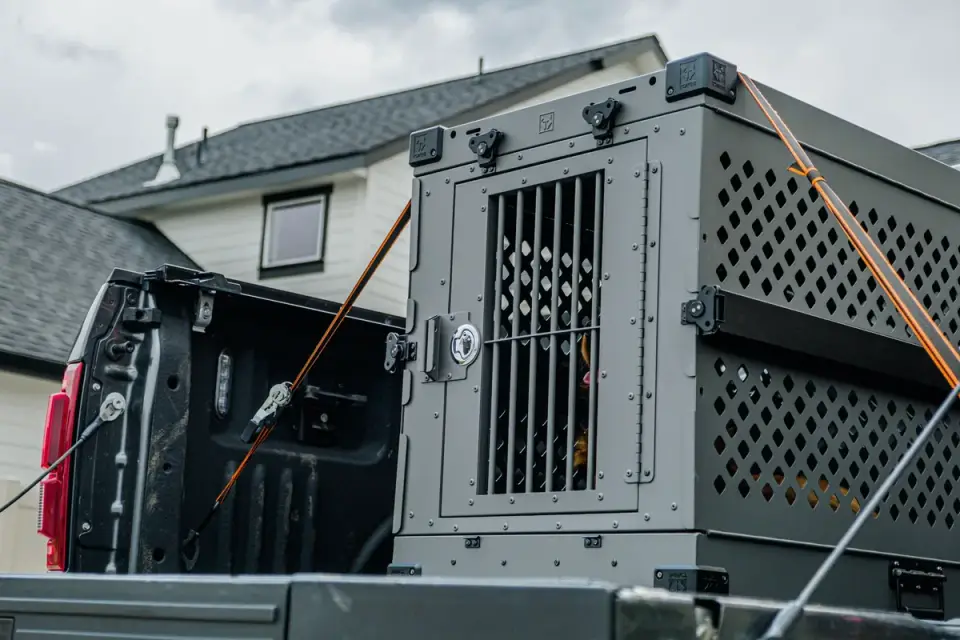
Confinement in the car may help support that healing window. A secured, well-ventilated crate sized for sternal lying, not standing and turning, limits acceleration forces better than a loose dog or a harness alone. I prefer the crate braced on a flat surface, with non-slip matting and no stacked luggage that could shift.
Drive like a recovery room, not a road trip
Plan shorter legs, flat loading, and medication on the clock. Lift medium and large dogs rather than letting them jump, use a ramp with a gentle angle for heavier dogs, and stop every 2-3 hours for a brief leash urination break on a clean surface. Keep the e-collar on during transport, keep the incision dry, and bring the discharge sheet, medications in original bottles, and your clinic number.
A failed approach I see often involves good intentions and too much freedom. A 4-year-old, 32-pound spaniel mix by day 10 after a spay looked bright, ate well, and hated the crate in a vacation rental. Her owner swapped the crate for a seat-belt harness, let her sleep on the rental bed, and removed the e-collar overnight because she seemed comfortable. By morning she had licked the lower staples, the skin was red and puffy, and a thin pink discharge stained the sheet. The owner cut the beach day short, found an urgent clinic, and the dog needed wound cleaning, a new collar, and three extra days of confinement. The harness was not the error. The error was reading energy as healing.
Air travel raises the bar further. Cargo hold noise, temperature swings, separation from you, and no access for medication make flying a poor fit for most early recoveries. General pet travel planning from the American Veterinary Medical Association stresses health certificates, acclimation, and direct communication with the carrier, and those logistics get harder when a dog needs wound checks. My expectation-first rule is simple: if your dog still needs an e-collar, lift assistance, or sedatives to stay quiet, do not fly.
The counterargument I hear, and where restraint data lands
Owners often argue a harness with more room is kinder than a crate for a sore dog. Comfort matters, but physics does not bend for it. Unsecured or loosely secured dogs become projectiles and strike interior surfaces in a sudden stop, which loads the abdomen, limbs, and spine exactly where healing tissue lives. Independent crash testing from the Center for Pet Safety has repeatedly shown large performance differences between restraint designs, and crates that hold their shape tend to manage that load more predictably.
That does not mean every crate is safe, and fit still decides comfort. Measure lying height and length, pad pressure points without adding bulk that pushes the dog into the walls, and keep airflow open around the head. For dogs that panic in a crate, practice low-stress handling at home before you decide travel is feasible. A sedative is not a substitute for acclimation, and any calming medication should follow your surgeon’s plan because sedation can mask pain cues.
An edge case changes the calculus for orthopedic and spinal cases. A 9-year-old, 54-pound shepherd mix three weeks in after a hind-limb procedure was finally placing weight well at home on non-slip rugs. The owner assumed a ground-floor rental would be equivalent, then found polished tile, three entry steps, and a slippery shower pan for bathing. The dog splayed once on tile on night one, refused stairs the next morning, and needed an extra week of assisted walks. Recovery travel for these dogs means calling ahead about flooring, entry grade, elevator access, and a bathroom spot within 30 feet. If you cannot confirm those details, boarding with your surgical team’s instructions or leaving the dog with a trained in-home sitter may help support healing better than bringing her along. For help choosing, compare Boarding Kennel vs Pet Sitter: Which Is Right for Your Dog? and In-Home Sitter vs Drop-In Visits vs Doggy Daycare.
Keep daily structure boring. Same feeding times, same medication intervals, same short leash route, same sleep crate.
What to pack and when to call the clinic
Bring twice the medications you expect, the e-collar plus a spare, a clean T-shirt or recovery suit if approved, gauze-free padding for crate bedding, waste bags, and a thermometer if your team asked you to monitor temperature. Photograph the incision in good light each morning so you can spot spreading redness, swelling, odor, discharge, opening, or new pain.
Call before you drive home early if you see fever, rapid swelling, bleeding, pale gums, repeated vomiting, refusal to bear weight that was improving, or chewing at the site. For car setup basics, review Dog Car Seat Belt vs Crate vs Barrier: Which Restraint Is Safest? and Traveling With a Small Dog vs a Large Dog: What Actually Changes.
My bottom-line recommendation is conservative on purpose: delay nonessential travel until your veterinarian clears activity, usually after suture removal and a recheck. If travel is unavoidable, assign one adult to the dog, keep every step flat and leashed, and protect the incision without exception.
Frequently asked questions
Can my dog travel right after surgery?
Short, necessary car trips are often possible with crate confinement, lift assistance, and medications on schedule, but vacation travel and flying are best delayed until your veterinarian clears activity at recheck.
Should the e-collar stay on in the car and hotel?
Yes, unless your surgeon directs otherwise. Most licking and wound opening happens when supervision drops during travel, overnight, or in new rooms.
What incision changes mean we should stop and call a clinic?
Spreading redness, swelling, heat, odor, discharge, open edges, bleeding, fever, new pain, or sudden lameness. Photograph the site daily and call promptly rather than waiting out the trip.
Sources
- 2022 AAHA Pain Management Guidelines for Dogs and Cats — American Animal Hospital Association
- Traveling with Your Pet — American Veterinary Medical Association
- Center for Pet Safety — Center for Pet Safety