On this page
- The fork: brakes now, or negotiations with 120 pounds later
- Why I start every heavy puppy on rewards, not corrections
- Leash skills when the puppy already pulls harder than you do
- House manners that have to scale: jumping, mouthing, doorways
- Exercise, growth plates, and the tired-puppy trap
- What I’d practice, buy, and skip this month
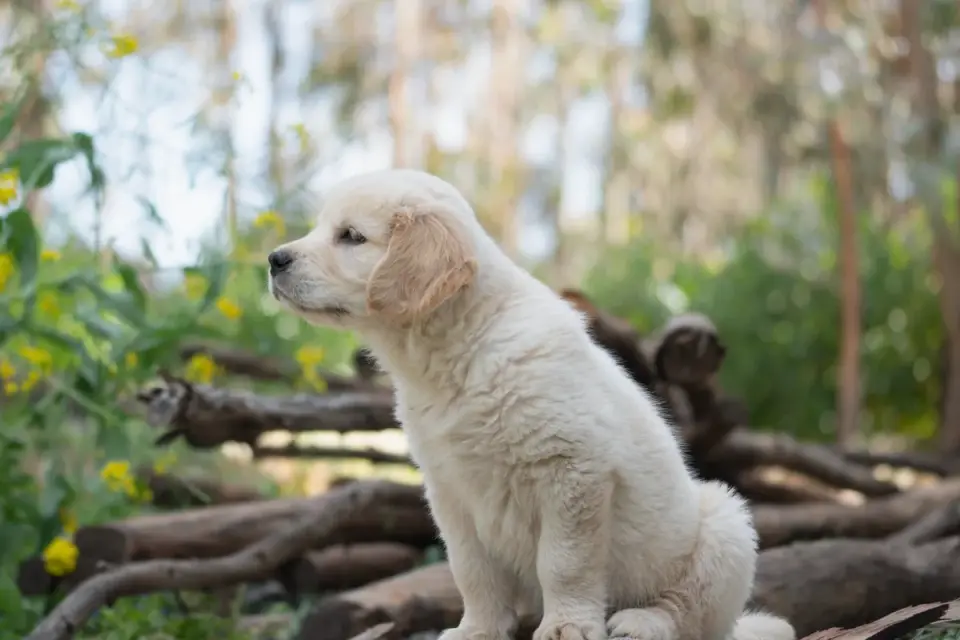
Maya met me at the end of her driveway with a 14-week-old Dane mix already tipping 48 pounds, leash looped twice around her palm and a neighbor’s advice ringing in her ears. The neighbor had told her to buy a prong collar now, before the puppy got big enough to drag her. Maya didn’t want to hurt him, but she could picture herself at 25 weeks trying to hold 90 pounds of excited puppy back from a squirrel. She asked the question every large-breed family asks me in that first visit: do we control the body first and teach later, or teach now so we don’t have to fight the body later?
The fork: brakes now, or negotiations with 120 pounds later
With a small breed, a missed lesson is annoying. With a large or giant breed, the same missed lesson becomes a safety issue by eight months. A jump that was cute at 20 pounds knocks over a toddler at 80. A pull that was manageable at 16 weeks dislocates a shoulder at a year. That math is why I counsel large-breed owners to treat the first four months as a braking-system install, not a trick list.
The decision stacks up like this. One path chases control through equipment and corrections: a collar that hurts enough to suppress pulling, longer walks to exhaust the puppy, waiting until adolescence to get serious. The other path builds behavior while the puppy is still small enough to practice easily: reward the position you want, manage the environment so the wrong choice pays less, and fit gear that helps you reinforce without a strength contest.
Control first feels faster.
Teaching first holds up when size arrives, and that difference is the whole article.
Why I start every heavy puppy on rewards, not corrections
My baseline recommendation is plain: train a large-breed puppy with short, frequent reward-based sessions, a front-clip harness fitted well, and household rules that assume adult size from day one. You’ll hear the counterargument constantly, and it deserves a fair hearing. It says big dogs are the exception, that a 100-pound adolescent needs a firmer hand because a cookie won’t stop him from jumping on grandma. I understand the fear behind it.
I still land on rewards, because the welfare and learning data point that way even for strong dogs. The American Veterinary Society of Animal Behavior recommends that only reward-based methods be used for all dog training, including behavior problems, and concludes there is no evidence aversive methods are more effective in any context. That matters more, not less, when the learner will soon outweigh you. You want a dog who offers calm behavior because it has paid reliably, not a dog who only behaves while the threat is present.
What reward-based actually means in a big-puppy house
It doesn’t mean permissiveness. The American Kennel Club lays out the same foundation I use with clients: base training on positive reinforcement, keep sessions to five to 10 minutes, avoid leash corrections and yelling that leave a puppy confused about what earned the punishment, and end while the puppy is still successful. Capture sits, lure downs, pay recalls like you mean it. Structure stays tight. Threats stay out.
If you want a catalog of the ways this goes sideways, read the roundup of common training mistakes beginners make. Inconsistent cues across family members and rewarding a half-second late are the two I correct most in large-breed homes.
Where corrections look tempting, and what they cost
Leash pops and collar corrections can suppress a jump in the moment, which is why they survive in parking-lot advice. What I’ve watched in exam rooms is the trade: the puppy gets quieter around the person holding the leash and more aroused everywhere else, and owners start escalating equipment to get the same effect at 70, then 90 pounds. You don’t gain reliability. You rent it, and the price rises with weight.
Three weeks in, Luis and his 5-month-old Bernese mountain dog, 62 pounds and still growing an inch a week, came back frustrated. They had tried the exhaust-him-first plan a friend swore by: a two-mile evening jog plus an hour at the dog park, then a training session when the puppy was finally sleepy. By day 12 the pulling was worse, not better. The puppy had learned that leash pressure predicts a sprint, had practiced jumping on every tired stranger on the bench, and was too wired to take food outdoors. At home he paced, mouthed sleeves, and couldn’t settle. Luis thought he had a stubborn dog. What he had was an over-faced, under-taught puppy whose only rehearsed skills involved speed.
We cut the forced mileage, swapped the back-clip harness for a fitted front-clip, and moved training to before the park, not after. Within ten days the puppy started offering eye contact at curbs because that behavior had finally been paid.
Leash skills when the puppy already pulls harder than you do
Loose-leash walking is the make-or-break skill for this size class, so I treat it like equipment fitting plus behavior in equal parts. Start indoors where you can win. Stand with the leash in a loose J, pay at your knee or hip for two steps of attention, then three, then five. When the puppy surges ahead, turn calmly the other way, call once, and pay back in position. Sessions stay short enough that you quit before frustration starts.
Gear helps, but it doesn’t train. I score leash gear the way I score everything in this publication: fit first, then comfort, then durability, then value. A front-clip harness wins on fit for most barrel-chested puppies because it steers the chest without pressing the throat, and a plain six-foot leash wins on comfort and value because you can actually practice the turn-and-reward loop. A head halter may help support handling for a very strong adolescent, but only with slow conditioning and a backup connection. What I reject is any tool sold as a substitute for repetitions.
A fit check that matters more than the brand
You should be able to slide two fingers under every strap, the chest ring should sit centered on the breastbone rather than twisting into the armpit, and the puppy should still take treats eagerly once it’s on. If the puppy freezes, scratches, or shuts down, the fit or the introduction is wrong, not the puppy. Condition the harness with food over two or three days before you ask for a walk in it.
House manners that have to scale: jumping, mouthing, doorways
I ask large-breed families to rehearse every greeting, doorway, and couch rule as if the puppy is already at adult weight. Four on the floor earns attention and treats. Feet leaving the ground earns a calm turn-away, not a knee or a shout. Doorways mean sit, release word, then walk. Cars mean wait for the cue, not a launch. It feels fussy at 30 pounds. It feels essential at 110.
Mouthing needs the same forward thinking. A Labrador-type puppy explores with its mouth, and small teeth on a sleeve predict big teeth on a sleeve. Keep a toy within reach, pay the puppy for choosing it, and end play briefly when teeth touch skin. If harvesting calm feels impossible, your treat may be too low-value for the distraction. This is where matching size, value, and ingredients to the job pays off: pea-sized soft treats you can deliver fast, without a long chew break that loses the moment.
Practice place work early. A bath mat becomes a station where good things happen: lie down, chew a stuffed Kong, get paid for staying. Ten repetitions of two minutes beat one marathon stay that falls apart. That mat may help support calmer vet visits and calmer doorbells later, which is exactly the preventive payoff I want.
Exercise, growth plates, and the tired-puppy trap
Here’s the contrast owners miss. Large-breed puppies need daily movement and social exposure, but forced, repetitive exercise is the wrong tool for calm behavior, and it can stress developing joints. VCA Animal Hospitals advises against pushing puppies into strenuous exercise like long jogs or hurdle jumping before maturity, notes giant breeds may not mature until around a year and a half, and recommends letting puppies self-regulate activity while keeping them lean.
I split the day into parts. Short sniff walks for training, free play on forgiving surfaces where the puppy chooses the pace, and mental work through food puzzles and nose games. Avoid the two-mile forced march to tire out a 4-month-old. You’ll build stamina faster than you build manners, and then you own a fitter dog with the same untrained habits.
Socialization runs on the same schedule. Brief, positive exposures to people, sounds, surfaces, and calm adult dogs beat flooding. Watch body language, keep greetings short, and let the puppy retreat. Confidence built this way generalizes. Confidence forced under pressure doesn’t.
Nora learned that edge case with her 10-month-old Leonberger, 108 pounds, who had been a social butterfly until a fear period hit. By day 10 of a new group class, the dog that once dragged her toward every stranger started barking at men in hats in the lobby. Instead we stepped back to distance work in the parking lot, paid quiet observation, asked for simple known cues, and left before stress stacked. Three weeks in, the dog was choosing to check in with Nora instead of fixating. The surprise for Nora was that less exposure, better timed, rebuilt more courage than more exposure had. Size hadn’t changed. The training question had: not how to overpower the bark, but how to keep the dog under threshold so learning could happen.
That story is why format matters as much as method. If you’re weighing group classes, private lessons, or online coaching, pick the setting your individual puppy can actually learn in right now. A reactive adolescent giant often progresses faster with two private sessions first, then a calm group.
What I’d practice, buy, and skip this month
If this were my client packet, it would be one page. Practice recall, sit, down, stay, loose-leash turns, and mat work in five-minute blocks, two or three times a day. Pay generously and fade food gradually as the behavior firms. Buy a well-fitted front-clip harness, a six-foot leash, a treat pouch you will actually wear, and a washable mat. Skip prong, choke, and shock tools entirely, skip the marathon exercise plan, and skip any program that promises off-leash reliability in a weekend.
Expect slow weeks. Adolescence will test every cue right when the dog looks full-grown but still thinks like a teenager. Keep your criteria clear, your household consistent, and your vet in the loop if fear, aggression, or sudden behavior change appears. Training a large-breed puppy is less about dominance than about installing brakes you can trust at full weight. Start early, reward the calm you want to keep, and size stops feeling like a threat and starts feeling like the dog you chose.
Frequently asked questions
Does a large-breed puppy need a prong or shock collar to learn to walk politely?
No. Start with luring, capturing, and a front-clip harness fitted well. Aversive collars suppress behavior in the moment without teaching a replacement, and the effect fades as the dog gains weight.
How long should training sessions be for a large puppy?
Two or three five-minute blocks daily beat one long session. End while the puppy is successful, and practice in easy rooms before driveways, sidewalks, and parks.
How much exercise is safe for a growing giant breed?
Use short sniff walks, free play at the puppy's own pace, and food puzzles. Avoid forced long runs or repetitive jumping until maturity, and keep the puppy lean. Ask your vet about your breed's growth timeline.
Sources
- Position Statement on Humane Dog Training — American Veterinary Society of Animal Behavior
- Teach Your Puppy These 5 Basic Cues — American Kennel Club
- How Exercise Can Damage Puppy Growth Plates — VCA Animal Hospitals