On this page
Checklist: what to sort out before you touch a leash
- Match daily physical output to the dog’s actual breed drive, not a generic “walk twice a day” default.
- Split exercise into structured (leash work, fetch, tug) and unstructured (sniffing, free play) — both matter.
- Add mental work on top of physical work; a tired body without a tired brain still gets restless.
- Train in short sessions after activity, not before, when the dog can actually hold focus.
- Track behavior changes over two to three weeks, not two to three days, before deciding a plan isn’t working.
I ask new clients the same question before we ever talk about sit and stay: how many minutes, today, has this dog actually run. Not walked on a loose leash sniffing mailboxes — run, or worked a retrieve, or pulled against something. Most owners of “hyper” dogs are running a training deficit that’s really an exercise deficit, and no amount of treat-based obedience work closes that gap on its own.
A young Australian Shepherd, Otis, seven months old and about forty pounds, came into my practice because his owners couldn’t get him to hold a sit for longer than a few seconds. They’d been doing fifteen-minute training sessions twice a day, treats and clicker, textbook technique. What they hadn’t been doing was running him. Otis got one twenty-minute neighborhood walk each morning, mostly on a retractable leash, mostly sniffing. By the time I saw him in the exam room he was bouncing off the walls at eight months old with the kind of pent-up motion you see in a dog that’s been physically under-stimulated for weeks. We didn’t change a single word of their cue vocabulary. We added forty minutes of structured fetch and a flirt pole session before each training block. Within three weeks the sits held, not because the dog had learned obedience faster, but because he finally had the physical capacity to hold still.
Start with the breed’s real energy budget
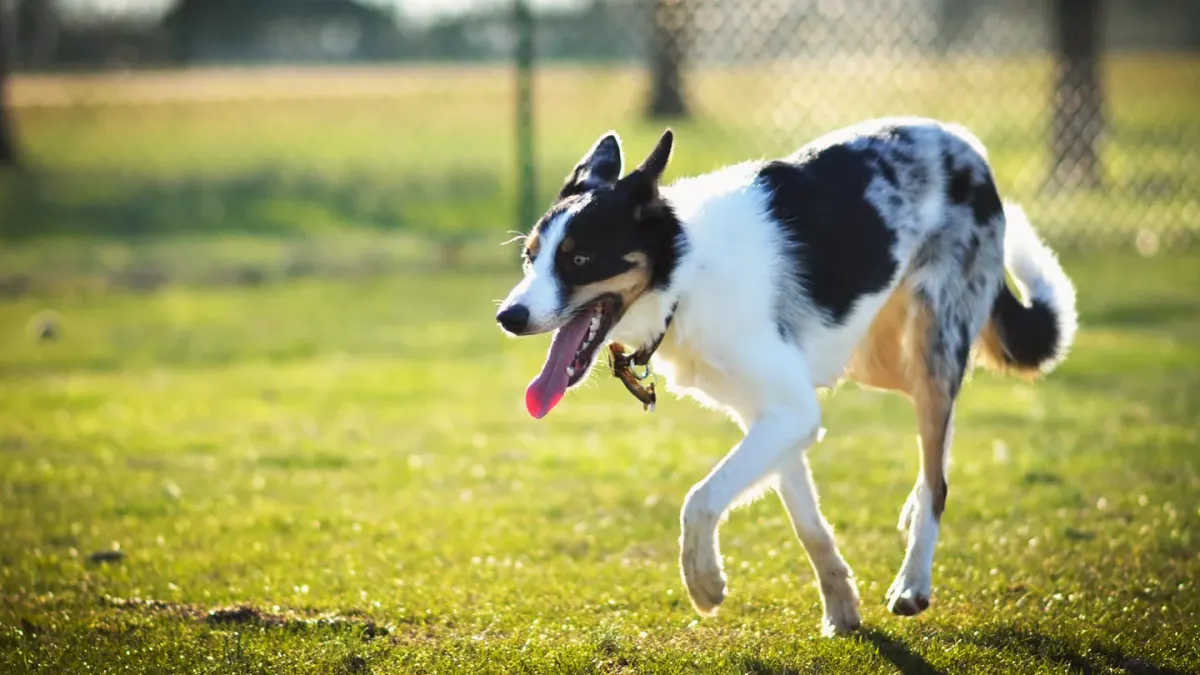
Herding and sporting breeds in particular were bred for output measured in hours, not minutes. High-drive dogs typically need at least sixty to ninety minutes of vigorous activity daily, with sporting breeds often landing at the higher end and herding breeds needing that plus dedicated mental work like puzzle toys or scent games, according to the AKC. A twenty-minute walk covers a fraction of that budget for a Border Collie or a working-line Lab, and the shortfall shows up as jumping, mouthing, destructive chewing, or an inability to settle in the house.
I keep this rule with clients: figure out what the breed was built to do, then get as close to that as your life allows. A retriever wants retrieving. A herding dog wants a job with direction changes. A terrier wants to dig or chase something small. You don’t need a farm — a flirt pole, a long line in an open field, or a structured fetch session in a fenced yard can approximate the real thing.
Physical tired and mental tired are different things
This is where most training plans stall. A dog can be leg-tired from a run and still restless, because the run didn’t ask anything of the brain. Environmental enrichment — puzzle feeders, scentwork, novel objects, training games — measurably shifts behavior in dogs. Enrichment programs have been shown to increase calm, settled behaviors and decrease undesirable ones like jumping and excessive barking, according to research reviewed by VCA Animal Hospitals. A PubMed-indexed study on shelter dogs found that structured enrichment reduced stress-associated behaviors compared to dogs without it — different population than a pet in a home, but the underlying mechanism holds: predictable outlets for a dog’s natural behaviors lower baseline arousal.
In practice that means pairing the physical exercise with something that makes the dog think: a fifteen-minute nose-work game hunting treats in the yard, a snuffle mat before dinner, a five-minute shaping session teaching a new trick. It doesn’t need to be long. It needs to happen daily, and it needs to come from problem-solving, not repetition.
Sequence training after activity, not before
If you’re doing structured obedience work, do it after the exercise, not as the first thing in the morning when the dog is at peak reserve energy. A dog running on a full tank of unspent energy is going to struggle to hold a stay regardless of how good your technique is. I tell clients to think of it like a toddler — you don’t start a quiet activity with a kid who’s been sitting in a car seat for two hours; you let them run around the yard first.
For young dogs still building their social skills, this sequencing matters even more, since early experience shapes long-term behavior. The American Veterinary Society of Animal Behavior notes that incomplete or improper socialization during the early developmental window can raise the risk of fear, avoidance, and behavior problems later on, and recommends reward-based training methods throughout. A well-exercised puppy is a puppy that can actually absorb a new experience instead of reacting to it out of raw excess energy.
If you’re building a training routine from scratch, our guide to a puppy potty-training schedule walks through how activity and elimination breaks fit together across a young dog’s day, and it’s worth reading alongside this piece if your hyper dog is also still house-training.
One thing I say almost every week: exercise isn’t a reward for good behavior, it’s the prerequisite for it. Owners sometimes want to withhold the walk until the dog “earns it” by settling down first. That gets the sequence backwards for a dog running an energy deficit.
Where owners get the format wrong
A lot of the frustration I see isn’t about exercise volume at all — it’s about training format. Owners default to short daily sessions squeezed in wherever, without much structure to the cues themselves. Whether you build cues around hand signals or verbal markers changes how fast a hyper dog locks onto you in a distracting environment; our breakdown of hand signals vs. verbal cues covers which tends to cut through arousal faster for dogs that struggle to focus. And if the sessions themselves aren’t working regardless of format, the issue may be the coaching structure rather than the dog — see our comparison of group classes, private lessons, and online coaching for how to match the format to a genuinely high-energy dog rather than a generic one.
Treat choice matters here too. A dog running hard sessions burns through rewards fast, and the wrong size or texture treat slows the whole session down; our training treats buyer’s guide covers sizing and ingredient basics that matter more for high-rep, high-energy training than most owners expect.
The dogs I still think about
One of the dogs I worked with, a two-year-old Vizsla named Penny, had been through two obedience classes and still couldn’t settle on a mat for longer than thirty seconds without pacing. Her owners were doing everything the class taught — mat training, duration building, reward timing — and getting nowhere. When I asked about her exercise, I learned she got one walk a day, about a half mile, because her owner worked long hours. Vizslas are bred for hunting stamina; a half-mile walk is a warm-up, not a workout. We restructured her week: a longer weekend hike, a midweek session at a dog park where she could run flat-out, and a daily ten-minute tug game before any mat work. Her owner reported real change by week three — not a cured dog, but a dog who could finally hold the mat position long enough for the training itself to take hold. That’s the pattern I see over and over: the training technique was never really the problem.
Bottom line
If your dog seems impossible to train, start with a stopwatch, not a clicker. Track actual vigorous activity minutes for a week before assuming the training method is broken. Most hyper dogs I see in practice aren’t defiant or poorly trained — they’re under-exercised for their breed, and the training frustration is a downstream symptom. Fix the energy budget first, add mental enrichment on top of it, and sequence your training sessions after activity rather than before. The obedience work gets dramatically easier once the dog’s body has somewhere to put its energy other than your living room.
Frequently asked questions
How much exercise does a high-energy dog actually need per day?
Most high-drive breeds do best with sixty to ninety minutes of vigorous activity daily, with sporting and herding breeds often at the higher end, plus separate time for mental enrichment.
Should I exercise my dog before or after a training session?
After. A dog running on excess unspent energy struggles to hold focus regardless of technique; training sessions tend to go better once the physical edge is off.
Is a long walk enough exercise for a hyper dog?
Usually not for high-drive breeds. A loose-leash sniffing walk covers ground but rarely matches the vigorous, sustained output these breeds were bred for.
Sources
- Puppy Socialization Position Statement — American Veterinary Society of Animal Behavior
- The Best Training and Dog Sports for Herding Breeds — AKC
- Using Enrichment, Predictability and Scheduling to Train Your Dog — VCA Animal Hospitals
- Effects of environmental enrichment on the behavior of shelter dogs — PubMed