
On this page
The fork isn’t brush-versus-scissors. It’s whether the mat still has slack in it.
Run two fingers underneath the tangle. If you can slide them between the mat and the skin, you’re usually looking at a brush-out. If the mat is pulled drum-tight and your fingers won’t fit, cutting or clipping it out is the safer call — not because scissors are inherently better than a slicker brush, but because a tight mat is already doing mechanical damage, and every minute spent combing it makes that worse.
I’ve had a Cockapoo named Daisy come into my exam room, nine years old, forty-two pounds, owned by a couple who’d been meaning to get to the groomer “next weekend” for about six weeks running. The mats had built up behind both ears and along the hind legs where the harness sat. What looked like a shaggy but manageable coat from three feet away turned out to be a solid felted pad once we parted the hair — tight enough that the skin underneath was inflamed and slightly moist, with the unmistakable sour smell of a coat that hadn’t been dry at the skin in days. The owners had tried brushing it out the night before and given up after twenty minutes because Daisy kept yelping. That’s the tell I look for now: a dog who tolerates brushing everywhere except one spot is usually telling you that spot has crossed from tangle to mat.
Why tight mats are a skin problem, not just a coat problem
A mat isn’t just cosmetic. Once hair felts together, it traps moisture, debris, and dead skin against the surface, and that combination creates a warm, low-oxygen microenvironment where bacteria and yeast do well. According to PetMD, hot spots, rashes, and skin infections frequently hide underneath mats, and the area can also shelter fleas or other parasites the owner never sees. When the skin stays damp long enough, it macerates — the outer protective layer softens and breaks down — which is part of why Boops N’ Bubbles describes matted coats as a setup for bacterial and fungal infection rather than just a grooming inconvenience.
Tight, pelted mats add a second problem: mechanical tension. A mat that’s shrunk down against the skin pulls constantly, and that steady traction can restrict blood flow to the area. Left long enough, that can progress to genuine tissue damage. This is the practical reason a brush-out stops being the right answer once a mat is truly tight — you’re not just detangling hair anymore, you’re tugging on already-compromised skin, and every pass with a comb reopens the same irritation.
What actually separates a safe brush-out from a mat you shouldn’t touch
Brushing is the right tool when the tangle still has movement in it — when you can work a slicker brush or a metal comb through the outer layer and gradually loosen it, ideally with a detangling spray to reduce friction and a line-brushing technique that works in thin sections rather than attacking the whole mat at once. This works well for mats that are still loose enough to separate, and it’s genuinely the gentler option when it’s applicable, because it doesn’t remove coat the dog may still want for warmth or sun protection.
Cutting or clipping becomes necessary once a mat is felted flat against the skin. At that point, dragging a comb through it doesn’t loosen the tangle — it pulls the skin along with it. This is where scissors get risky in an owner’s hands: because the mat sits so close to the skin, it’s easy to catch a fold of skin in the blades without meaning to, especially around thin-skinned areas like the armpits, groin, and behind the ears. Clippers with a guard, run parallel to the skin rather than into it, are generally safer than scissors for this reason, and for coats matted over a large area, a full clip-down performed by a professional groomer or a vet is usually the least traumatic option — even though it means starting the coat over from scratch. Groomers routinely work in exactly this territory, on skin that’s thin and already irritated before they even begin, which is part of why matting removal is one of the more technically demanding parts of the job rather than a routine trim.
If skin injury does happen during mat removal, whether at home or in a grooming appointment, it needs veterinary attention rather than a wait-and-see approach — open skin under fur is prone to infection, and antibacterial treatment tends to work better started early than late.
Reading your own dog before you decide
Coat type changes this calculus. A double-coated breed that’s neglected for a season can mat into a solid layer close to the skin that looks worse than it is from outside, while a curly or wool-type coat, the kind you’ll manage very differently than a slicker brush versus an undercoat rake territory, tends to mat in smaller, denser knots that show up faster and need more frequent attention. Neither coat type gets a pass on regular brushing — mats are a maintenance failure more than a breed trait, and how often you’re supposed to be brushing in the first place matters more than which tool you reach for once matting has already happened.
In my day-to-day practice, the dogs who end up with true pelted mats are almost never the ones getting brushed even once a week. It’s the six-week gap, not the coat type, that turns a manageable tangle into a decision between a professional shave-down and a trip to my exam room. I tell owners that the honest fix isn’t a better detangling spray — it’s closing the gap between brushings before the mat has a chance to felt in the first place, and pairing that with a regular bathing schedule so the coat isn’t sitting damp against the skin between grooming sessions.
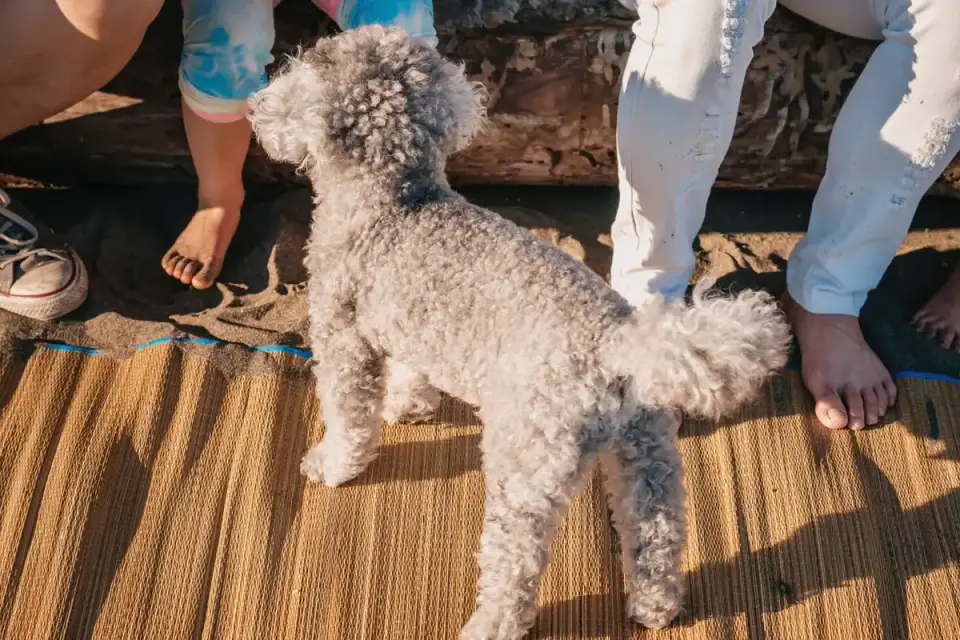
Daisy ended up needing a partial shave around both ears and the hind legs, with a topical treatment for the irritated skin underneath. Her coat grew back over about two months, and the couple started a twice-weekly brushing habit that’s kept her mat-free since. That’s not a guaranteed outcome for every matted dog — it’s one case, and how a coat recovers depends on the breed, the extent of the shave, and how consistently the owner keeps up afterward. But it’s a fair example of how quickly the fix can become routine once the underlying gap in grooming frequency gets addressed.
Where I land
Brush when you can still get two fingers under the mat and the dog tolerates it without flinching. Cut or clip — by a professional whenever the mat covers more than a small, isolated patch — once the mat is tight to the skin, the skin looks irritated, or your dog is telling you the area is painful. Scissors in inexperienced hands are the riskiest option on the table, not the safest, because of how easily they catch skin that’s already pulled taut. If you’re weighing whether this is a job for home tools at all, the broader question of when to hand grooming off to a professional is worth settling before the mats show up, not after — the same way it’s worth having a plan for nail care before overgrowth becomes its own emergency.
Frequently asked questions
Can I cut a mat out with regular scissors at home?
You can for small, loose tangles, but tight mats sit close to the skin and are easy to catch with a blade. For anything felted flat against the skin, clippers run parallel to the surface, or a professional groomer, are the safer route.
Is it ever okay to just shave the whole coat instead of picking apart mats?
Yes, and for widespread matting it's often the least traumatic option, since working a comb through many small mats can mean repeated tugging on already irritated skin. A full clip-down lets the coat start over cleanly.
How do I know if the skin under a mat is already infected?
Redness, odor, moisture, or a dog that flinches when the area is touched are all signs to get a veterinary check rather than continuing to groom it yourself.