On this page
Best toys for retriever dogs protect the mouth, invite swimming, and spare hard-working joints.
You’ve got two kinds of fetch in one dog. There’s the careful carry — soft mouth, head high, parading the bumper like it matters — and there’s the full-send chase that ends in a skid. Good retrieving toys let you feed both without wrecking teeth or shoulders, and that’s the fork: do you buy for the mouth first, or for the throw?
I land on mouth first every time. A retriever bred to carry birds will tell you quickly what feels right to hold, and if the texture is wrong they’ll either chomp it to death or lose interest. You want something easy to grip but not so hard they have to bite down to keep it, with enough give to encourage that loose, relaxed hold.
A 4-year-old, 68-pound Golden I followed in clinic notes is a good example of that decision. She lived for water retrieves, but her owner was throwing a slick, heavy plastic dumbbell that she had to clamp to carry, and by three weeks in she was dropping it short and shaking her head on the return. Swapping to a larger-diameter canvas bumper with a rope toggle changed the carry in one session — head up, no head shake, willing to swim farther. The quantified change was the timeline: three weeks of short drops, then a clean full retrieve the first day with a hold-friendly shape.
Pick for the carry, not just the chase
Think mouthfeel before distance. Canvas and firehose-style bumpers, soft vinyl dummies, and larger balls with some squish reward a gentle grip. Small, rock-hard balls do the opposite — they invite chomping, they wear teeth faster, and they’re easier to swallow for a big Lab.
Size it to the dog in front of you. The toy should be too big to slip behind the canines and be gulped, but not so bulky a young or smaller retriever has to strain the jaw. For most adult Labs and Goldens that means bumpers in the standard 2-inch diameter range and balls larger than a tennis ball for daily fetch. Tennis balls are the classic tradeoff: dogs love the fuzz and bounce, but the abrasive cover plus grit is rough on enamel with chronic chewing.
That’s where the American Kennel Club guidance on fetch play is useful context — keep sessions structured, trade rather than wrestle the toy away, and quit while the dog still wants more. You’ll get more retrieves over a lifetime from a dog that never learns fetch means a tug war at your feet.
Float, visibility, and where you actually throw
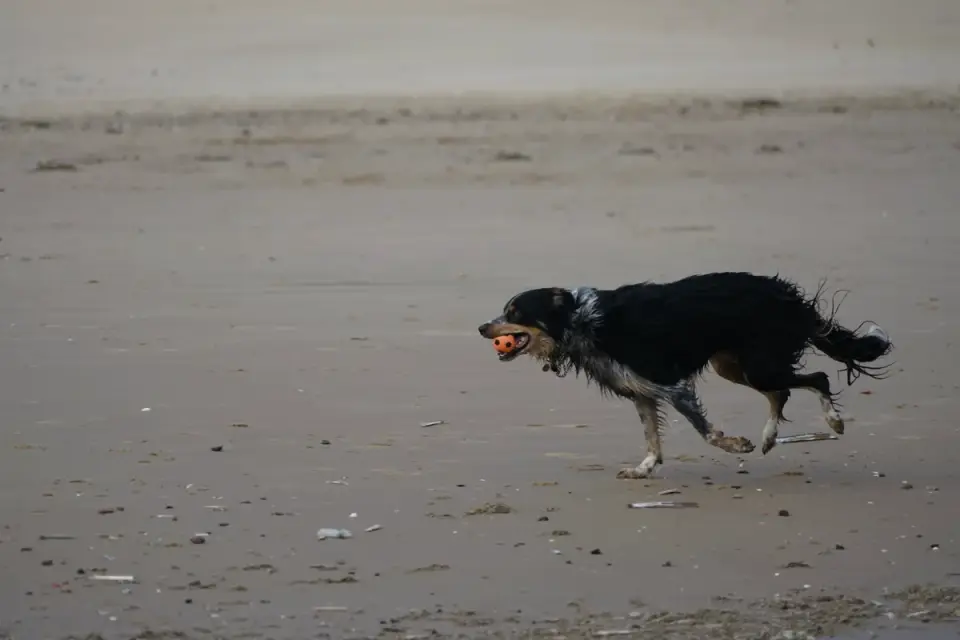
If you throw near water, float isn’t optional. A bumper or ball that rides high and stays visible lets a swimming dog track with the head up instead of dunking and snorting to find it. Bright orange, white, or high-contrast two-tone shows up best in chop and in green grass at dusk.
Here’s the failed approach I see a lot. A 2-year-old, 74-pound Lab — big engine, no off switch — had an owner who bought the farthest-flying hard plastic disc to tire him out. On land it worked for ten minutes. In the lake it sank just below the surface, and the dog spent five minutes per rep circling and diving. By day 10 the owner reported a sore, short-strided front end after sessions and a dog that started balking at the water. The fix wasn’t more rest alone; it was switching to a high-float bumper for water days and saving the long land throws for short grass with warm-up and straight-line limits. The number that mattered was day 10 — that’s when repetitive diving and hard stops caught up to enthusiasm.
Land fetch needs its own guardrails. Uphill throws, slick mud, and frantic jump-and-twist catches load shoulders and backs. Keep throws low and out in front, throw fewer reps, and build in sniff breaks. For ideas on rotating toy types so fetch isn’t the only gear, see Interactive Toys vs. Chew Toys: When to Use Each.
What fetch can and can’t do for joints and recovery
You can’t out-fetch a diet gap, and that’s where I get ingredient-literate on purpose. Daily retrieving is excellent conditioning for muscle and cardio, which may help support mobility and healthy weight — and weight is joint medicine for retrievers. What a toy can’t realistically do is rebuild cartilage or replace balanced nutrition, rehab, or weight control.
Ground an integrative claim in the nutritional evidence this way: eicosapentaenoic acid and docosahexaenoic acid from fish oil, plus a complete and balanced base diet, have the strongest nutritional support for dogs with joint wear, while glucosamine, chondroitin, and undenatured type II collagen may help support normal joint structure as part of a broader plan. That context comes through clearly in VCA Animal Hospitals client resources on activity, weight, and joint health in active dogs. If your fetcher is stiff after play, getting sore by the next morning, or under 18 months with open growth plates, shorten the session and talk to your vet before you add mileage or supplements.
Cleaning matters more for mouth toys than most people think, especially canvas that stays damp. Rinse after lake or drool-heavy sessions, air-dry fully, and retire anything with exposed foam, frayed rope cores, or cracked vinyl. Our How to Clean and Disinfect Dog Toys walkthrough and How to Exercise a Dog Indoors With Toys During Bad Weather routine are both handy when weather pushes fetch inside.
The edge case that changes the plan is the older dog who still lives to retrieve. A 9-year-old, 71-pound Labrador I tracked didn’t lose drive — she lost bounce-back. Twenty-minute sessions left her slow on stairs that evening, which scared her owner into stopping fetch entirely. We didn’t need to quit; we needed to re-dose it. Five short water retrieves with a soft, high-float bumper, twice a week, plus leash walks and food puzzles on off days. Two weeks in she was carrying proudly again without that evening stiffness. Age in years was the signal here — 9 — not lack of desire.
My take: build a three-toy fetch kit
Keep it spare. One soft-mouth bumper for training and water, one larger soft ball for yard reps, and one food-stuffable toy for the days joints say no. Score everything on the same rubric: does the dog carry it softly, can you see it and find it, does it survive teeth without shedding pieces, and can you clean it?
Skip anything you have to make excuses for.
Frequently asked questions
Are tennis balls okay for retrievers?
For occasional fetch on grass, many dogs do fine, but avoid letting your retriever chew them. The abrasive felt plus dirt can wear teeth, and small balls can be a choking risk for large Labs and Goldens.
What size bumper is best for a Lab or Golden?
Most adults carry a standard-diameter bumper (around 2 inches) best — large enough to prevent gulping, slim enough for a soft hold. Young, small, or sore-mouthed dogs often do better with a smaller puppy bumper.
How many retrieves per session?
Start with 3–5 quality reps with warm-up and rest, especially for puppies, seniors, or dogs returning from injury. Quit while your dog is still eager rather than playing to exhaustion.
Sources
- Fetch and Retrieve Play — American Kennel Club
- Joint Health and Activity in Dogs — VCA Animal Hospitals