
On this page
You have about three seconds when those needle teeth find your fingers, and what you do next decides whether mouthing fades or becomes a habit. You can yank your hand away and scold, which usually amps most puppies up, or you can go still, interrupt calmly, and feed that same urge into a toy.
I watched this play out with a 12-week-old retriever mix during a living-room play session, all wiggles and tail thumps until overtired. The owners had been waving a rope toy in his face while he chewed their cuffs, hoping he would choose wisely. By day four of a clearer plan — hands go still, toy goes low and wiggly, praise for any tooth-on-toy contact — the puppy was turning toward the toy on his own in about half the reps. Not perfect, but the observable shift was fewer grabs at sleeves and quicker reorientation to the toy they kept at knee height.
That is the expectation I want you to hold. Mouthing is normal exploratory and play behavior at baseline, not defiance. Our job is not to suppress oral behavior entirely, but to make toys the easier, more rewarding target while you teach gentle manners.
Pick your lane: still hands or lively hands
Puppies chase movement. Lively hands that wave, push, or squeal sound like play, so teeth follow. Still hands are boring, and boring is teachable.
Keep one or two small, soft toys in every room where you play with your puppy. A plush with a squeaker, a short fleece tug, or a rubber teether you can wiggle along the floor will beat a bulky chew you have to go find. Fit matters here like any gear: light enough to shake, long enough to keep your knuckles clear, and comfortable for you to grab fast.
When teeth touch skin, freeze. Let your hand go limp for a beat, then calmly offer the toy an inch from the puppy’s nose and animate it away from you. Mark and praise the second teeth land on the toy. You are scoring the same rubric every time: did teeth leave skin, did teeth find the toy, and did we keep arousal low.
Calm wins.
What to do in the three seconds after teeth touch skin
Use the same loop until it feels automatic:
- Go still and breathe out. Tuck thumbs or fold hands across your chest if you need to.
- Redirect low. Wiggle the toy along the ground, not in the puppy’s face. Movement away from your body pulls the chase drive with it.
- Pay for the swap. Quiet “yes” and continued tug or toss when the puppy bites the toy. Keep your voice low and warm.
- Reset briefly. If the puppy drops the toy and re-targets hands twice in a row, stand up, step over a baby gate, or turn away for 15-20 seconds. Then invite back to the toy.
The American Veterinary Society of Animal Behavior emphasizes rewarding desired behavior over punishment for behavior concerns, and mouthing is a textbook case. Interrupting and redirecting preserves trust while the puppy learns what pays.
For texture on timing and body language, the ASPCA outlines a similar withdraw-and-redirect approach for mouthing and play biting, including brief time-outs from play when pressure escalates.
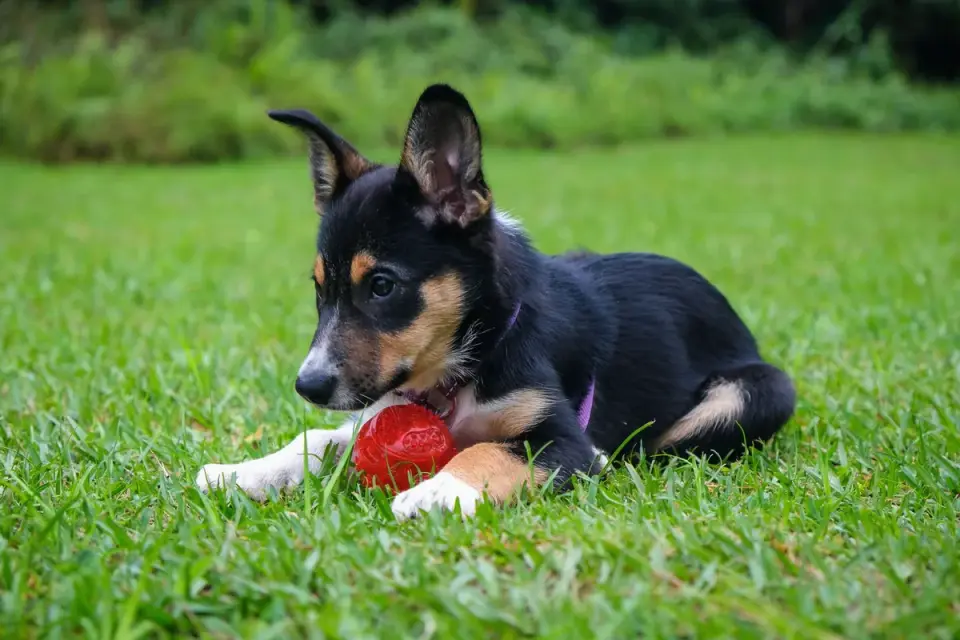
When yelping backfires and revs them up
A lot of owners were told to yelp like a littermate. For some soft puppies it pauses them. For many confident, toy-driven puppies it does the opposite.
I worked through this with a nine-week-old herding-breed puppy in a kitchen, second week home. The family was diligent, yelping “ouch” on every nip. After six redirects in ten minutes with no drop in intensity, we counted the pattern together: each high-pitched yelp triggered harder lunges, jumping, and grabbing at pant legs. We swapped the yelp for silence. Still hand, toy skittered across the tile, low praise for the grab. Within that same session the bite pressure softened and he held the toy for longer stretches instead of ricocheting back to ankles. The tradeoff was clear — less drama from us meant less fuel for him.
If yelping excites your puppy, drop it without guilt. Low arousal is the point. You may also need to check your own play style with guidance on Common Dog Training Mistakes Beginners Make — looming, fast hand play, and wrestling in the evening witching hour all raise arousal.
The overtired biter nobody warns you about
Here is where the usual “just redirect” advice has to bend. A tired puppy does not learn well, and no toy swap fixes exhaustion.
Think of a 34-pound, five-month-old bully mix I counseled around after a Saturday adoption event. He had been charming at the park, then came home and turned into a land shark at 7 p.m., launching at hands and sleeves on the couch. The owners assumed defiance and kept drilling redirects for nearly an hour. We changed course entirely: last potty break, dim lights, stuffed Kong in the crate, lights out by 7. He slept. The next evening they protected a nap after dinner instead of pushing play, and mouthing stayed at a level where redirection actually worked.
Cornell University College of Veterinary Medicine notes that mouthing often spikes when dogs are overstimulated or tired, which matches what I see in practice. Young puppies may need 18-20 hours of sleep, and enforced naps may help support calmer behavior more than another training rep.
Pair this with short, well-timed rewards. Pea-sized, soft treats you can deliver fast keep the lesson clear without filling the belly; our guide to Best Training Treats for Dogs: A Buyer’s Guide to Size, Value, and Ingredients can help you match texture to the moment. And if you want a cleaner way to mark that tooth-on-toy instant, see Clicker vs Verbal Marker Word: Which One Should You Actually Use?.
What I want you to do tomorrow
Keep the plan boring and repeatable. Station toys where mouthing happens, go still when teeth touch skin, animate the toy low and away, and pay warmly for the swap. Add sleep before you add more training.
Expect gradual change over two to four weeks, not overnight silence. If biting breaks skin often, escalates to hard pressure with stiff body language, or comes with guarding or fear, ask your veterinarian for a referral to a qualified trainer promptly. For most mouthy puppies, though, still hands plus a well-fitted toy teaches the lesson you want: hands are for petting, toys are for teeth.
Frequently asked questions
How long does it take to stop a puppy mouthing hands?
Most puppies improve over 2-4 weeks of consistent redirect-to-toy practice plus enough sleep. Expect gradual progress with setbacks during teething or overtired evenings, not overnight change.
Should I yelp when my puppy bites me?
Try it twice. If your puppy pauses and softens, keep it. If yelping excites more lunging and harder bites, drop it and use still hands plus a low, calm toy redirect instead.
What kind of toy works best for redirection?
Use a small, soft, easy-to-grab toy you can wiggle along the floor away from your body. Keep one in each play area so you can reward tooth-on-toy contact within seconds.
Sources
- Position Statements — American Veterinary Society of Animal Behavior