Choose soft, oversized puppy chew toys that give under your nail while teething lasts.

On this page
Puppy teeth are built for transition, not for punishment, so the toy that feels hardest in the store is often the least suitable during teething. Deciduous teeth have thinner enamel and shorter roots than adult teeth, and the adult dentition erupts over several months with inflamed gums and a strong urge to chew. Published owner resources from the American Veterinary Medical Association emphasize preventive dental habits and avoiding chewing forces that injure teeth or gums. That comparison of published evidence favors pliable rubber, soft vinyl and fabric toys sized well beyond the back teeth over dense nylon or compressed bone substitutes for most puppies under six months.
Why developing teeth break before adult teeth do
Puppy tooth structure explains much of the risk. Hard objects concentrate force on a small cusp tip. Softer toys distribute that load across a wider surface and deform before enamel does.
In practical terms, the thumbnail test remains a useful screen. Press a thumbnail into the toy surface for five seconds. When the material gives slightly and rebounds, it is more likely to support normal chewing function without concentrating force on a fragile cusp. When the surface shows no indentation, reserve it for later adolescence after the full adult dentition is present and stable.
Size the toy to the jaw in front of you
Size protects as much as softness does. A teething toy should sit wide enough that a puppy cannot wedge it behind the canine teeth and gnaw end-on, and long enough that the puppy chews with the premolars rather than crushing with the molars. For small breeds, that often means a medium puppy ring or bone shape rather than a small ball. For large-breed puppies, that often means a large puppy-rated rubber shape even when the puppy looks small at eight to twelve weeks.
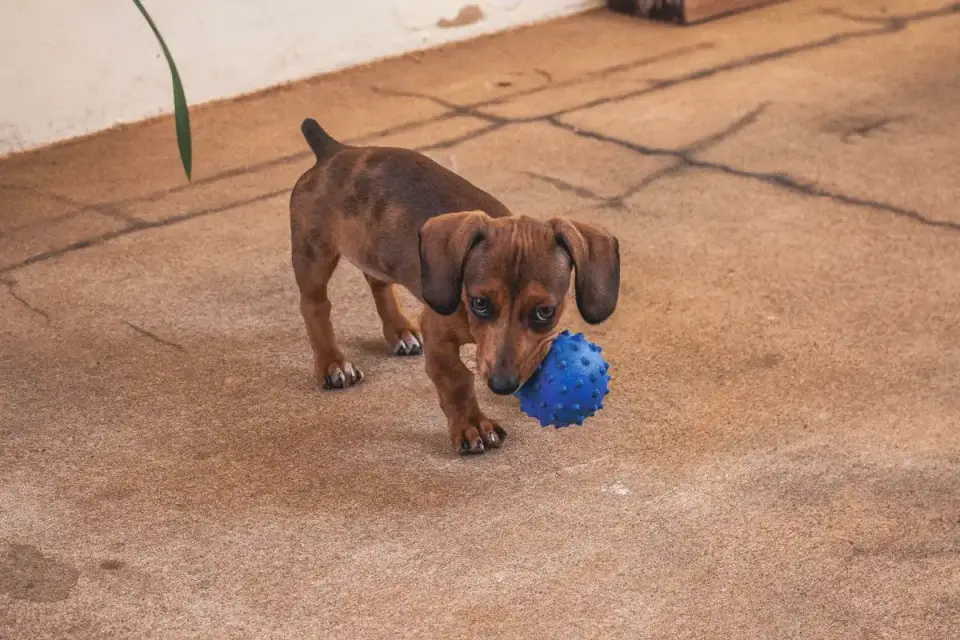
Replace the toy when the puppy can fit the entire end past the canines or compress it flat between the back teeth. Growth changes fit every two to three weeks during peak teething. What fit in March may become a choking or tooth-trapping size by April.
Choose materials that forgive sore gums
Not all soft is equal. Comparison on the data favors three categories for the teething period.
Puppy-formula rubber with hollow centers allows gentle compression and can be stuffed with moistened kibble and frozen briefly to add soothing cold. Smooth thermoplastic vinyl with low-profile nubs massages inflamed gingiva without sharp edges. Tightly woven fabric or flat rope for supervised tugging gives under jaw pressure, although any fraying ends the toy’s service life.
Dense nylon, hard compressed starch bones and antler-type chews do not give under thumbnail pressure. They are designed for sustained gnawing by adult dentition. The Veterinary Oral Health Council lists products with demonstrated effects on plaque or tartar in dogs with mature teeth, which is a different question from teething comfort. Teething selection should prioritize gum tolerance and fracture avoidance, not abrasive cleaning power.
For more on how non-edible toys differ from consumable chews during this stage, see Chew Toys vs. Edible Chews: What’s the Difference and Rubber vs. Nylon Chew Toys: Which Is Safer.
Shape, texture and cold matter more than flavor
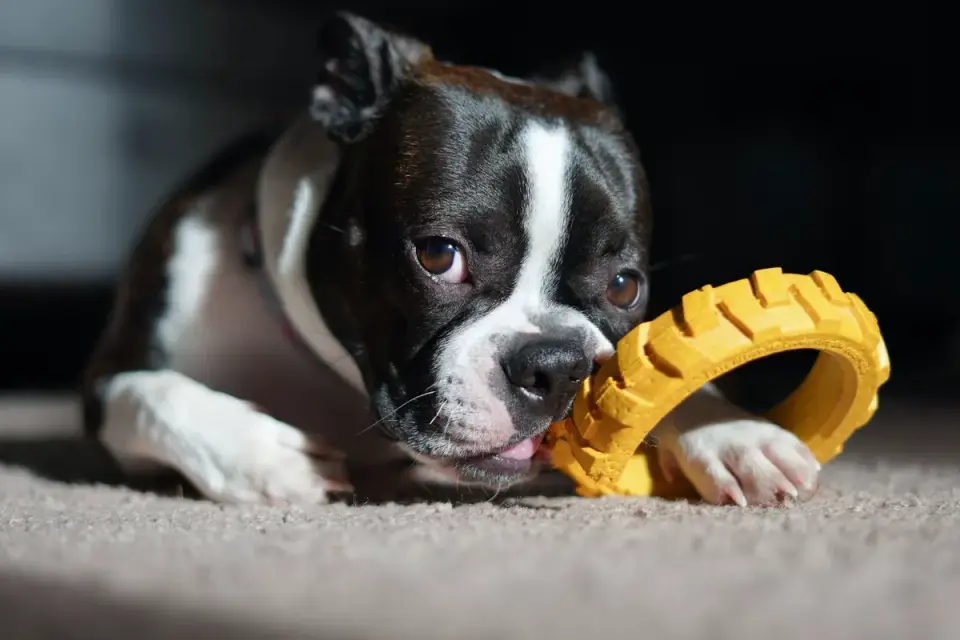
Teething discomfort responds to mild pressure, varied texture and cool temperature. Rings and figure-eight shapes let puppies stabilize the toy with the paws while applying even pressure across the incisors. Light ridges increase interest without creating hard points. Brief chilling of a water-safe rubber toy, then offering it for ten to fifteen minutes of supervised chewing, provides short-term soothing that supports normal play behavior.
Avoid freezing solid blocks of ice as a primary plan or leaving a chilled toy down for extended unsupervised chewing. Cold supports comfort only when the puppy remains engaged, drooling normally and switching sides of the mouth. Persistent pawing at one side, bleeding beyond light gum spotting or refusal to eat suggests retained teeth or malocclusion that needs examination rather than a different toy. Learn which textures target soreness in Teething Toys That Soothe a Puppy’s Sore Gums.
Inspect daily and retire toys without guilt
No teething toy is maintenance-free. Before each session, check for splits, missing chunks, exposed squeakers and loosened fibers. Remove any toy with a crack that catches a fingernail, a piece that bends outward or stuffing visible through fabric. Supervise all chewing during teething, even with products marketed for puppies.
A simple rotation helps. Keep two to three size-appropriate toys in use, wash rubber and vinyl with warm soap and water, air-dry fully and store the rest out of reach. When chewing intensity shifts toward sustained destruction around five to seven months, review sizing again in When Do Puppies Stop Teething and Need Different Toys?.
What to buy for the next month
Read the data closely before crowning anything. For most teething puppies, comparison on published dental information supports one soft puppy-rated rubber toy in the correct large size plus one textured fabric tug for supervised play. That combination covers soothing pressure, appropriate fit and daily washability while adult teeth erupt. Reserve harder nylon-style toys until a veterinarian confirms complete adult dentition and normal occlusion, then reintroduce gradually with continued inspection.
Frequently asked questions
How soft should puppy chew toys be during teething?
Choose toys that indent slightly under firm thumbnail pressure and rebound. Toys with no give concentrate force on thin deciduous enamel and developing adult teeth.
When should a puppy move to harder chew toys?
Wait until the full adult dentition has erupted, usually around six months, and a veterinarian has confirmed normal occlusion. Reassess size and hardness at that visit.
Are squeakers and rope safe for teething puppies?
They can be used only with direct supervision. Remove the toy at the first sign of a torn seam, exposed squeaker, loose threads, or a piece small enough to fit entirely behind the canine teeth.
Sources
- Pet Dental Care — American Veterinary Medical Association
- Veterinary Oral Health Council — Veterinary Oral Health Council