On this page
Which is actually safer for a dog — the ocean, a lake, or a backyard pool? I get some version of this question every summer, and owners are usually surprised that my answer isn’t “whichever is closest.” Each of these bodies of water carries a distinct risk profile, and the right one for your dog depends on things like kidney and heart health, ear anatomy, and how good you are about rinsing.
Why “just let them swim” isn’t quite right
I’ve watched this play out more times than I can count: a healthy young Labrador spends an August afternoon in the ocean, drinks more seawater than anyone noticed, and is vomiting and wobbly by dinner. The owners always describe the same thing — a dog who wouldn’t stop chasing waves, gulping mouthfuls between retrieves, and then going quiet and lethargic in the car ride home. That’s the pattern of salt toxicosis, and it’s the single biggest reason I don’t reflexively recommend ocean swimming over the alternatives. According to the AKC, a dog would need to ingest roughly 2.2 teaspoons of salt per pound of body weight to reach genuinely toxic levels, and seawater carries about 2 teaspoons of salt per cup — so it usually takes sustained, enthusiastic drinking, not a few laps, to get there. Small dogs and dogs who play retrieve games in the surf are the ones I worry about most, because they’re gulping water with every throw.
So no single venue is automatically the safe one. Ocean, lake, and pool each fail a different kind of dog in a different way, and the job is matching the water to the dog in front of you, not defaulting to whatever’s on the map.
The ocean’s real hazard is what your dog swallows, not the waves
Rip currents get the headlines, but in my experience the more common ocean problem is quieter: salt ingestion during retrieve games, plus sand colitis in dogs who paw and mouth at wet sand along the tideline. A dog that’s otherwise a strong swimmer can still end up dehydrated and vomiting from an afternoon of chasing a ball into the surf, simply because every retrieve comes with a mouthful of saltwater. The fix isn’t avoiding the beach — it’s bringing fresh water and offering it often, rinsing your dog off after (which also cuts down on salt they’d otherwise lick off their coat later), and dialing back retrieve games if your dog is the gulping type. Dogs with kidney disease or heart conditions that make them sensitive to sodium and fluid shifts are the ones I’d steer away from ocean swimming altogether, since even moderate salt loads change their fluid balance more than a healthy dog’s would.
Lakes carry a biological risk that isn’t visible from shore
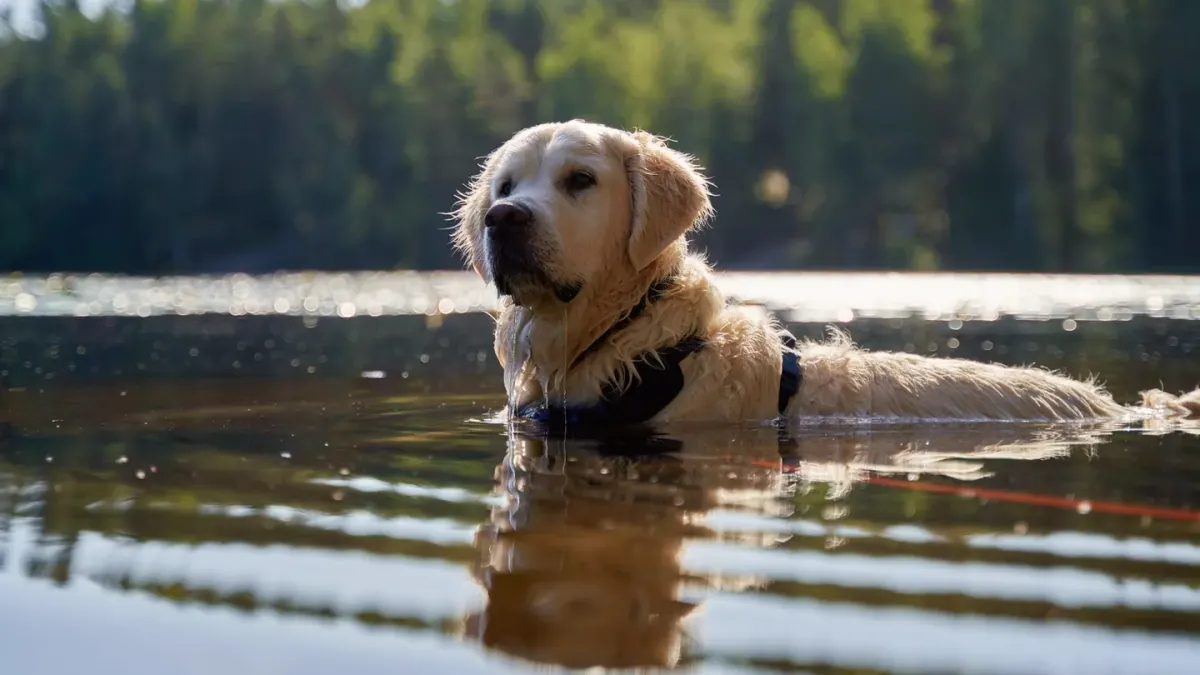
Lakes and ponds bring two problems oceans mostly don’t: leptospirosis and harmful algal blooms. The AVMA specifically flags standing or slow-moving water — ponds, marshes, and sluggish river sections — as the higher-risk exposure points for Leptospira bacteria, which dogs can pick up simply by swimming or drinking from contaminated water. Separately, the CDC notes that cyanobacterial toxins in freshwater blooms can make a dog seriously ill within hours of swallowing contaminated water, and dogs are considered among the most susceptible species to this kind of poisoning. Neither hazard is something you can eyeball reliably — a bloom can look like ordinary pond scum, and lepto-contaminated water looks completely normal. If I’m sending a client toward lake swimming, I want them checking posted advisories, avoiding stagnant coves and warm, still water in late summer, and getting their dog’s leptospirosis vaccination current if they swim regularly in freshwater. That last point matters more than most owners expect for a dog with a standing lake habit.
Pools trade infectious risk for chemical and mechanical ones
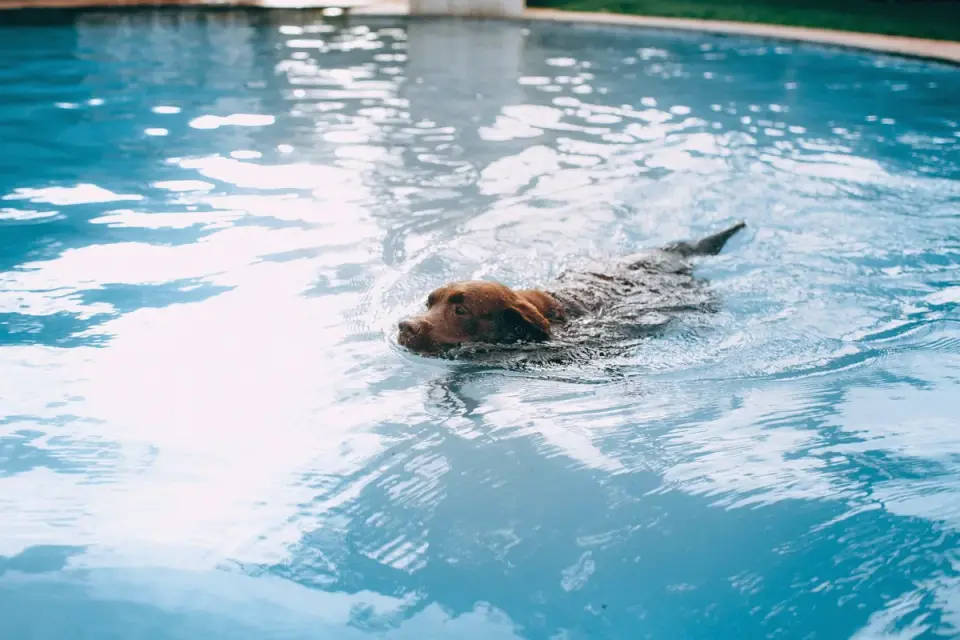
Chlorinated pools sidestep both of the above problems — properly maintained chlorine levels aren’t a leptospirosis or algae risk — but they introduce their own issues. Chlorine and pool chemicals can dry out skin and coat with repeated exposure, and pools without a ramp or shallow exit are a real drowning hazard for dogs who can’t find their way out, especially older dogs or ones new to swimming. The upside is control: you know exactly what’s in the water, and there’s no tide, current, or contamination to manage. For a senior dog doing swim-based conditioning, or a dog recovering from an orthopedic procedure, I actually prefer a clean pool with a ramp over open water, precisely because the water quality is a known quantity and I can control the temperature and session length.
What I actually tell owners to check, dog by dog
One family I worked with had a 9-year-old Golden Retriever, Maple, with mild early kidney changes on bloodwork and a long-standing habit of chasing tennis balls into the lake behind their house every evening after work. Nothing about her swimming looked unusual to them — she’d done it for years — but the combination of her kidney status and a summer with an algae advisory posted at the boat launch changed the calculus. We swapped her evening lake sessions for a neighbor’s pool with a ramp, kept the retrieve game (just on land), and had her drink from a bowl before and after instead of the lake. Her owners noticed she was less wobbly getting up the stairs afterward within about two weeks, though I’d chalk that up as much to a cooler, shorter swim routine as the venue change itself. The point of that story isn’t that pools beat lakes — it’s that the right answer shifts once you know the specific dog’s kidney status, age, and habits, not just the general category of water.
Ears deserve a mention too, regardless of venue: dogs with narrow ear canals or a history of otitis tend to do better with a thorough post-swim dry-out and, in some cases, a vet-recommended ear rinse, since trapped moisture is what sets up an infection, not the water itself. If your dog is a floppy-eared breed or has had ear infections before, that’s a bigger factor in your venue choice than ocean-versus-lake purity debates. And if you’re weighing a pool purely because it’s more predictable, it’s still worth checking your dog’s tolerance for chlorine exposure and coat drying before committing to it as a regular routine rather than an occasional outing.
Before any of this, if your dog is new to water at all, get the basics right — a puppy potty-training schedule habit of predictable routines translates surprisingly well to introducing swimming gradually, and a dog who already responds reliably to a verbal marker word is easier to recall out of open water if conditions change. Afterward, whatever venue you pick, factor in the grooming side: how often you bathe your dog and how often you trim their nails both shift when swimming becomes a regular habit, since chlorine, salt, and lake sediment all affect coat and paw condition differently.
Where I land
If I had to give one blanket recommendation, it would be this: for a healthy adult dog without kidney, heart, or chronic ear issues, a clean, monitored freshwater lake with no active algae advisory is usually the most practical choice, with fresh water on hand and a rinse afterward. For a dog with any of those health complications, or for structured recovery and conditioning work, a chlorinated pool with a proper exit ramp is the more controlled and defensible option, even though it costs more in access and chemical upkeep. The ocean is fine in moderation for confident swimmers who aren’t heavy drinkers mid-retrieve, but it’s the venue I’d most actively manage rather than set-and-forget. None of these are permanently right or wrong — they’re a match to the dog you actually have this summer.
Frequently asked questions
Is ocean water or lake water worse for a dog to swallow?
They carry different risks rather than one being categorically worse. Ocean water risks salt toxicosis if a dog drinks a large volume during play, while lake water carries infectious risks like leptospirosis and, seasonally, toxic algae blooms that can make a dog seriously ill within hours.
Are backyard pools safe for dogs to swim in?
Generally yes, and pools avoid the infectious risks of open water, but chlorine can dry out skin and coat with repeated exposure, and a pool without a ramp or easy exit can be a drowning hazard for dogs who can't climb out.
How do I know if a lake has a harmful algae bloom?
Blooms aren't always visible, so check for posted local advisories, avoid stagnant coves and warm still water in late summer, and keep your dog out of any water with unusual scum, discoloration, or odor.