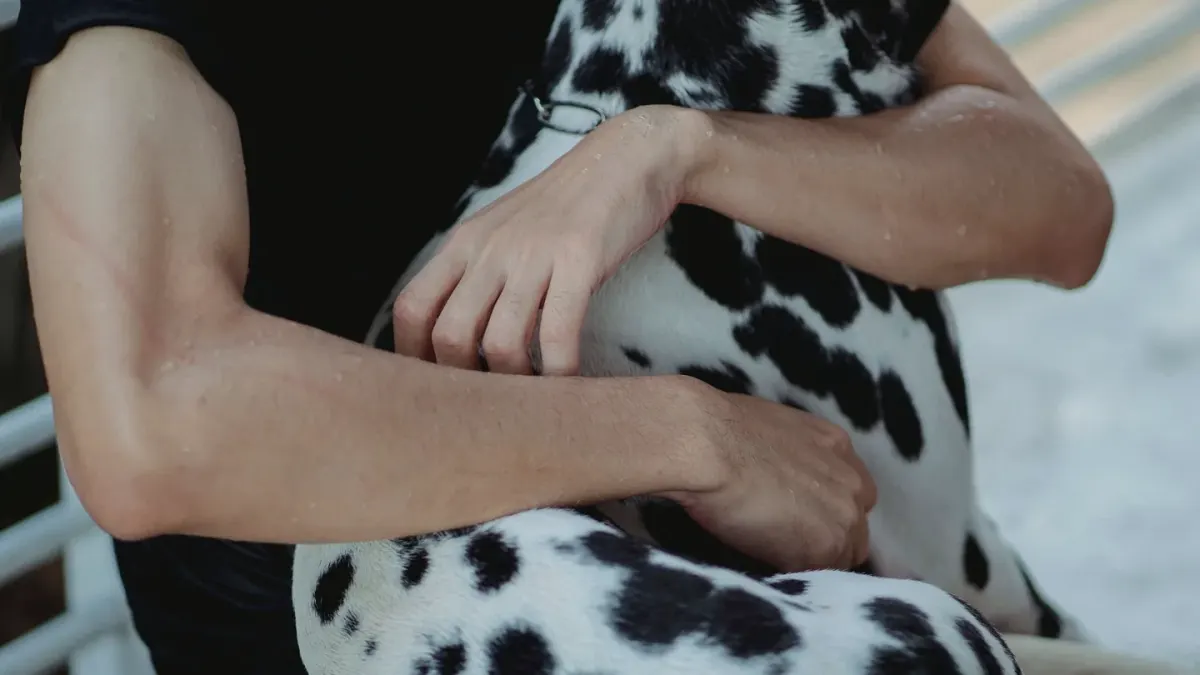
Stop the session the second teeth touch the brush, then restart with a job for the mouth to do. That one change prevents more brush-biting than any tool swap because most dogs do not hate grooming, they hate having nothing to do with their mouths while you pull at their coat. Hold a lick mat or long chew in one hand, keep strokes to two seconds along the back, and pay for quiet mouths before the teeth move.
I saw this pattern last spring with a 14-month-old, 52-pound doodle mix who came in matted behind the ears after winter. The owner had been trying to push through a full 20-minute brush-out every Sunday, and by minute six the dog was spinning, mouthing the slicker, and leaving red lines on her forearm. We cut the goal to five minutes on the back and sides only, paired every three strokes with a lick, and stopped while he was still succeeding. After 10 days of those short wins, his head stayed forward for the whole five minutes and the owner could finally reach the collar line without a wrestling match.
Pick stillness or motion before you pick a brush
Decide what your dog needs to hold still. Some dogs settle when they can lick or chew, and some settle when they can move their feet. Lickers do best on a non-slip mat with a frozen lick mat or stuffed Kong held at nose height. Movers do best standing, with you brushing one side while you walk slowly around a table or let them step forward for a treat every few strokes.
Keep pressure light enough that the skin does not ripple. Long, dragging strokes on tangles hurt, and hurt is what teaches a dog to bite first and ask later. Work in layers with a comb after the slicker, test each tangle by sliding the comb away from the skin, and quit a spot when the skin pinks up rather than forcing it clean. For help choosing contact time and pressure, my guide to how to brush a dog that hates being brushed walks through the same short-session setup.
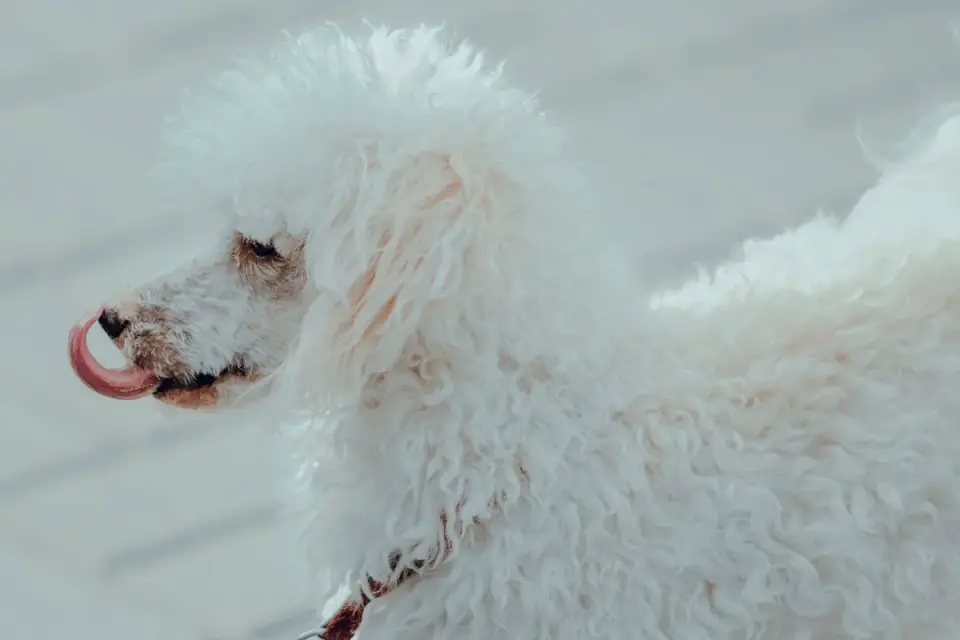
Trade force for a mouth job and a pay schedule
Teach a chin rest or a sustained lick as the incompatible behavior. Smear the mat, cue the chin into your palm or onto a towel, brush twice on the shoulder, then mark and let the dog lift to eat. Repeat that loop until the dog offers the chin without being asked. The rule stays simple: teeth on the brush ends the brushing for five seconds, teeth on the chew restarts it.
This approach follows AVSAB’s humane training guidance on rewarding calm behavior rather than correcting fear or frustration, and it pairs well with low-stress handling ideas from Fear Free’s cooperative care resources.
I tried to shortcut this once with a 3-year-old, 18-pound terrier who guarded the brush like a toy. I handed the owner a rubber chew, told them to brush faster to “get it over with,” and let sessions run until the coat looked done. Within four nights the dog escalated from air-snapping to clamping the brush head and shaking it, and brushing took twice as long because we had to repair the fallout. We went back to 90-second rounds with a hard stop, paid every still mouth, and left the belly for last. The biting faded once speed stopped being the goal.
Match the tool to the coat so you pull less. A flexible slicker supports fine, tangling coats when you pat rather than drag, while a wide-tooth comb checks your work without scraping skin. If you are unsure which edge your coat needs, read slicker brush vs undercoat rake: which do you need before you buy another brush. Dull pins, bent teeth, and matted clumps all add pain that no treat can cover.
Know when to stop brushing and cut the mat instead
Biting that clusters in one spot is information. Armpits, behind ears, the collar band, and the rear feathering mat first and hurt most. Probe with a comb; if you cannot slide a finger between mat and skin, do not saw at it with a slicker. That is the moment to switch to clippers or a groomer, a point I use in should you cut a mat out or brush it out? a vet’s decision rule.
An 8-year-old, 11-pound senior spaniel taught me to bend the short-session rule entirely. She would tolerate two minutes on her back, then whip to bite at the brush near her right hip, and the owner assumed it was attitude because she had groomed fine for years. On exam that hip was stiff and sore after a 0.6-mile walk, and lateral pressure made her flinch. We moved to table-free brushing lying on her good side, skipped the sore quarter, and booked the sore mats for the clinic with pain control. Her brush-biting stopped once we stopped asking a painful joint to do a young dog’s stand-stay.
End each session with the same two-minute check. Run hands against the lay of the coat, feel for tight knots at the skin, look for pinkness or flaking, and note where teeth moved. If biting spreads, sessions keep failing after two weeks of short wins, or skin looks sore, pause home brushing and get hands-on help rather than pushing through. Prevention supports comfort and may help maintain a coat you can actually manage, although the evidence for any single chew, spray, or brush design preventing biting on its own is thin.