On this page
A toy advertised as indestructible still has a failure point, and your job is to spot it before your dog’s teeth do.
What kind of chewer is in front of you right now — nibbler, dissector, or power grinder?
Start with the fork: play style before material
In practice, vets often see the same mismatch: a soft-mouth retriever gets a rock-hard nylon bone he ignores, while a terrier-type shredder gets a thin plush toy that loses an ear in six minutes. Durability only means something in context. A nibbler mouths and carries. A dissector works seams, tags, eyes, and squeakers with incisors until the toy opens. A power grinder compresses with molars and tries to shear off chunks.
Christy in Downey, California, lives with the second and third types in one body. Macaroni, a 3-year-old neutered male Weimaraner, would carry a tennis ball gently on a walk and then settle on his bed to methodically peel it. After he swallowed two strips of fuzz and vomited once within 24 hours, Christy started choosing by failure mode rather than by toughness claims: solid rubber for solo chewing, reinforced fetch toys only for interactive play, nothing with glued-on parts left unattended.
That decision fork — interactive versus solo, observed versus unobserved — matters more than price.
How rubber, nylon, rope, and plush actually fail
Chewing loads teeth and jaws in predictable ways, and each material concentrates force differently. Solid molded rubber deforms and rebounds, which spreads pressure across the tooth crown. Very hard nylon and similar thermoplastics do not deform, so the tooth takes more of the load; slab fractures of upper premolars are the classic injury vets warn against with objects that do not give. Rope frays into strands that can saw between teeth and, if swallowed, can linearize in the gut. Plush fails at seams first, then releases stuffing and squeakers that become foreign bodies.
The American Veterinary Medical Association advises owners to match toy size and hardness to the dog and to supervise chewing, removing toys once pieces begin to break off. The American Kennel Club gives similar practical guidance on sizing up and avoiding toys with small detachable parts. For dental-specific chewing claims, the Veterinary Oral Health Council maintains the only widely recognized list of products with accepted plaque or tartar data, which is a useful check when a chew toy also promises dental benefit.
No toy material strengthens teeth through nutrition, and that distinction matters for expectations. Chew activity may help support normal jaw exercise and enrichment as part of whole-patient health, grounded in the nutritional evidence that daily energy and micronutrient needs still come from a complete diet rather than from chewing itself. I would change that view if controlled feeding data showed a toy substrate meaningfully altered nutrient balance or mobility recovery; without that evidence, I treat toys as behavior and dental-risk tools, not diet tools.

Fit the toy to the mouth in front of you
Hands-on testing beats packaging. Squeeze it: if your thumbnail does not dent it, assume a hard chewer can crack a tooth on it. Pull seams hard in opposite directions. Twist rope. Drop it, wash it, and check whether it stays intact when wet with saliva. Score every candidate on the same four points — fit for mouth size, durability under that dog’s style, comfort to carry and chew, and value per week of use.
A toy that survives is not automatically safe.
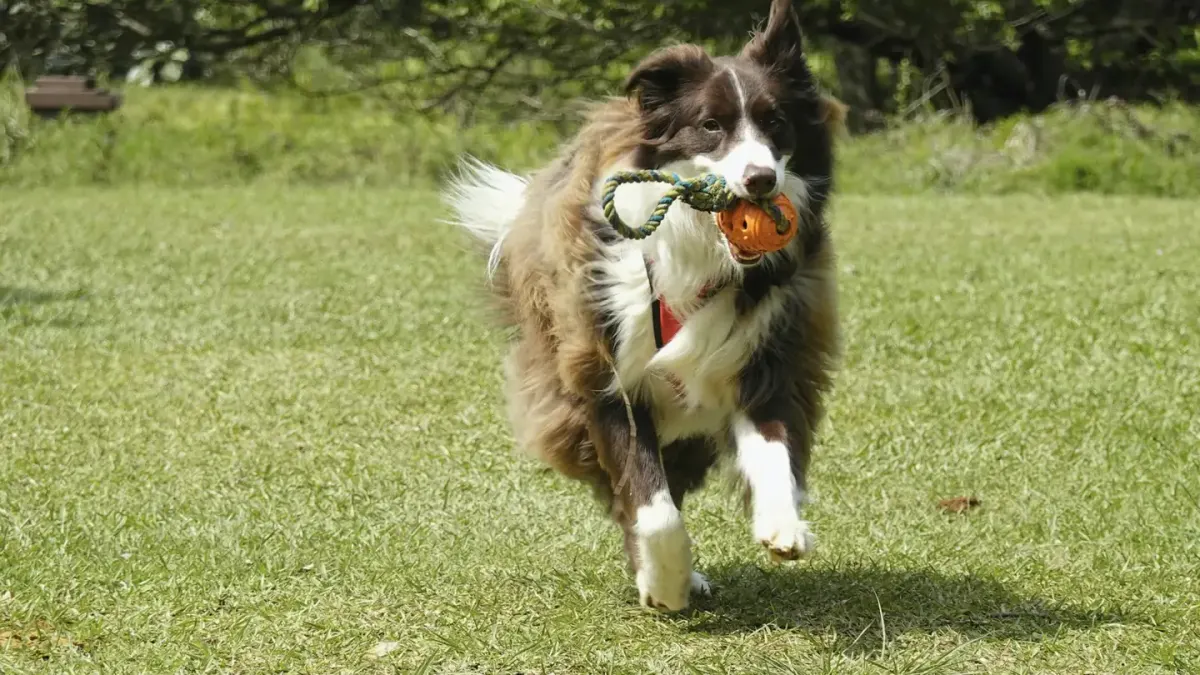
For power grinders, choose one-piece molded rubber sized so it cannot wedge behind canines, and retire it at the first deep gouge that lets a nail catch. For dissectors, avoid layered plush withknotted limbs if you cannot supervise; save rope toys for supervised tug and compare them honestly to plush for your chewer instead of leaving either in a crate. For fetch-obsessed dogs like Gerda, a 4-year-old intact female German Shorthaired Pointer whose owner Monica in Rochester, Minnesota, logs 40-yard retrieves, keep light flying discs and balls for interactive sessions only and store them after, which extends life from days to months.
Cleaning affects lifespan too. Saliva-soaked plush and rope harbor odor and bacteria, so rotate two sets and follow a regular wash routine described in how to clean and disinfect dog toys. If chewing is the goal rather than chasing, use the framework in interactive toys vs. chew toys when to use each to avoid buying a puzzle for a dog who just needs to gnaw.
My recommendation: buy for failure, then retire early
Pick the construction whose failure you can manage. Rubber that wears smooth. Nylon that sheds only rice-sized shavings and gets replaced on schedule. Rope that never frays unsupervised. Plush with embroidered, not plastic, features and no loose stuffing access.
Inspect weekly and retire without guilt when you see a through-hole, exposed squeaker, frayed strand longer than a half-inch, crack, or missing chunk. Durable means you saw it coming.
Frequently asked questions
Are hard nylon bones safe for power chewers?
They last longer but carry higher tooth-fracture risk because they do not deform. Choose a size that cannot wedge, supervise, and discard once sharp edges or large shavings appear.
How do I know when to throw a durable toy away?
Retire it when a thumbnail catches in a gouge, you see a through-hole or exposed squeaker, rope strands fray, or any piece goes missing. When in doubt, take it away.
Sources
- Selecting Safe Toys for Pets — American Veterinary Medical Association
- Accepted Products — Veterinary Oral Health Council