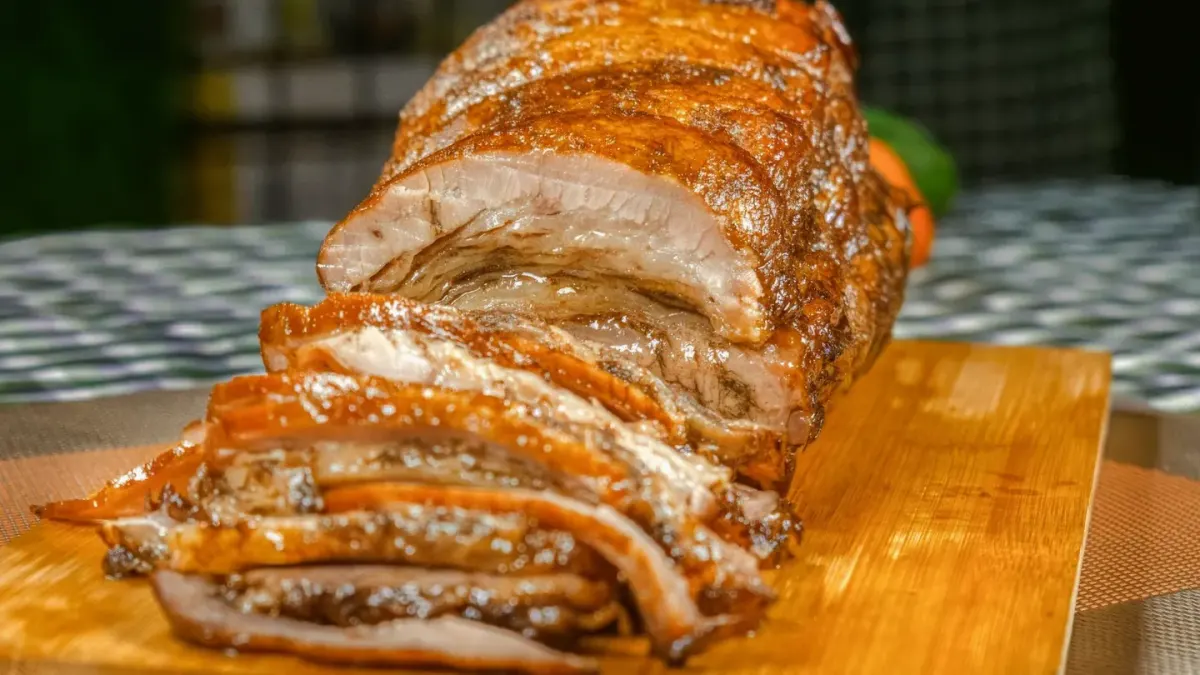
Before the turkey hits the counter, run this list:
- Skin off, bones out, no seasoning — that’s the whole safe version
- Portion small: a spoonful mixed into the bowl, not a plateful
- No onion, garlic, or heavy sage — the Allium family is genuinely toxic, not just an upset stomach
- Watch dogs with a pancreatitis history closely; fat is the trigger, not the protein
- If it’s processed (deli turkey, turkey bacon, sausage), treat it like any other salty processed meat
Is turkey itself the problem, or is it what happens to turkey between the roasting pan and the dog bowl? That’s really the question worth answering, because the two get conflated every November and the conflation causes most of the panic.
Picture a Labrador mix parked under the dining table on Thanksgiving afternoon, working the room with the kind of patience only a food-motivated dog can manage. Someone slips her a sliver of white meat off the carving board — plain, no gravy, no stuffing touching it. That’s a low-stakes moment. Now picture the same dog getting a spoonful of drippings-soaked stuffing and a piece of skin an hour later, once everyone’s had a glass of wine and the rules get loose. That second moment is where the emergency-room visits actually come from, and the difference between the two has nothing to do with turkey as a protein and everything to do with fat, salt, and what got mixed into it.
Is Plain Turkey Actually Good for a Dog’s Diet?
Yes, in the narrow sense that it matters here. Turkey breast is lean, easily digested, and a common named protein in commercial dog foods for exactly that reason — it isn’t a novelty. A few small pieces of plain, fully cooked white meat, skin and bone removed, is a reasonable treat for most healthy adult dogs, and it’s a protein some owners rotate toward specifically because it tends to sit lightly compared to fattier cuts of red meat. According to AKC, turkey served this way is generally considered safe as an occasional addition rather than an everyday staple. I’d frame it the same way I frame most single-ingredient treats: fine in moderation, not a reason to redesign the diet around it.
What Turns a Safe Bird into an Emergency-Room Bird?
Three things, and none of them are the meat. First, the skin — it’s saturated with rendered fat and whatever butter or oil it was basted in, and that fat load is the classic trigger for a pancreatitis flare, particularly in breeds already predisposed to it. PetMD notes that the high fat content in skin and trimmings is the specific concern, not the muscle meat underneath it. Second, cooked bones. They splinter along sharp, brittle lines instead of bending the way raw bone can, and those fragments are a genuine choking and puncture risk working their way through the gut. Third, seasoning. Onion and garlic are toxic to dogs in real, non-trivial quantities — they damage red blood cells — and a stuffing or gravy built around a mirepoix base is one of the more common ways dogs end up exposed without an owner realizing it.
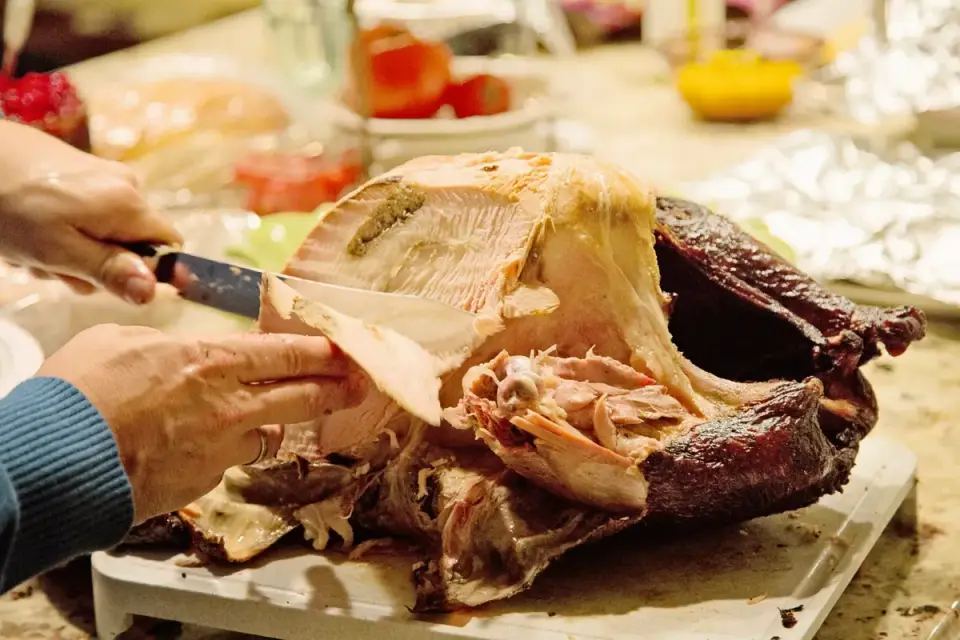
Consider a senior dog with a known sensitive stomach, the kind of dog whose owner has already had to switch her onto a gentler food once this year. A well-meaning guest offers her a chunk of skin-on turkey leg because she’s sitting politely by the table. Nothing happens for two hours. Then the vomiting starts, and by evening she’s hunched, restless, and refusing water. That’s not a rare story — fatty-food pancreatitis flares are one of the more predictable holiday-week vet visits, and they’re almost always preventable with the same three rules: skin off, bones out, no seasoning.
How Much Is Too Much for a Dog Prone to GI Trouble?
There’s no universal number, and I’m skeptical of anyone who gives you one down to the ounce. What matters more is direction: keep turkey to a small fraction of the day’s calories, favor breast meat over thigh or skin, and back off entirely if a dog has a history of pancreatitis, has a fatty tumor disorder that affects fat metabolism, or already runs a sensitive gut. Hill’s Pet frames the same caution around fat content specifically, which lines up with how most veterinary nutritionists think about novel proteins generally — the ingredient matters less than the fat and salt riding along with it. If you’re curious how this compares to another common holiday add-in, the same logic applies almost exactly to sweet potato: the base ingredient is fine, the preparation is where it goes wrong. And if seasoning is the sticking point, it’s worth reading up on garlic specifically before assuming a small amount in gravy is harmless.
So, should turkey make the regular rotation, or stay a once-a-year treat? For most healthy dogs, a few bites of plain, skinless, boneless turkey breast is a low-risk way to share the table — not a reason for panic, and not a reason to build a habit around it either. Skip the skin, skip the bones, skip the gravy boat, and the bird stops being a holiday hazard and goes back to being what it is: a lean, unremarkable protein.
Frequently asked questions
Can dogs eat turkey bacon or turkey deli meat?
Both are processed and heavily salted, which is a bigger problem than the turkey itself. Regular turkey bacon or lunch meat isn't a safe substitute for plain cooked breast — the sodium and preservative load adds up fast in a small dog.
Is ground turkey safer than a carved slice?
Plain, fully cooked ground turkey without added fat, onion, or seasoning packets is fine in small amounts. Read the package — a lot of grocery-store ground turkey is blended with skin and fat to boost flavor, which defeats the purpose.
What about turkey and gravy on Thanksgiving?
Gravy is usually butter, drippings, and often onion or garlic reduction, which is exactly the combination worth avoiding. Serve the meat plain and skip the gravy boat for the dog.
Can dogs eat raw turkey?
Raw poultry carries a meaningfully higher risk of Salmonella and Campylobacter contamination than cooked meat. Most veterinary nutritionists recommend fully cooked turkey for casual feeding rather than raw.
Sources
- Can Dogs Eat Turkey? Holiday Safety Tips for Pet Owners — AKC
- Can Dogs Eat Turkey? — PetMD
- Can Dogs Eat Turkey? — Hill's Pet