On this page
To change food for a senior dog well, give the swap more days than you’d use for a younger dog. That single adjustment — patience over speed — solves most of the stomach upset, food refusal, and stress that come with switching an older dog’s diet.
Why an Older Gut Handles Change Differently
A young adult dog’s digestive tract adapts quickly: new enzymes ramp up, the microbiome shifts, and within a week most dogs are stable on a new formula. An aging gut doesn’t move at that same pace. Motility slows, enzyme output can be less robust, and a lifetime of whatever diet history a dog carries means the resident microbiome is often less flexible than it was at two years old. None of that means an old dog can’t handle a new food — it means the runway should be longer and the ratio changes smaller.
AAHA guidance built for pet owners is blunt about this: take it slowly, and give the digestive system time to adjust rather than swapping bowls overnight. For a healthy young dog that might mean a week. For a senior, plan on stretching that window.
The Step-by-Step Timeline
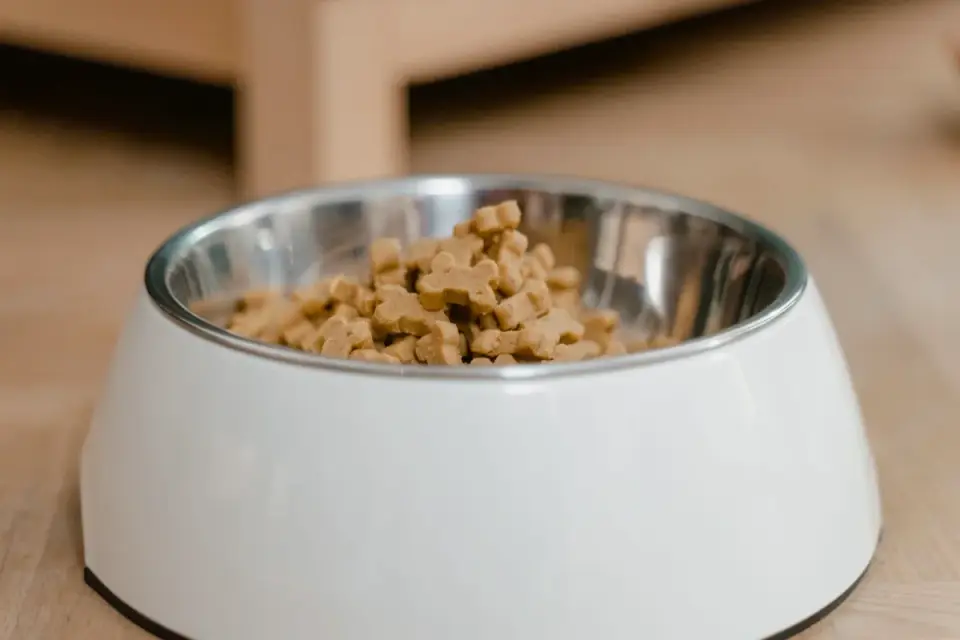
Start with roughly 75 percent old food and 25 percent new food for two to three days. Move to a 50/50 split for another two to three days. Shift to about 25 percent old and 75 percent new for two to three more days, then finish on the new food entirely. That’s the standard skeleton — for a senior dog, hold each stage a day or two longer than you would for a younger adult, and don’t be shy about repeating a stage if stool softens.
Weigh what a diet change can realistically do for an older dog’s digestion, mobility, and day-to-day comfort before assuming a faster pace is fine just because it worked with a puppy years ago. Feed at the same times each day during the transition. Keep treats and table scraps minimal so you can actually attribute any GI changes to the food swap and not a confounding variable.
Gradual Versus Abrupt: What the Difference Actually Buys You
An abrupt switch forces the gut to process a new set of proteins, fats, and fiber sources all at once, with no lead time for enzyme output or microbial populations to catch up. A gradual switch spreads that adjustment across many small, low-stakes days instead of one large one. The practical payoff for a senior dog is fewer vomiting or diarrhea episodes, less appetite disruption, and an easier read on whether the new food itself — versus the transition process — is the reason for any symptoms that show up.
This distinction matters more in dogs with a documented digestive condition. In dogs diagnosed with exocrine pancreatic insufficiency, treatment already centers on more than diet timing alone — JAVMA notes that “EPI is treated by pancreatic enzyme replacement therapy, nutritional management (low-residue diets with moderate fat content), and supplementation of cobalamin.” A senior dog with that diagnosis needs a food plan built around a veterinarian’s guidance, not a generic transition calendar.
Reading Stool, Appetite, and Energy During the Switch
Check three things daily, not just for the first two days. Stool should stay formed; occasional softening at a ratio change is common, but ongoing diarrhea is not. Appetite should stay steady — a senior dog that sniffs and walks away from the bowl for more than a meal or two is telling you something. Energy and general demeanor matter too, since a dog quietly feeling unwell often slows down before stool changes show up.
Gut microbiome research adds a caution worth carrying into how you interpret day-to-day symptoms: individual dogs respond differently to the same intervention, and stool or microbiome snapshots don’t reliably predict who will do well. A Frontiers in Veterinary Science study on probiotic response in dogs found that “diversity metrics did not distinguish non-responders from responders.” In plain terms: don’t assume one dog’s smooth transition means yours will look identical, and don’t panic over a day of soft stool if appetite and energy stay normal.
When to Slow Down or Call Your Vet
If stool loosens for more than a day at any stage, drop back to the previous ratio for another two to three days before advancing again. If a senior dog refuses the new food outright across several meals, stops eating altogether, vomits repeatedly, or seems lethargic, stop the transition and call your veterinarian rather than pushing through. This is especially true for dogs with known kidney, liver, or pancreatic disease, where the food itself — not just the pace of the switch — needs veterinary sign-off. A slower, boring transition is the goal; a dramatic one is a signal to pause.
Switching an older dog’s food doesn’t have to be complicated. It has to be unhurried, closely watched, and willing to bend the calendar when the dog’s body asks for more time.
Frequently asked questions
How many days should I take to switch my senior dog's food?
Most healthy senior dogs do well over 10 to 14 days, longer than the roughly 7-day window often used for younger adults. Dogs with a history of sensitive digestion may need even more time.
Is it normal for an older dog to have soft stool during a food change?
Mild, brief softening can happen as the ratio shifts. Persistent diarrhea, vomiting, or a dog that stops eating is not normal and is a reason to pause the transition and call your veterinarian.
Sources
- Take It Slowly When Transitioning Your Pet to a New Food — AAHA
- Exocrine pancreatic insufficiency review — JAVMA
- Probiotic response variability in dogs — Frontiers in Veterinary Science