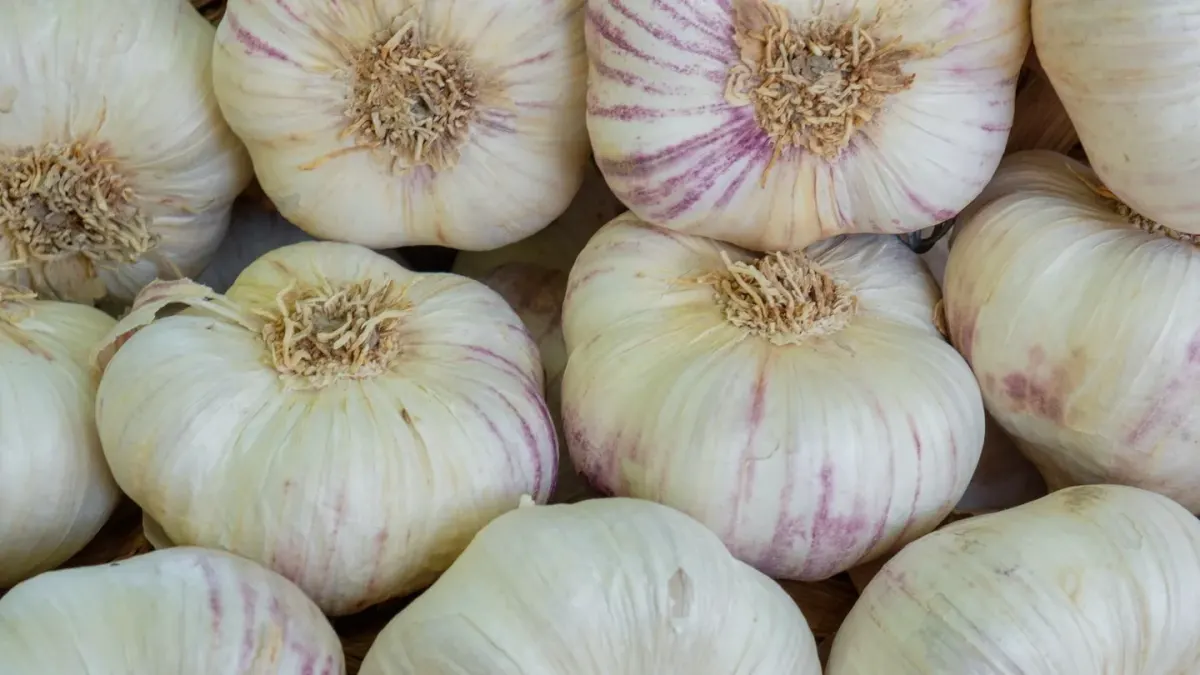
A client of mine brought in a ten-year-old beagle named Gus last winter after she’d started leaving simmered chicken-and-garlic broth to cool on the counter, the way her own mother used to make it for a cold. Gus, true to his nose, helped himself to a few spoonfuls twice that week before she thought to ask whether it was a problem. Nothing happened right away. That’s the part owners find hardest to believe, and it’s the reason garlic deserves a more careful look than most kitchen ingredients get.
Garlic sits in the Allium genus alongside onions, leeks, chives, and shallots, and every member of that family carries the same basic hazard for dogs. The compounds responsible are organosulfur thiosulfates, and once metabolized they oxidize hemoglobin inside a dog’s red blood cells. That oxidative damage produces Heinz bodies, which are small clumps of denatured protein that make the cell membrane fragile. A dog’s spleen and immune system then recognize those damaged cells and start removing them from circulation, which is the mechanism behind the hemolytic anemia that defines Allium toxicosis. I find it useful to think of this the same way I think about a slow-building nerve compression rather than an acute injury: the damage is accumulating at the cellular level well before the whole-body signs catch up.
That lag is the part worth sitting with. According to the Merck Veterinary Manual, Heinz bodies and methemoglobin levels can rise within 24 hours of an Allium ingestion, yet the clinical signs of anemia may not surface for several days. A dog can look completely normal on day one. An in vitro study examining garlic’s direct effect on canine red blood cells found that Heinz body formation tracked with both the concentration and the form of garlic tested, reinforcing that this is a dose-and-preparation-dependent injury rather than a fixed threshold you either cross or don’t, a finding reported in the PMC in vitro study on garlic and canine erythrocytes.
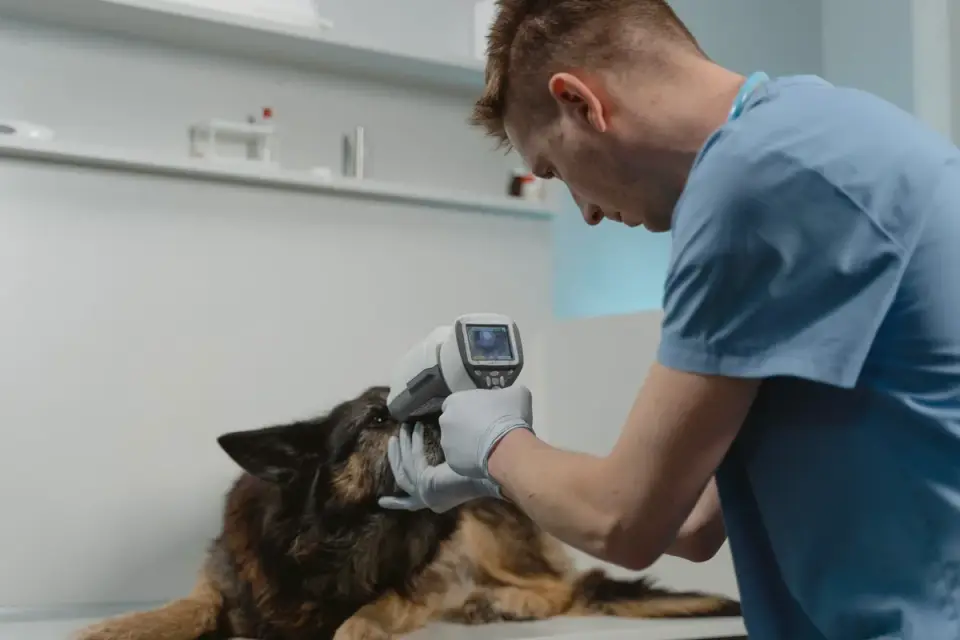
By the second through seventh day after a meaningful exposure, that’s typically the window where owners notice something is wrong. Weakness, pale or yellow-tinged gums, dark urine, a faster heart rate, and heavy panting are the signs most often described in dogs progressing through Allium-related hemolysis. This is also the stretch where a veterinarian would want blood work, because a red cell count and a look for Heinz bodies under the microscope will confirm what a physical exam alone cannot. Treatment, per the veterinary literature, centers on early decontamination if the ingestion is caught soon enough and supportive management of the anemia itself if it isn’t.
So where does “small amounts” actually land in this picture? ASPCA poison control lists garlic among the plants considered toxic to dogs, and the Pet Poison Helpline is direct about it too: reported toxic effects have followed repeated dosing at roughly 5 g/kg of fresh garlic per day, and for a mid-size dog that can translate to something in the range of a handful of cloves reached all at once, or smaller amounts fed regularly over time. Garlic is also considered several times more concentrated than onion gram for gram, so the comparison numbers for onion toxicity understate garlic’s relative potency. None of that adds up to a nutritionally useful dose that’s also reliably safe. A single stray sliver in a broth is a different conversation from a supplement or seasoning added on purpose, and I’d rather owners hear that distinction plainly than guess at it.
Breed matters here in a way that’s easy to miss. Akitas, Shiba Inus, and related Japanese breeds carry red blood cells that are inherently more susceptible to oxidative stress, and documented cases show these dogs developing Heinz body changes at exposures that other dogs shrug off without visible signs. If you share your home with one of these breeds, the margin for a garlic mishap is narrower than it is for, say, a Labrador.
Gus, for what it’s worth, never developed a visible symptom. His owner switched to garlic-free broth after that visit, and we ran a follow-up blood smear a week later that came back clean. I mention that not to suggest small exposures are harmless, but because it illustrates the real lesson: the absence of symptoms in the first day or two tells you very little, and the only way to know a dog dodged the injury is to look, not to assume.
If your dog eats a meaningful amount of garlic, whether raw, cooked, or in powdered seasoning form, the right move is to call your veterinarian or a pet poison hotline promptly rather than wait for symptoms, since the earliest window for decontamination is also the most effective one. Keep garlic bread, seasoned broths, garlic powder, and garlic-containing supplements out of reach, and treat any “just a little” exposure as something to report rather than something to monitor quietly at home.
Frequently asked questions
Is garlic safe for dogs in small amounts, like a sliver in a homemade broth?
A single trace exposure is unlikely to cause visible illness in most dogs, but veterinary toxicologists don't define a nutritionally useful 'safe' threshold for garlic because the oxidative injury to red blood cells is dose-dependent and cumulative, not all-or-nothing.
How much garlic is dangerous for a dog?
The Merck Veterinary Manual notes that related Allium toxicosis in dogs has followed ingestion of roughly 15 to 30 g/kg of raw onion, with garlic considered several times more potent gram for gram, so a much smaller quantity of garlic can pose a comparable risk.
What are the first signs of garlic toxicity in a dog?
Early signs can include vomiting, drooling, and lethargy, but the hemolytic anemia that defines Allium toxicosis often doesn't become clinically obvious, with pale gums, weakness, and dark urine, for several days after ingestion.
Are some dogs more sensitive to garlic than others?
Yes. Breeds with red blood cells that are more vulnerable to oxidative stress, including Akitas and Shiba Inus, have been documented to develop Heinz body changes at exposures that other dogs tolerate without visible harm.
Sources
- Garlic and Onion (Allium spp) Toxicosis in Animals — Merck Veterinary Manual
- Toxic and Non-toxic Plants: Garlic — ASPCA
- Garlic Is Toxic To Dogs — Pet Poison Helpline
- The Effect of the Type and Concentration of Garlic (Allium sativum) on Heinz Body Concentrations in Canine Erythrocytes—An In Vitro Study — PMC