On this page
Picture a dog named after nobody in particular, a scruffy mixed breed who spends August afternoons parked under a tomato trellis because that’s where the shade and the smell of warm dirt happen to overlap. The owner is out there pinching suckers off the vines, tossing the odd overripe tomato into a bucket, and the dog is doing what dogs do near unattended food: testing the boundary. A globe of red tomato drops, gets nosed, gets eaten. Later that week a green one falls too, half-shredded, vine attached. Same dog, same yard, two very different chemistry problems—and that gap is the whole story I want to walk through, because most of the internet flattens it into a single yes-or-no answer that doesn’t hold up.
The Fork in the Garden Row: Ripe or Not
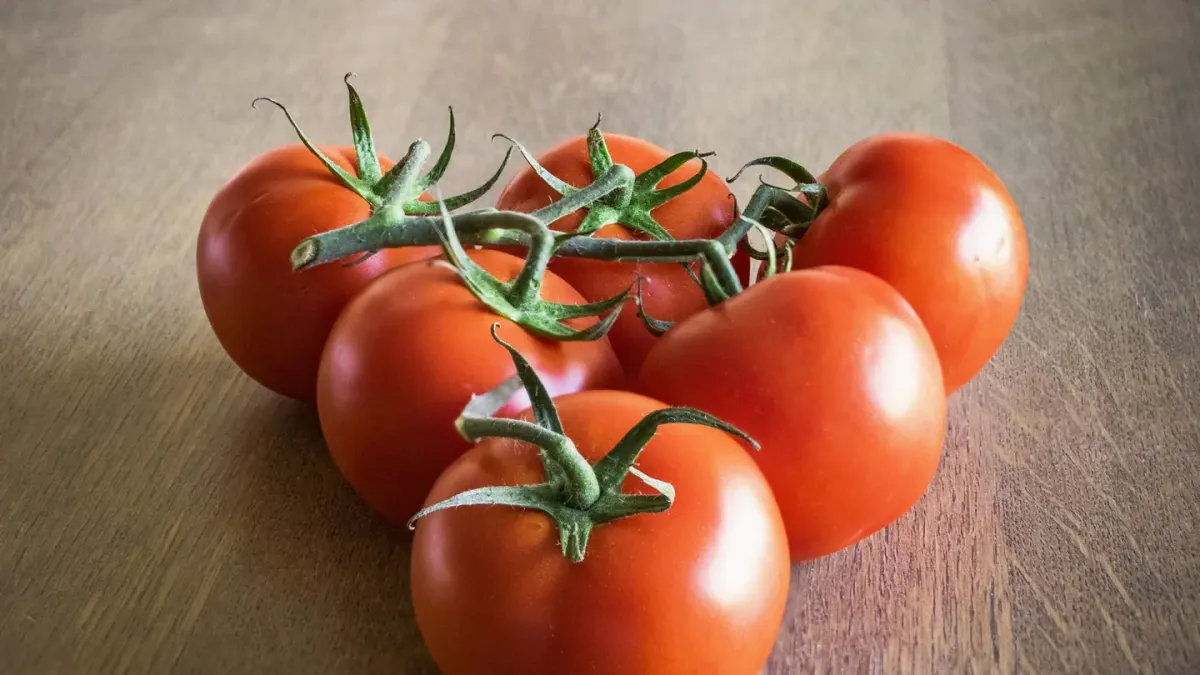
The decision fork here is not “tomato, yes or no.” It’s ripeness. Fully ripe, red tomato flesh is generally regarded as non-toxic to dogs, and a small piece now and then is a defensible treat for a healthy adult dog. The AKC has been direct about this: only feed the fully ripened fruit, skip the plant’s green parts entirely, and keep portions modest because the acidity alone can unsettle a sensitive stomach. That last point matters more than owners expect. I see plenty of dogs where the limiting factor isn’t toxicity at all, it’s a gut that’s already working at capacity.
What Solanine Actually Does to a Dog’s Nervous System and Gut
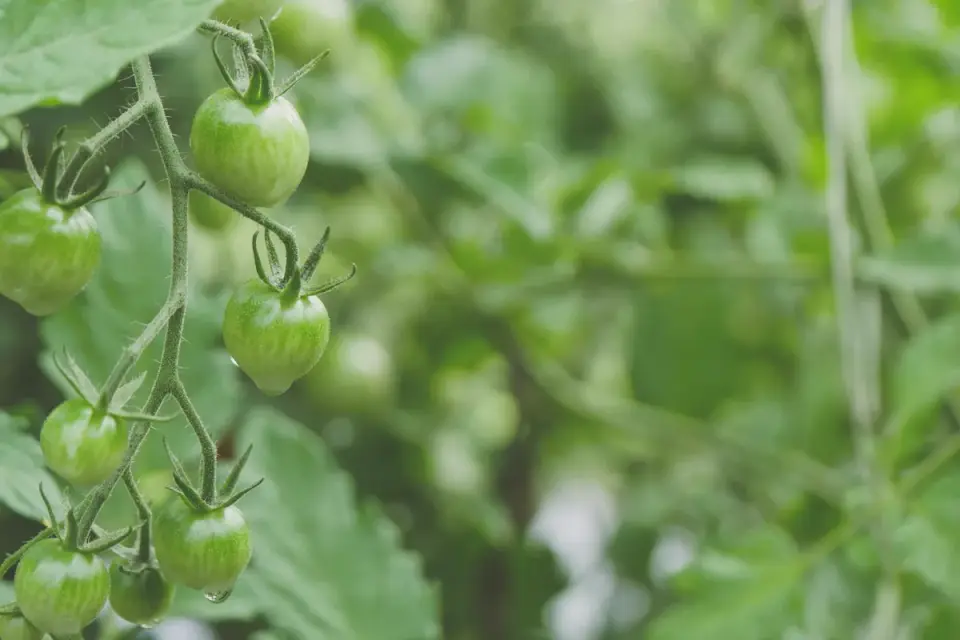
Here’s where I reach for the mechanism instead of the folklore. Tomatoes belong to the nightshade family, and the plant defends its unripe fruit and foliage with glycoalkaloids—solanine and its close cousin tomatine. These compounds concentrate in the green tomato, the leaves, the stems, and the vine, and drop off sharply as the fruit ripens and reddens. The ASPCA lists the tomato plant as toxic on that basis, and the signs it describes read like a nervous-system and GI event at once: hypersalivation, vomiting, lethargy, weakness, dilated pupils, a slowed heart rate. That combination is exactly why I don’t wave this off as “just an upset stomach.” Solanine is a cholinesterase-affecting compound, which is the same broad mechanism I think about when I’m reaching for both an imaging study and an acupuncture needle in a neuro case—structure and physiology explain the sign, not the other way around. A dog that ate a handful of green tomatoes isn’t being dramatic. Something measurable is happening.
The Sauce, Salsa, and Ketchup Problem
This is the part owners skip past. A dog rarely encounters a whole raw tomato in daily life; more often it’s a dropped meatball, a spoonful of marinara, a chip loaded with salsa. Once tomato is cooked into a sauce, the ripeness question stops being the relevant one. What I actually worry about is everything riding along with it—onion, garlic, added salt, sugar, and sometimes a slick of oil that a dog’s pancreas didn’t sign up for. If you’ve read our piece on garlic in small amounts, you already know that ingredient alone earns real caution, and it shows up in tomato sauce constantly. So my honest answer to “can my dog have a lick of spaghetti sauce” is usually no, not because of the tomato, but because of the company it keeps.
I think about a different dog here, a senior Lab mix whose owner switched her to a bland, low-fat diet after a rough bout of pancreatitis. The owner wanted to know if a spoonful of homemade tomato soup, no onion, no cream, would be a fine reward for finishing her medication. On paper the tomato itself wasn’t the issue. The oil the soup was finished with was. That’s the distinction I try to get owners to hold onto: ingredient-by-ingredient thinking beats blanket rules, and a dog recovering from GI disease needs a much lower bar for what counts as safe than a dog who’s never had a digestive problem in her life.
Which Dogs Should Be More Cautious With Tomato at All
For dogs with a clean GI history, ripe tomato flesh in small amounts is a low-stakes treat. For dogs managing exocrine pancreatic insufficiency, the calculus changes. The JAVMA review on the condition notes that “EPI is treated by pancreatic enzyme replacement therapy, nutritional management (low-residue diets with moderate fat content), and supplementation of cobalamin”—a reminder that these dogs are already on a tightly managed diet where an acidic, fibrous add-in like tomato has no real job to do. The same review is candid about the limits of current knowledge, noting that “future studies are needed to further understand the causes of persistent dysbiosis in animals with EPI following initiation of pancreatic enzyme replacement therapy.” I read that as license to be conservative, not experimental, with this group of dogs.
Dogs recovering from a GI flare more broadly deserve the same caution. A Frontiers in Veterinary Science study on probiotic response in dogs found that “diversity metrics did not distinguish non-responders from responders,” which tells me gut recovery is individual and not something I can predict from a stool sample alone. If you’re already navigating a sensitive gut during a senior food transition, a new fruit or vegetable is one more variable I’d rather not add mid-process.
A Practical Way to Offer Tomato Without the Regret
Keep it simple. Wash a fully ripe tomato, remove the stem and any green shoulder, and offer a small piece plain—no salt, no sauce, no seasoning. Skip it for puppies still building GI tolerance and for any dog with a pancreatitis or EPI history. If your dog free-ranges in a yard with a tomato patch, fence the vines the same way you’d fence anything else you don’t want chewed; this is the same low-effort thinking behind setting real physical boundaries, whether that’s a garden trellis or a crate for a new puppy’s first night. And if a dog does get into unripe fruit or a mouthful of vine, call your veterinarian rather than waiting to see what happens.
Where I Land
I don’t think tomato deserves the blanket “toxic, never” label it sometimes gets online, and I don’t think it deserves a free pass either. Ripe flesh, plain, in small amounts, for a dog with a settled gut: fine. Green fruit, stems, leaves, vine, sauces loaded with onion or fat, or any of it for a dog already managing pancreatic or digestive disease: not worth the gamble. The strongest pushback I hear is that nightshades as a category should just be avoided outright on principle, and I understand the instinct toward a clean rule. But the evidence doesn’t support treating ripe tomato flesh the same as the plant that produced it, and I’d rather give owners an accurate distinction than a tidy one. So the real question isn’t whether tomatoes are safe. It’s which part of the plant, in which dog, at which moment in that dog’s digestive history?
Frequently asked questions
Can dogs eat tomato sauce or ketchup?
I'd avoid both as a rule. Commercial sauces usually carry added salt, sugar, onion or garlic, and sometimes seed oils that do more to upset a dog's gut than the tomato itself ever would.
How much ripe tomato is too much?
There's no established safe dose I'd point you to, so I keep it to a bite or two of plain flesh, not a bowlful, and I watch for loose stool afterward given the fruit's acidity.
What should I do if my dog eats a green tomato or chews on the vine?
Call your veterinarian or a poison control line and describe how much plant material was involved. Most dogs that nibble a leaf in passing do fine, but a mouthful of unripe fruit or vine is worth a call, not a wait-and-see.
Sources
- Toxic and Non-Toxic Plants: Tomato Plant — ASPCA
- Tomatoes for Dogs: What's Safe and What's Not — AKC
- Exocrine pancreatic insufficiency in dogs: management review — JAVMA
- Probiotic response variability in dogs — Frontiers in Veterinary Science